THE ADVENTURE COLLECTIVE® · Independent discovery and booking for outdoor travel

Descend 135 meters beneath Kraków to wander carved chapels, salt chandeliers and medieval shafts. This fast-track guided walk through Wieliczka Salt Mine combines geology, history and underground architecture in a three-hour circuit.
Descend 135 meters beneath Kraków to wander carved chapels, salt chandeliers and medieval shafts. This fast-track guided walk through Wieliczka Salt Mine combines geology, history and underground architecture in a three-hour circuit.
You descend into a dim corridor where carved saints and chandeliers of salt catch the torchlight; the air is cool, a bit briny, and moves with the soft hush of centuries. The tourist route runs about 3 kilometers roughly 135 meters below ground, a sequence of chambers, chapels and salt-carved sculptures that pull the senses into a different kind of landscape — one hewn by miners and time.
Verified experiences and guided adventures in the surrounding area.
Operated by ExcitingKrakow · Wieliczka, Lesser Poland Voivodeship
You descend into a dim corridor where carved saints and chandeliers of salt catch the torchlight; the air is cool, a bit briny, and moves with the soft hush of centuries. The tourist route runs about 3 kilometers roughly 135 meters below ground, a sequence of chambers, chapels and salt-carved sculptures that pull the senses into a different kind of landscape — one hewn by miners and time.
The mine’s recorded history stretches back to the 13th century, but the salt-bearing Cambrian and Silurian rocks beneath Lesser Poland tell an older geological story of buried seas and evaporite layers. Culturally, Wieliczka has been both an industrial engine and a pilgrimage site: St. Kinga’s Chapel, entirely carved in salt, shows the overlap of labor and devotion.
Expect stairs and uneven stone steps; an elevator is available on request but standard visits involve many flights. The microclimate — cool, stable, and mineral-rich — is often cited for respiratory benefits, and guides point out mining tools, ventilation shafts and medieval drainage solutions as you walk.
Practical pointers: allow about three hours including time to move between levels; bring layers (it’s around 14°C/57°F year-round), sturdy closed shoes, and a small bottle of water. Photography is allowed but watch your step; large backpacks may be restricted. Fast-track tickets cut queue time at the entrance, but tours still follow a set route and schedule, so arrive on time. For travelers based in Kraków, the mine makes a compact half-day excursion with historical depth and a uniquely tactile underground landscape.
easy.
3 hours.
Suitable for most fitness levels but requires the ability to navigate stairs and stand during the walk
The standard guided route takes approximately 3 hours and covers about 3 kilometers of underground passages and chambers.
The route involves many stairs; an elevator is available on request but must be arranged in advance—contact the operator prior to booking.
Yes, photography is generally permitted for personal use, though guides may restrict flash or tripods in certain areas to protect exhibits.
Yes—children and infants can join; strollers may be accommodated on some sections but many stairs make a carrier practical for parts of the route.
Wieliczka operated continuously for about nine centuries, shaping local economy and guild culture; miners developed sophisticated methods for ventilation and water management that are visible today.
The mine is a UNESCO World Heritage site with preservation measures focused on humidity control, visitor limits to reduce wear, and strict rules against touching delicate salt sculptures.
ExcitingKrakow operates guided outdoor trips and adventures with an emphasis on safety, stewardship, and memorable experiences.
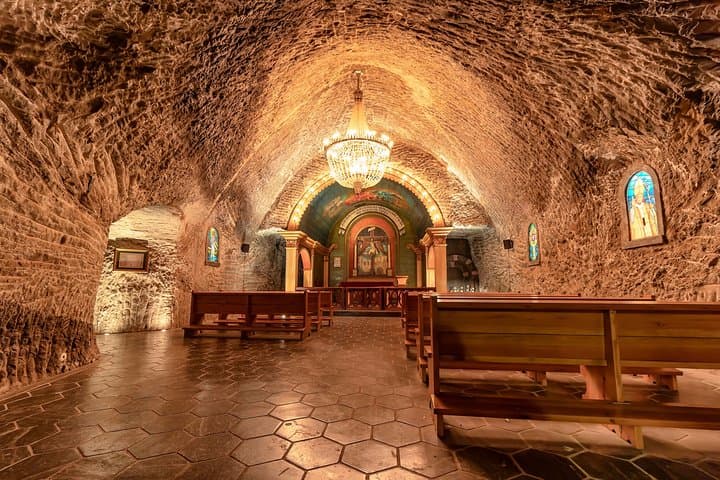
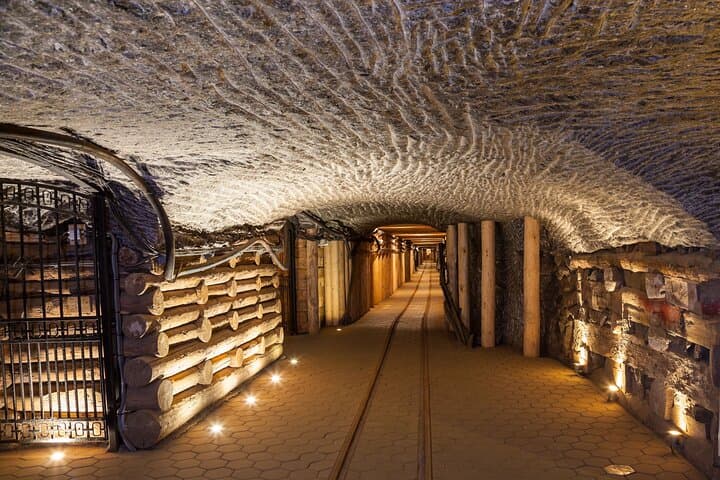
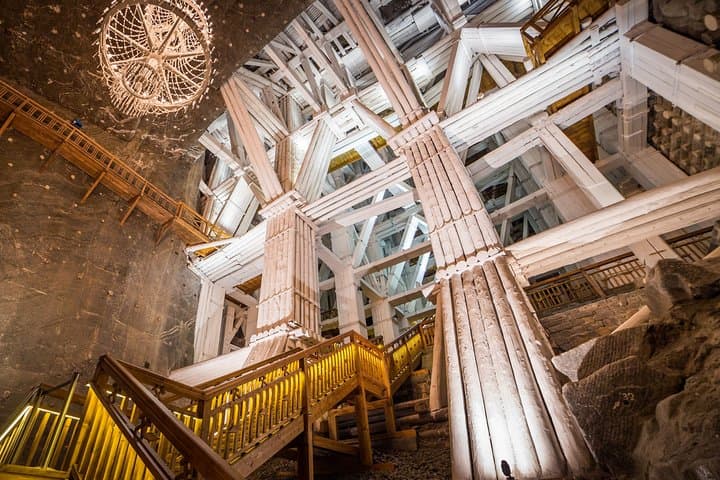
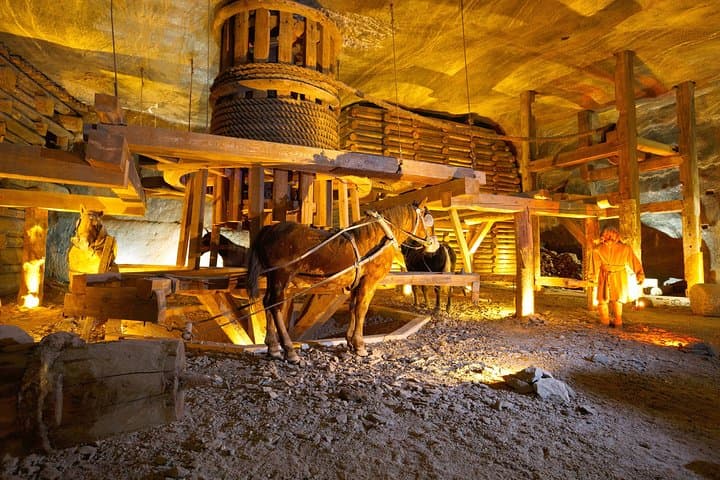
You descend into a dim corridor where carved saints and chandeliers of salt catch the torchlight; the air is cool, a bit briny, and moves with the soft hush of centuries. The tourist route runs about 3 kilometers roughly 135 meters below ground, a sequence of chambers, chapels and salt-carved sculptures that pull the senses into a different kind of landscape — one hewn by miners and time.
You descend into a dim corridor where carved saints and chandeliers of salt catch the torchlight; the air is cool, a bit briny, and moves with the soft hush of centuries. The tourist route runs about 3 kilometers roughly 135 meters below ground, a sequence of chambers, chapels and salt-carved sculptures that pull the senses into a different kind of landscape — one hewn by miners and time.
The mine’s recorded history stretches back to the 13th century, but the salt-bearing Cambrian and Silurian rocks beneath Lesser Poland tell an older geological story of buried seas and evaporite layers. Culturally, Wieliczka has been both an industrial engine and a pilgrimage site: St. Kinga’s Chapel, entirely carved in salt, shows the overlap of labor and devotion.
Expect stairs and uneven stone steps; an elevator is available on request but standard visits involve many flights. The microclimate — cool, stable, and mineral-rich — is often cited for respiratory benefits, and guides point out mining tools, ventilation shafts and medieval drainage solutions as you walk.
Practical pointers: allow about three hours including time to move between levels; bring layers (it’s around 14°C/57°F year-round), sturdy closed shoes, and a small bottle of water. Photography is allowed but watch your step; large backpacks may be restricted. Fast-track tickets cut queue time at the entrance, but tours still follow a set route and schedule, so arrive on time. For travelers based in Kraków, the mine makes a compact half-day excursion with historical depth and a uniquely tactile underground landscape.