THE ADVENTURE COLLECTIVE® · Independent discovery and booking for outdoor travel

Descend 135 meters beneath Wieliczka to explore chapels, salt sculptures and underground lakes on a 4–5 hour guided tour. Fast-track tickets and a licensed guide streamline access to one of Poland’s most storied industrial monuments.
Descend 135 meters beneath Wieliczka to explore chapels, salt sculptures and underground lakes on a 4–5 hour guided tour. Fast-track tickets and a licensed guide streamline access to one of Poland’s most storied industrial monuments.
You step off the tram into an old market town and into air that subtly cools as you approach a low stone portal. The staircase begins almost immediately — hundreds of carved steps that lead down into a cathedral of salt where chandeliers glitter and artists once carved chapels from the same mineral that once paid kings.
Verified experiences and guided adventures in the surrounding area.
Operated by Super Cracow - Tours Shuttle · Wieliczka, Lesser Poland Voivodeship
You step off the tram into an old market town and into air that subtly cools as you approach a low stone portal. The staircase begins almost immediately — hundreds of carved steps that lead down into a cathedral of salt where chandeliers glitter and artists once carved chapels from the same mineral that once paid kings.
Wieliczka is a medieval industrial site morphed into an underground cultural landscape. Salt was extracted here from the Middle Ages until the 20th century; its subterranean corridors, chapels (most notably St. Kinga’s Chapel) and sculpted figures earned the mine UNESCO World Heritage status in 1978. Geologically the chambers sit within an evaporite deposit left by an ancient inland sea, and over centuries miners hollowed galleries that now reveal both raw geology and human craft.
The tour drops you roughly 135 meters below ground, with about 800 steps on the visitor route, moving through carved salt sculptures, mirror-still lakes and dimly lit vaulted rooms. The temperature runs cool (around 14°C/57°F), so layers are useful. Guides explain mining techniques, devotional life underground and the site’s role in Polish culture.
Practically: expect 4–5 hours total for round-trip options and transport choices; wear solid shoes, carry a small water bottle, and reserve skip-the-line tickets in advance to avoid long surface queues. Photography is permitted in many areas but follow the guide — some chapels are fragile. This is a sensory, human-scale encounter with industrial history rather than an adrenaline expedition, and it rewards steady footsteps and curiosity.
moderate.
4–5 hours.
Able to walk on uneven stone and climb/descend ~800 steps; suitable for most active travelers but not recommended for those with serious mobility issues.
The standard visitor route reaches about 135 meters below the surface and includes roughly 800 steps round-trip.
Families with older children usually manage well; infant seats and child-friendly options exist but the large number of stairs can be challenging for very young children and strollers.
Photography is generally allowed in most chambers, but follow your guide’s instructions—some areas are fragile or restricted for conservation reasons.
Some ticket options include transportation from Kraków; otherwise the mine is regularly served by public transit and short private transfers.
Wieliczka has been worked for salt since at least the 13th century; its underground chapels and sculptures reflect centuries of miners’ religious and cultural life.
The site limits touching and follows strict visitor pathways to protect delicate salt carvings; follow guide directions, avoid flash photography where requested, and stay on marked routes.
Super Cracow - Tours Shuttle operates guided outdoor trips and adventures with an emphasis on safety, stewardship, and memorable experiences.
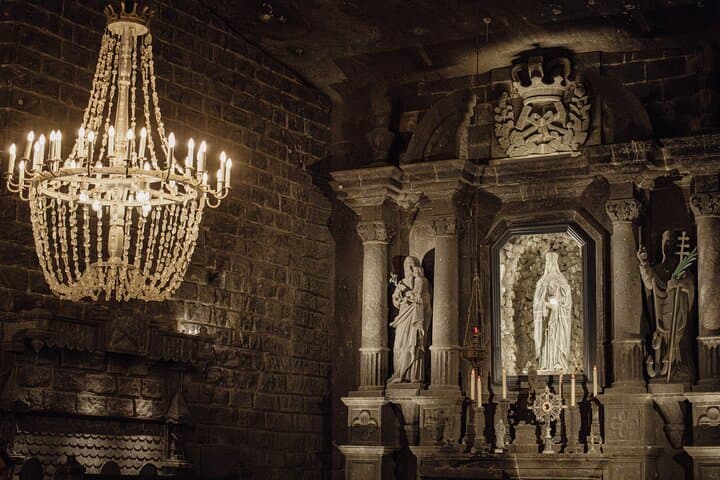
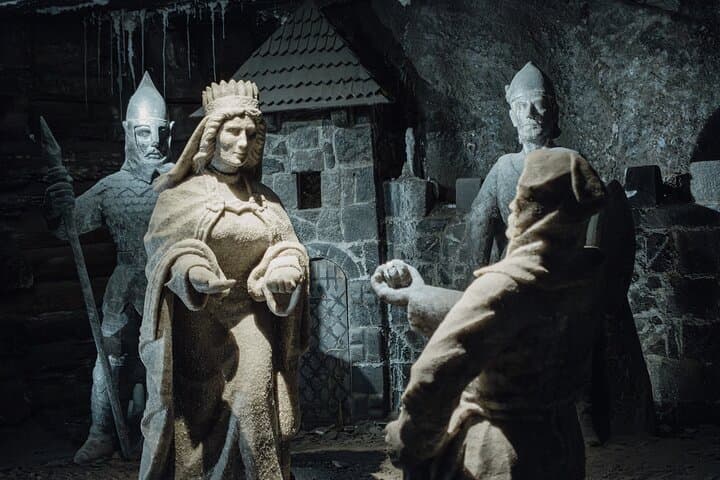
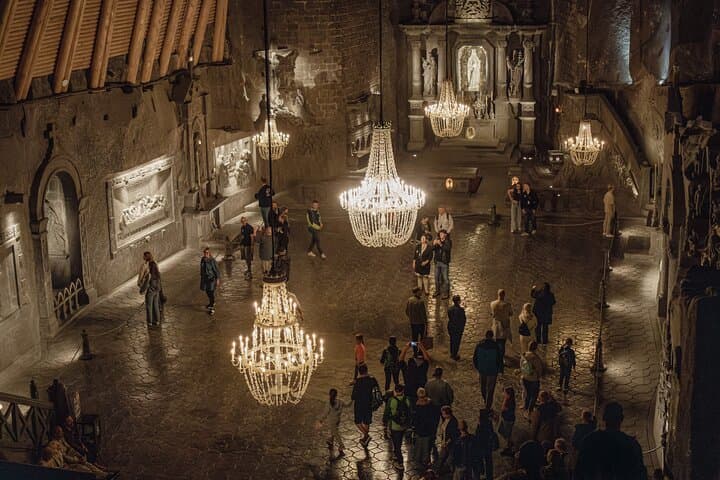
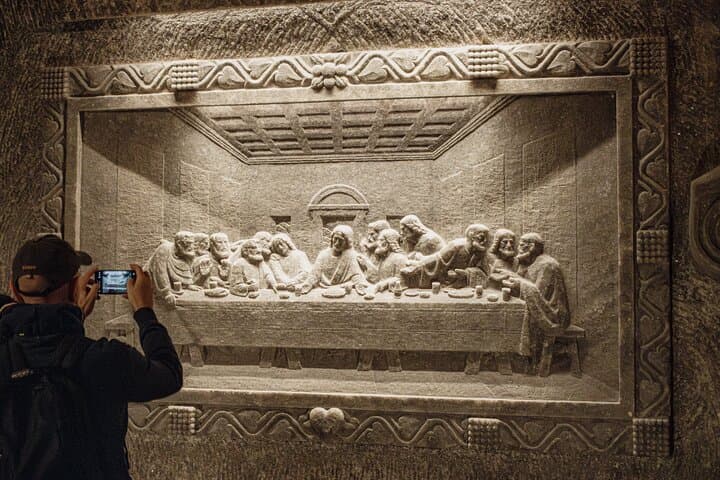
You step off the tram into an old market town and into air that subtly cools as you approach a low stone portal. The staircase begins almost immediately — hundreds of carved steps that lead down into a cathedral of salt where chandeliers glitter and artists once carved chapels from the same mineral that once paid kings.
You step off the tram into an old market town and into air that subtly cools as you approach a low stone portal. The staircase begins almost immediately — hundreds of carved steps that lead down into a cathedral of salt where chandeliers glitter and artists once carved chapels from the same mineral that once paid kings.
Wieliczka is a medieval industrial site morphed into an underground cultural landscape. Salt was extracted here from the Middle Ages until the 20th century; its subterranean corridors, chapels (most notably St. Kinga’s Chapel) and sculpted figures earned the mine UNESCO World Heritage status in 1978. Geologically the chambers sit within an evaporite deposit left by an ancient inland sea, and over centuries miners hollowed galleries that now reveal both raw geology and human craft.
The tour drops you roughly 135 meters below ground, with about 800 steps on the visitor route, moving through carved salt sculptures, mirror-still lakes and dimly lit vaulted rooms. The temperature runs cool (around 14°C/57°F), so layers are useful. Guides explain mining techniques, devotional life underground and the site’s role in Polish culture.
Practically: expect 4–5 hours total for round-trip options and transport choices; wear solid shoes, carry a small water bottle, and reserve skip-the-line tickets in advance to avoid long surface queues. Photography is permitted in many areas but follow the guide — some chapels are fragile. This is a sensory, human-scale encounter with industrial history rather than an adrenaline expedition, and it rewards steady footsteps and curiosity.