THE ADVENTURE COLLECTIVE® · Independent discovery and booking for outdoor travel

Descend into Poland’s salt-carved underworld on a guided tour from Krakow. Explore the Chapel of St. Kinga, subterranean lakes and centuries of mining history on a 3.5 km tourist route with round-trip transport.
Descend into Poland’s salt-carved underworld on a guided tour from Krakow. Explore the Chapel of St. Kinga, subterranean lakes and centuries of mining history on a 3.5 km tourist route with round-trip transport.
A cool draft meets you before you descend: the mine breathes at a steady 14°C and the stone-sweet scent of salt clings to the air as visitors step off the coach and begin the long staircase into Wieliczka. The route slips beneath the town of Wieliczka, where carved salt walls and dim-lit chambers open into vaulted chapels, subterranean lakes and miner tools arranged like museum still-life.
Verified experiences and guided adventures in the surrounding area.
Operated by Hello Cracow · Wieliczka, Lesser Poland Voivodeship
A cool draft meets you before you descend: the mine breathes at a steady 14°C and the stone-sweet scent of salt clings to the air as visitors step off the coach and begin the long staircase into Wieliczka. The route slips beneath the town of Wieliczka, where carved salt walls and dim-lit chambers open into vaulted chapels, subterranean lakes and miner tools arranged like museum still-life.
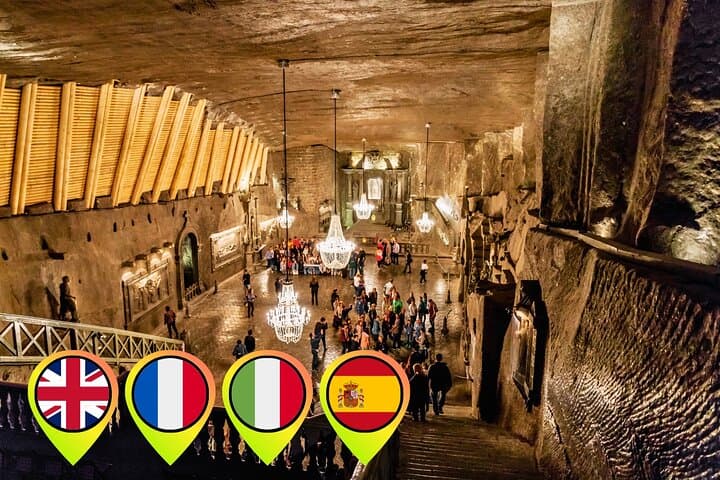
Carved when medieval miners followed a glittering seam, the mine stretches along a 3.5 km tourist route between 64 and 135 meters below ground. The highlight is the Chapel of St. Kinga — an ornate chamber hewn entirely from salt, complete with chandeliers and altarpieces sculpted by miners over centuries. Geology here is straightforward: halite layers created by evaporated ancient seas, later mined into galleries that reveal both human craft and sedimentary bedding planes.
Culturally, the site is part industrial heritage and part sacred place; it’s been a working mine since at least the 13th century and is protected as a UNESCO World Heritage Site. Local guides licensed by the museum connect technical details with miners’ stories, explaining ventilation, brine management and how salt shaped regional trade.
Practical notes: expect roughly 800 steps (about 380 at the drop-in), steady footing on carved stone, and a consistent cool temperature — dress in layers and wear grippy shoes. Tours include entry, an English-speaking guide and, on the booked option, round-trip transport from Krakow; total time listed is about 4 hours including travel. Photography is generally allowed but follow your guide’s directions in sacred chambers and restricted areas.
moderate.
4 hours.
Moderate fitness—able to manage sustained stair descent/ascent and several kilometers of walking on stone surfaces.
The listed tour includes round-trip transport by A/C vehicle from Krakow unless you select an 'on the spot' option without transfer.
The full route involves roughly 800 steps (about 380 at the initial descent). It’s moderate exertion—suitable for those in average fitness but not for people with serious mobility or heart conditions.
Temperature is steady at about 14°C; wear layers and bring a light jacket or fleece to stay comfortable.
Photography is generally permitted on the tourist route, but obey your licensed guide—some chapels or events may restrict flash or tripods.
Wieliczka operated as a salt mine from medieval times (documented from the 13th century) and grew into a major regional economic center; its preserved chambers reflect centuries of miner craftsmanship.
The museum manages visitor flow and conservation measures—stay on marked paths and avoid touching salt carvings to reduce wear; proceeds support preservation and controlled access.
Hello Cracow operates guided outdoor trips and adventures with an emphasis on safety, stewardship, and memorable experiences.
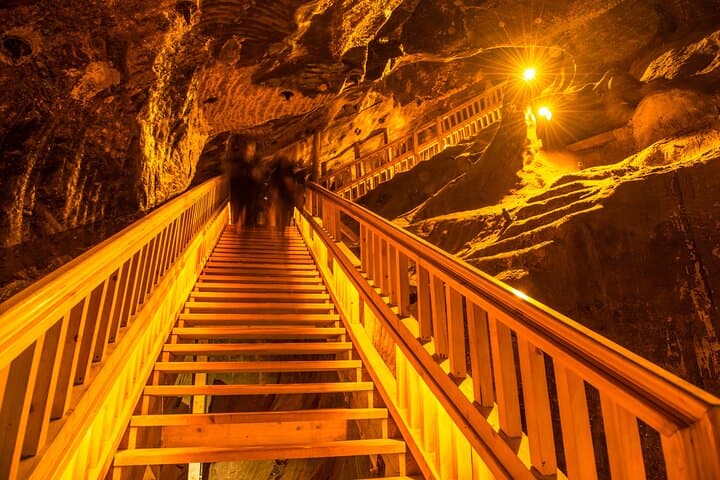
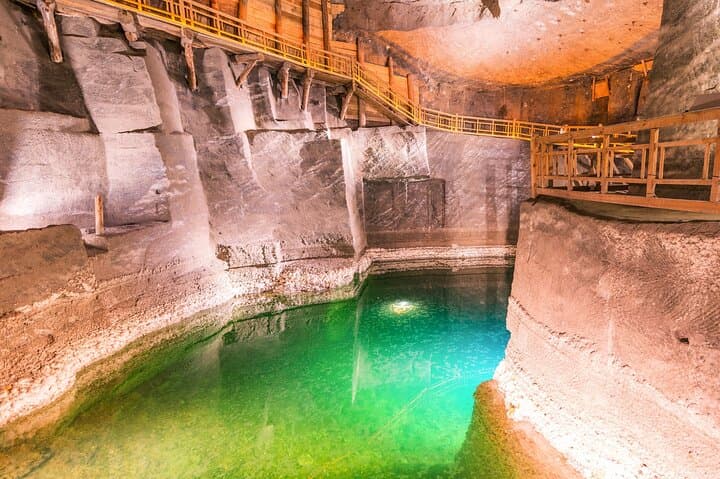

A cool draft meets you before you descend: the mine breathes at a steady 14°C and the stone-sweet scent of salt clings to the air as visitors step off the coach and begin the long staircase into Wieliczka. The route slips beneath the town of Wieliczka, where carved salt walls and dim-lit chambers open into vaulted chapels, subterranean lakes and miner tools arranged like museum still-life.
A cool draft meets you before you descend: the mine breathes at a steady 14°C and the stone-sweet scent of salt clings to the air as visitors step off the coach and begin the long staircase into Wieliczka. The route slips beneath the town of Wieliczka, where carved salt walls and dim-lit chambers open into vaulted chapels, subterranean lakes and miner tools arranged like museum still-life.
Carved when medieval miners followed a glittering seam, the mine stretches along a 3.5 km tourist route between 64 and 135 meters below ground. The highlight is the Chapel of St. Kinga — an ornate chamber hewn entirely from salt, complete with chandeliers and altarpieces sculpted by miners over centuries. Geology here is straightforward: halite layers created by evaporated ancient seas, later mined into galleries that reveal both human craft and sedimentary bedding planes.
Culturally, the site is part industrial heritage and part sacred place; it’s been a working mine since at least the 13th century and is protected as a UNESCO World Heritage Site. Local guides licensed by the museum connect technical details with miners’ stories, explaining ventilation, brine management and how salt shaped regional trade.
Practical notes: expect roughly 800 steps (about 380 at the drop-in), steady footing on carved stone, and a consistent cool temperature — dress in layers and wear grippy shoes. Tours include entry, an English-speaking guide and, on the booked option, round-trip transport from Krakow; total time listed is about 4 hours including travel. Photography is generally allowed but follow your guide’s directions in sacred chambers and restricted areas.