THE ADVENTURE COLLECTIVE® · Independent discovery and booking for outdoor travel

Descend into one of Europe’s oldest salt mines on a guided English tour from Kraków. This 3‑hour trip includes hotel pickup, entrance tickets and a route through carved chapels and salt sculptures.
Descend into one of Europe’s oldest salt mines on a guided English tour from Kraków. This 3‑hour trip includes hotel pickup, entrance tickets and a route through carved chapels and salt sculptures.
You step out of the minivan as the mine mouth cuts a cool shadow into the late-morning light. The air here is steady—14–16°C—and the salt walls seem to hold the echoes of centuries; miners' figures and chandeliers gleam in a soft, mineral light as a guide threads the group down carved stairs.
Verified experiences and guided adventures in the surrounding area.
Operated by Michal Krupa Polturist · Wieliczka, Lesser Poland Voivodeship
You step out of the minivan as the mine mouth cuts a cool shadow into the late-morning light. The air here is steady—14–16°C—and the salt walls seem to hold the echoes of centuries; miners' figures and chandeliers gleam in a soft, mineral light as a guide threads the group down carved stairs.
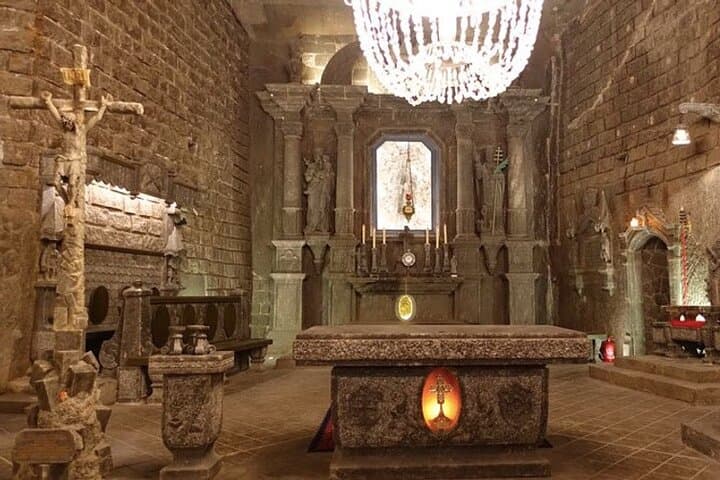
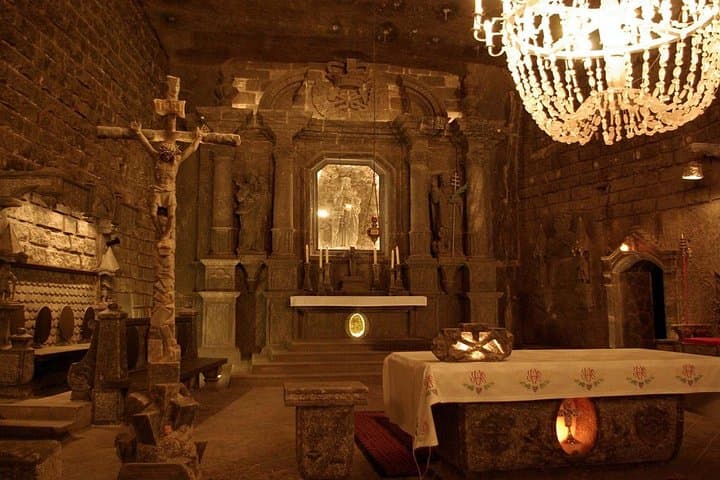
Wieliczka began producing salt in the 13th century and operated commercially into the 21st, shaping not only the local economy but the culture of the surrounding towns. Geologically, the mine is a halite labyrinth: layered salt deposits carved into chambers, chapels and sculptures that double as both art and structural support. The Chapel of St. Kinga is the standout, a vaulted cathedral hewn from salt with intricate altarpieces and chandeliers.
Culturally, the mine carries miners' traditions and religious iconography—Saint Kinga’s legend is part of the local identity—and Żupny Castle in Wieliczka town expands that story aboveground.
Practical guidance: the standard English tour runs about 2½–3 hours and groups are capped for a focused experience. Expect roughly 800 steps round-trip (about 350 down at the start), steady cool temperatures, and paved but sometimes uneven walkways. Wear closed-toe shoes with good grip, bring a light jacket, and plan for hotel pickup and drop-off from Kraków. Photography is generally permitted but follow signage in sacred chambers and avoid flash where requested. If you have mobility concerns, contact the operator—there’s no simple bypass for the stairwell on the main route. Take your time on the ascent; the mine rewards patience with quiet niches, salt-polished carvings and the peculiar stillness of an underground landscape that helped build a city.
moderate.
3–4 hours.
Suitable for people in average fitness; stair-climbing ability required and those with mobility limits should check with the operator.
Yes—the tour price includes museum entrance and the English guided tour; tickets are handled by the driver at pickup.
No—the standard tourist route includes many stairs and uneven sections; contact the operator for assistance or alternatives.
Children can take the tour but must be able to manage the stairs; strollers aren’t suitable on the main route.
Expect about 2½–3 hours underground and a 3–4 hour total trip with door-to-door shared minivan pickup from Kraków.
Wieliczka’s mine dates to the 13th century and produced table salt commercially until 2007, shaping regional trade and community life.
The mine’s microclimate and delicate salt carvings require controlled visitor numbers and strict ‘no-touch’ rules—stick to paths and follow your guide to protect the site.
Michal Krupa Polturist operates guided outdoor trips and adventures with an emphasis on safety, stewardship, and memorable experiences.


You step out of the minivan as the mine mouth cuts a cool shadow into the late-morning light. The air here is steady—14–16°C—and the salt walls seem to hold the echoes of centuries; miners' figures and chandeliers gleam in a soft, mineral light as a guide threads the group down carved stairs.
You step out of the minivan as the mine mouth cuts a cool shadow into the late-morning light. The air here is steady—14–16°C—and the salt walls seem to hold the echoes of centuries; miners' figures and chandeliers gleam in a soft, mineral light as a guide threads the group down carved stairs.
Wieliczka began producing salt in the 13th century and operated commercially into the 21st, shaping not only the local economy but the culture of the surrounding towns. Geologically, the mine is a halite labyrinth: layered salt deposits carved into chambers, chapels and sculptures that double as both art and structural support. The Chapel of St. Kinga is the standout, a vaulted cathedral hewn from salt with intricate altarpieces and chandeliers.
Culturally, the mine carries miners' traditions and religious iconography—Saint Kinga’s legend is part of the local identity—and Żupny Castle in Wieliczka town expands that story aboveground.
Practical guidance: the standard English tour runs about 2½–3 hours and groups are capped for a focused experience. Expect roughly 800 steps round-trip (about 350 down at the start), steady cool temperatures, and paved but sometimes uneven walkways. Wear closed-toe shoes with good grip, bring a light jacket, and plan for hotel pickup and drop-off from Kraków. Photography is generally permitted but follow signage in sacred chambers and avoid flash where requested. If you have mobility concerns, contact the operator—there’s no simple bypass for the stairwell on the main route. Take your time on the ascent; the mine rewards patience with quiet niches, salt-polished carvings and the peculiar stillness of an underground landscape that helped build a city.