THE ADVENTURE COLLECTIVE® · Independent discovery and booking for outdoor travel

Step into Oz at the Gershwin Theatre: Wicked rethinks the witches' origin story with soaring music, aerial effects and a production that turns Broadway mechanics into magic. Read on for what to expect and how to plan your visit.
Step into Oz at the Gershwin Theatre: Wicked rethinks the witches' origin story with soaring music, aerial effects and a production that turns Broadway mechanics into magic. Read on for what to expect and how to plan your visit.
A hush falls over the Gershwin Theatre as the house lights dim and the first notes of Stephen Schwartz’s score pull the audience forward like a current. Seats settle, voices drop, and the stage breathes to life — emerald lights, towering sets and actors who use every inch of the stage to redraw what you thought you knew about Oz.
Verified experiences and guided adventures in the surrounding area.
Operated by Broadway Inbound · New York, New York
A hush falls over the Gershwin Theatre as the house lights dim and the first notes of Stephen Schwartz’s score pull the audience forward like a current. Seats settle, voices drop, and the stage breathes to life — emerald lights, towering sets and actors who use every inch of the stage to redraw what you thought you knew about Oz.
Wicked premiered on Broadway in 2003 and has since become a cultural touchstone, reimagining L. Frank Baum’s universe through the friendship-turned-rivalry of two young witches. The Gershwin, one of Midtown Manhattan’s largest houses, frames the spectacle with wide sightlines and rigging that supports dramatic flying effects and complex scenery changes.
Geology and infrastructure play a quiet role here: Manhattan’s schist bedrock supports the dense skyscraper grid around Times Square, where subway lines funnel theatergoers into the neighborhood. The theater district’s history stretches from vaudeville houses to modern mega-productions, and Wicked sits in that lineage as modern pageant and backstage craft.
For travelers, the show is predictable in length (about 165 minutes) but variable in delivery: best-available seating is assigned by the theater and electronic tickets are common. Practicalities matter — arrive early, keep phones off, and bring photo ID if you’re 18 or older. Families should note age restrictions and late seating policies; accessibility options are available but may require advance notice.
The experience balances spectacle with storytelling: soaring choreography, dense technical work, and a score that lingers on the subway ride home. It’s theater as engineered wonder—emotional, exacting, and built to be seen.
easy.
2–3 hours.
Suitable for all fitness levels; requires only the ability to sit for the run time and manage standard theater stairs.
The run time is approximately 165 minutes, typically with one intermission.
Yes—URL/mobile tickets are accepted; have the unique barcode ready on your device at entry.
Most productions recommend ages 8+ and some theaters do not admit children under 5; check the specific show policy before booking.
The Gershwin Theatre and many Broadway houses offer wheelchair-accessible seating and companion seats; request these in advance through customer service.
Wicked opened on Broadway in 2003 at the Gershwin Theatre and reshaped modern musical theater with its technical ambition and pop-influenced score.
Broadway theaters increasingly adopt energy-efficient lighting and recycling programs; buying tickets through official channels helps curb counterfeit circulation and associated waste.
Broadway Inbound operates guided outdoor trips and adventures with an emphasis on safety, stewardship, and memorable experiences.
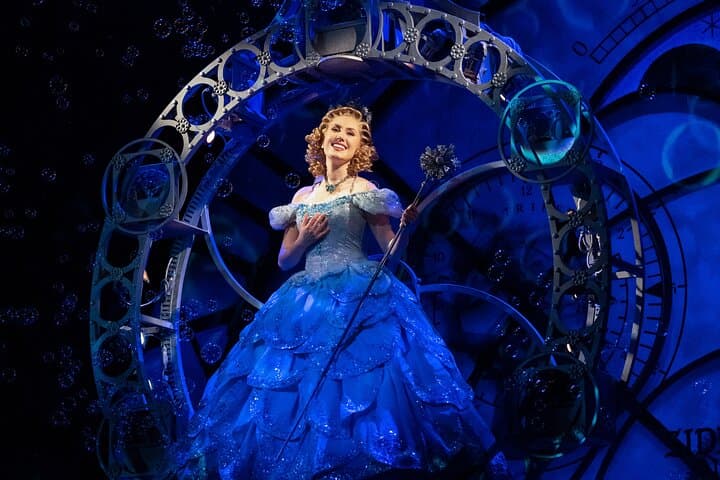
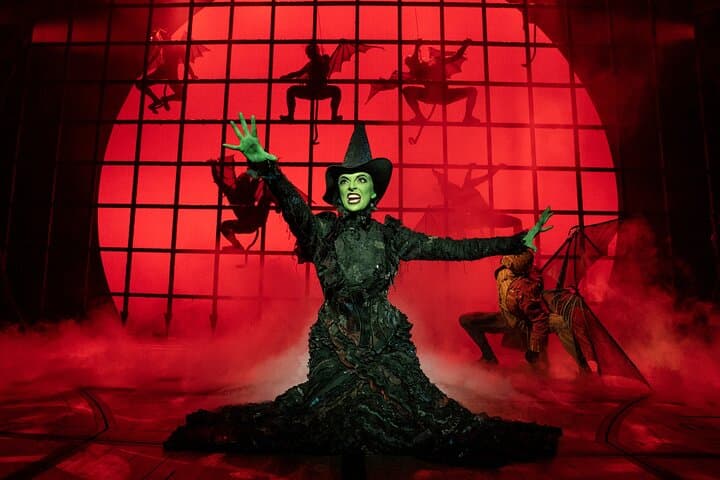
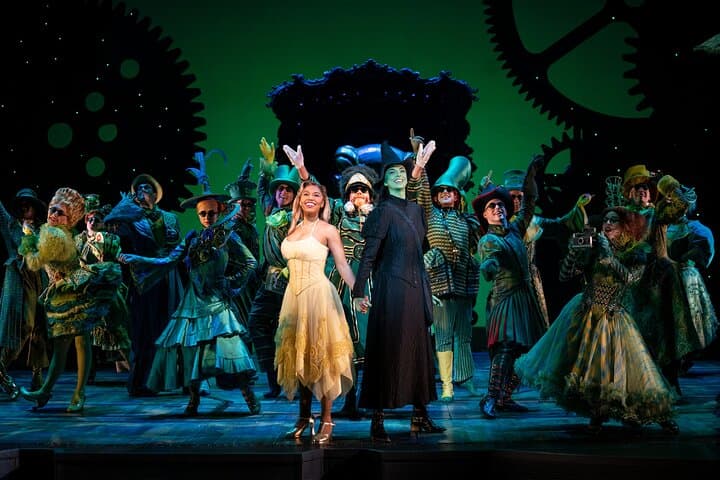
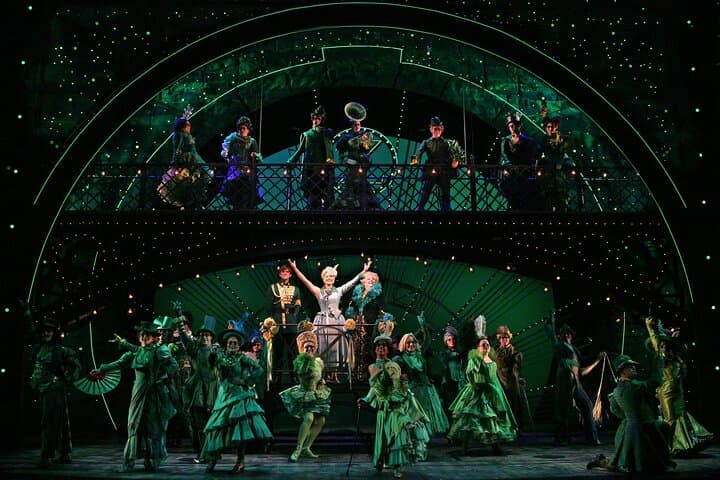
A hush falls over the Gershwin Theatre as the house lights dim and the first notes of Stephen Schwartz’s score pull the audience forward like a current. Seats settle, voices drop, and the stage breathes to life — emerald lights, towering sets and actors who use every inch of the stage to redraw what you thought you knew about Oz.
A hush falls over the Gershwin Theatre as the house lights dim and the first notes of Stephen Schwartz’s score pull the audience forward like a current. Seats settle, voices drop, and the stage breathes to life — emerald lights, towering sets and actors who use every inch of the stage to redraw what you thought you knew about Oz.
Wicked premiered on Broadway in 2003 and has since become a cultural touchstone, reimagining L. Frank Baum’s universe through the friendship-turned-rivalry of two young witches. The Gershwin, one of Midtown Manhattan’s largest houses, frames the spectacle with wide sightlines and rigging that supports dramatic flying effects and complex scenery changes.
Geology and infrastructure play a quiet role here: Manhattan’s schist bedrock supports the dense skyscraper grid around Times Square, where subway lines funnel theatergoers into the neighborhood. The theater district’s history stretches from vaudeville houses to modern mega-productions, and Wicked sits in that lineage as modern pageant and backstage craft.
For travelers, the show is predictable in length (about 165 minutes) but variable in delivery: best-available seating is assigned by the theater and electronic tickets are common. Practicalities matter — arrive early, keep phones off, and bring photo ID if you’re 18 or older. Families should note age restrictions and late seating policies; accessibility options are available but may require advance notice.
The experience balances spectacle with storytelling: soaring choreography, dense technical work, and a score that lingers on the subway ride home. It’s theater as engineered wonder—emotional, exacting, and built to be seen.