THE ADVENTURE COLLECTIVE® · Independent discovery and booking for outdoor travel

An interactive two-hour investigation through Père Lachaise that turns a cemetery visit into a puzzle: follow clues, read monuments and solve the mystery of Victor’s death while learning local history.
An interactive two-hour investigation through Père Lachaise that turns a cemetery visit into a puzzle: follow clues, read monuments and solve the mystery of Victor’s death while learning local history.
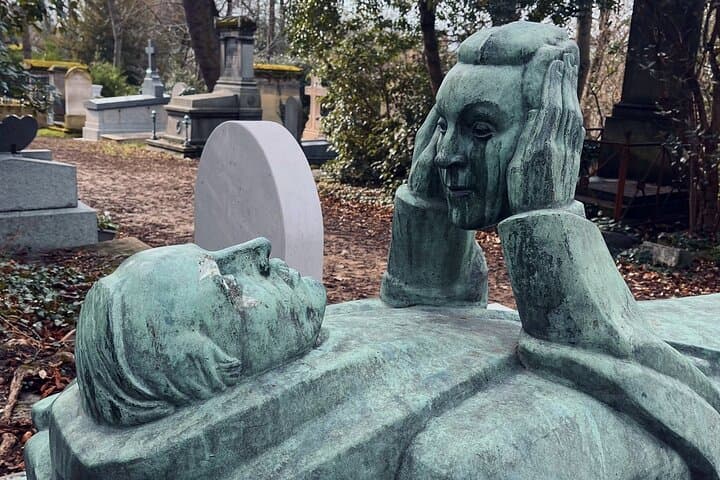
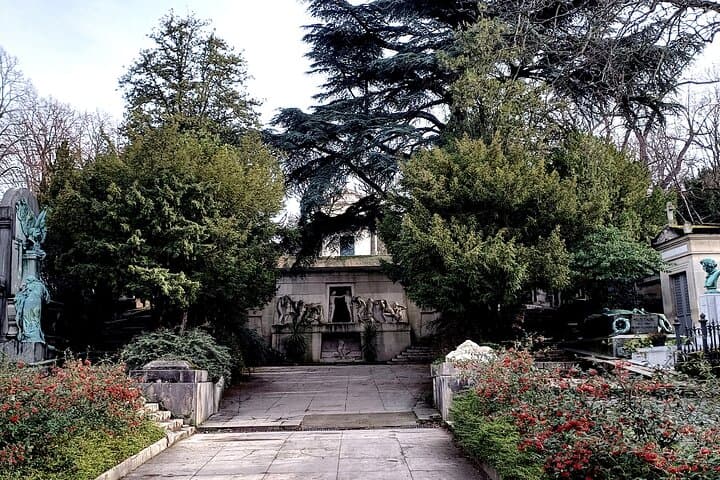
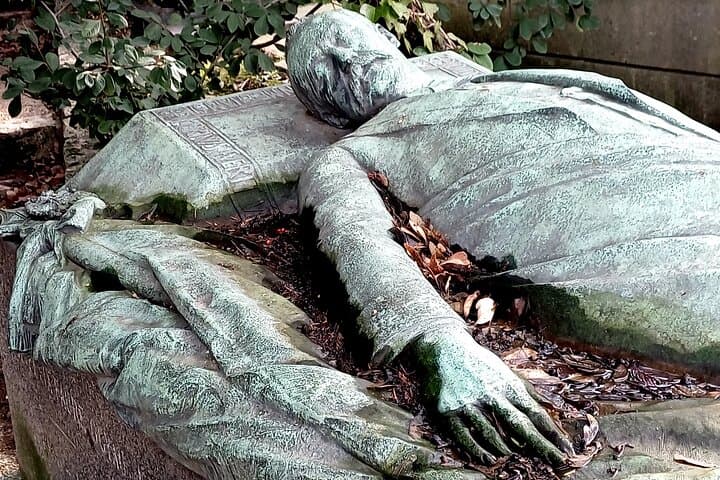
You step through an iron gate and the city noise thins to a distant hum; avenues of plane trees funnel you past carved angels and moss-dark stone as a map flutters in your hand. This is Père Lachaise seen sideways — not a passive stroll among famous graves but a plotted investigation that asks you to read inscriptions, follow sightlines and piece together clues to solve Victor’s murder.
Verified experiences and guided adventures in the surrounding area.
Operated by Tous Azimut · Paris, Île-de-France
You step through an iron gate and the city noise thins to a distant hum; avenues of plane trees funnel you past carved angels and moss-dark stone as a map flutters in your hand. This is Père Lachaise seen sideways — not a passive stroll among famous graves but a plotted investigation that asks you to read inscriptions, follow sightlines and piece together clues to solve Victor’s murder.
Founded in 1804 and named for the Jesuit confessor François de la Chaise, Père Lachaise sits on the eastern rise of Paris’s 20th arrondissement. The ground is mostly compacted earth and limestone fragments; paths climb gentle slopes and open onto terraces with city views. Culture crowds the stones here: poets, musicians and political martyrs share space with quiet family plots and the Mur des Fédérés, a raw historical marker from the 1871 Commune.
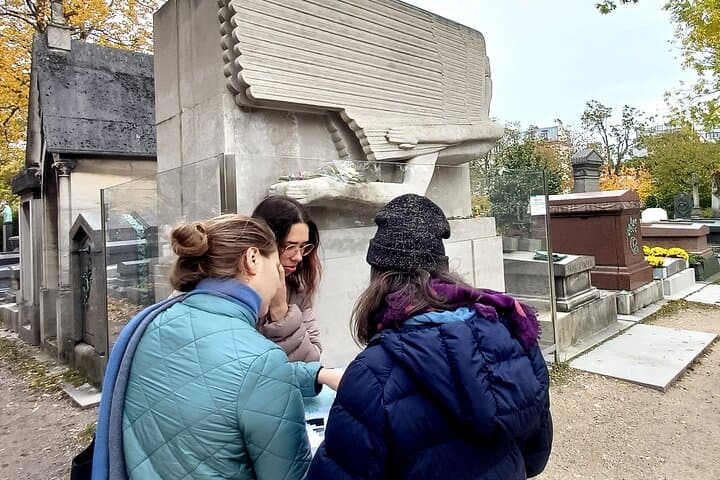
Expect close observation rather than endurance: the route winds between tight alleys of tombs, columbaria and sculpted ornaments. The operator supplies a themed map and instruction sheets; you’ll follow visual riddles, decode dates and orient yourself by monuments rather than GPS.
Practical guide: allow two hours, wear sturdy walking shoes for uneven paving, and carry water and a light jacket for changing weather. The experience is wheelchair accessible but can be crowded near iconic graves — go early to avoid queues. Respect signage, stay on paths and keep voices low; the cemetery is an active memorial and a fragile urban ecosystem. Bring a charged phone for photos and note-taking, but leave nothing behind. Victor is waiting.
easy.
2 hours.
Suitable for most fitness levels; the route involves walking and some short climbs on uneven surfaces.
Plan for about two hours — the operator lists a fixed 120-minute duration, though pace varies with crowds and how deeply you engage with clues.
Yes — the listing notes wheelchair-accessible surfaces and transportation; however, some older grave areas may be tighter or have low steps.
The activity provides instruction sheets and a map; staff typically offer hints rather than full solutions so groups can continue the game.
Famous memorials like Jim Morrison or Oscar Wilde are on the route; expect queues and plan to arrive early to see them without delaying your investigation.
Père Lachaise opened in 1804 and became Paris’s premier cemetery as the city expanded; it contains graves of major cultural and political figures across the 19th and 20th centuries.
Visitors are asked to stay on paths and avoid touching sculptures; the cemetery’s caretakers manage historic stonework and plantings to protect burial sites and native urban biodiversity.
Tous Azimut operates guided outdoor trips and adventures with an emphasis on safety, stewardship, and memorable experiences.
You step through an iron gate and the city noise thins to a distant hum; avenues of plane trees funnel you past carved angels and moss-dark stone as a map flutters in your hand. This is Père Lachaise seen sideways — not a passive stroll among famous graves but a plotted investigation that asks you to read inscriptions, follow sightlines and piece together clues to solve Victor’s murder.
You step through an iron gate and the city noise thins to a distant hum; avenues of plane trees funnel you past carved angels and moss-dark stone as a map flutters in your hand. This is Père Lachaise seen sideways — not a passive stroll among famous graves but a plotted investigation that asks you to read inscriptions, follow sightlines and piece together clues to solve Victor’s murder.
Founded in 1804 and named for the Jesuit confessor François de la Chaise, Père Lachaise sits on the eastern rise of Paris’s 20th arrondissement. The ground is mostly compacted earth and limestone fragments; paths climb gentle slopes and open onto terraces with city views. Culture crowds the stones here: poets, musicians and political martyrs share space with quiet family plots and the Mur des Fédérés, a raw historical marker from the 1871 Commune.
Expect close observation rather than endurance: the route winds between tight alleys of tombs, columbaria and sculpted ornaments. The operator supplies a themed map and instruction sheets; you’ll follow visual riddles, decode dates and orient yourself by monuments rather than GPS.
Practical guide: allow two hours, wear sturdy walking shoes for uneven paving, and carry water and a light jacket for changing weather. The experience is wheelchair accessible but can be crowded near iconic graves — go early to avoid queues. Respect signage, stay on paths and keep voices low; the cemetery is an active memorial and a fragile urban ecosystem. Bring a charged phone for photos and note-taking, but leave nothing behind. Victor is waiting.