THE ADVENTURE COLLECTIVE® · Independent discovery and booking for outdoor travel

Charge the Río Naranjo from Quepos on a technical Class III+ run that mixes two hours of intense whitewater with jungle-lined breaks and local hospitality. This guided expedition combines a thrilling paddle with practical safety, snacks, and transport.
Charge the Río Naranjo from Quepos on a technical Class III+ run that mixes two hours of intense whitewater with jungle-lined breaks and local hospitality. This guided expedition combines a thrilling paddle with practical safety, snacks, and transport.
The raft surges, a wall of green riverbanks leaning in as the Naranjo dares you forward. Spray hits your face; the guide’s voice cuts through the rush and the raft rides a lip, then drops. For two intense hours you’ll read the river—lines, holes, and eddies—before settling into slower water and a riverside break with fresh fruit.
Verified experiences and guided adventures in the surrounding area.
Operated by Extreme M&R · Quepos, Puntarenas
The raft surges, a wall of green riverbanks leaning in as the Naranjo dares you forward. Spray hits your face; the guide’s voice cuts through the rush and the raft rides a lip, then drops. For two intense hours you’ll read the river—lines, holes, and eddies—before settling into slower water and a riverside break with fresh fruit.
Geology here is active: the Naranjo has carved channels through volcanic soils and steep gullies on the Central Pacific slope, producing fast, technical rapids in the rainy months. The route runs through secondary rainforest used historically for small-scale agriculture; local crews come from the Quepos and Manuel Antonio region where fishing and tourism shape the culture.
This is a technical, team-driven descent. The operator runs roughly 10 kilometers of whitewater—Class III and occasional Class IV—within a longer 17-kilometer stretch of river, about two hours of paddling embedded in a roughly 4.5-hour excursion including transfers and briefing. Expect an air-conditioned pickup from Quepos, a safety orientation, life vests and helmets provided, and a mid-run snack stop.
Practical notes: the river is at its most challenging May–December (rainy season); dry months mellow some rapids. Good swimming ability, basic paddling technique, and a moderate level of fitness are required. Bring secure footwear, reef-safe sunscreen, a small waterproof bag for essentials, and a sense of teamwork—rafts punch through the river’s moods together. Follow your guides’ commands; the river rewards attention and punishes hesitation.
challenging.
4–5 hours.
Moderate to fit—able to paddle actively for 2 hours and handle short swims; no serious injuries or cardiovascular issues.
The guided whitewater section covers about 10 kilometers of Class III–IV rapids that take roughly two hours; the full excursion, including transport and briefing, lasts about 4–5 hours.
No formal certification is required, but basic paddling skill, swimming ability, and a moderate fitness level are recommended for safety and enjoyment.
Operators supply U.S. Coast Guard–style life vests, helmets, paddles, and trained guides; listen closely to the pre-run safety briefing.
For big, technical rapids choose the rainy season (May–November); for milder water and easier lines pick the drier months (December–April).
The Naranjo flows from coastal highlands shaped by volcanic activity; local settlements historically combined small-scale farming with river crossings and riverine transport.
Operators emphasize leave-no-trace practices and use local guides to support community livelihoods; avoid single-use plastics and follow guide instructions to minimize bank erosion.
Extreme M&R operates guided outdoor trips and adventures with an emphasis on safety, stewardship, and memorable experiences.
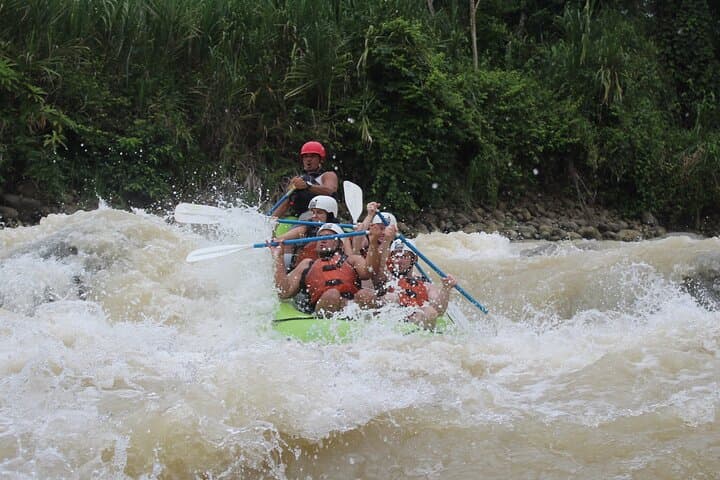
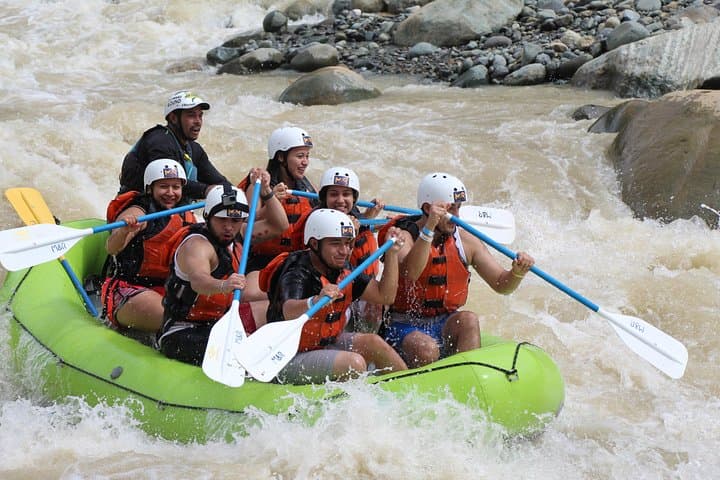
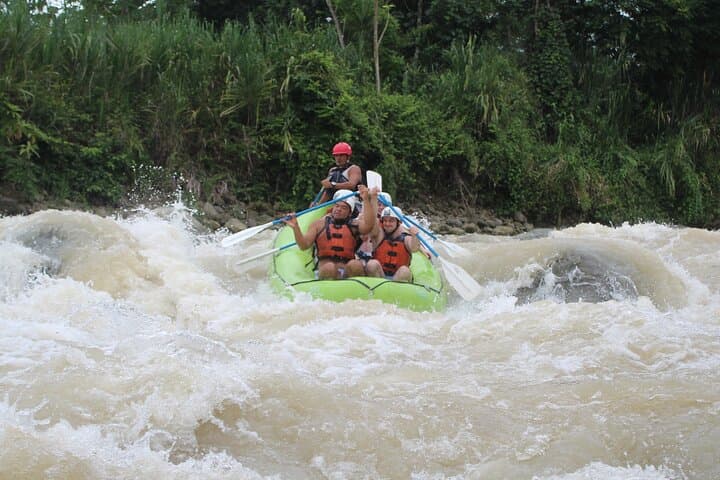
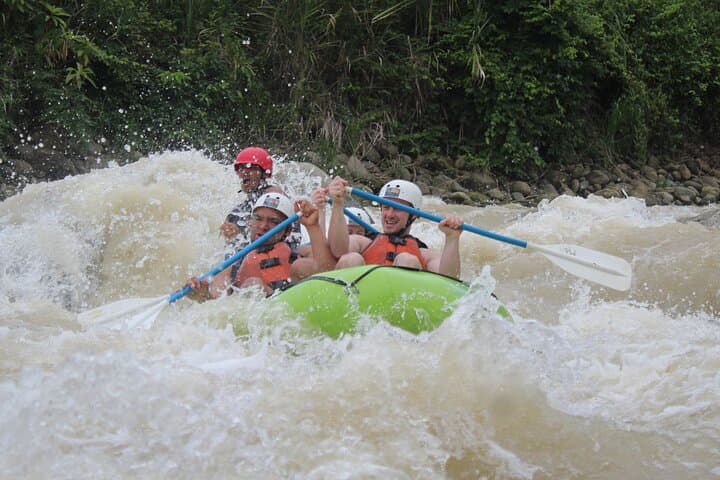
The raft surges, a wall of green riverbanks leaning in as the Naranjo dares you forward. Spray hits your face; the guide’s voice cuts through the rush and the raft rides a lip, then drops. For two intense hours you’ll read the river—lines, holes, and eddies—before settling into slower water and a riverside break with fresh fruit.
The raft surges, a wall of green riverbanks leaning in as the Naranjo dares you forward. Spray hits your face; the guide’s voice cuts through the rush and the raft rides a lip, then drops. For two intense hours you’ll read the river—lines, holes, and eddies—before settling into slower water and a riverside break with fresh fruit.
Geology here is active: the Naranjo has carved channels through volcanic soils and steep gullies on the Central Pacific slope, producing fast, technical rapids in the rainy months. The route runs through secondary rainforest used historically for small-scale agriculture; local crews come from the Quepos and Manuel Antonio region where fishing and tourism shape the culture.
This is a technical, team-driven descent. The operator runs roughly 10 kilometers of whitewater—Class III and occasional Class IV—within a longer 17-kilometer stretch of river, about two hours of paddling embedded in a roughly 4.5-hour excursion including transfers and briefing. Expect an air-conditioned pickup from Quepos, a safety orientation, life vests and helmets provided, and a mid-run snack stop.
Practical notes: the river is at its most challenging May–December (rainy season); dry months mellow some rapids. Good swimming ability, basic paddling technique, and a moderate level of fitness are required. Bring secure footwear, reef-safe sunscreen, a small waterproof bag for essentials, and a sense of teamwork—rafts punch through the river’s moods together. Follow your guides’ commands; the river rewards attention and punishes hesitation.