THE ADVENTURE COLLECTIVE® · Independent discovery and booking for outdoor travel

Lift off from Flametree and see Whitehaven Beach, Hill Inlet and 74 islands in a single 30-minute circuit. This short helicopter flight delivers dramatic aerial perspectives, useful local history and practical tips for a weather-dependent, weight-limited experience.
Lift off from Flametree and see Whitehaven Beach, Hill Inlet and 74 islands in a single 30-minute circuit. This short helicopter flight delivers dramatic aerial perspectives, useful local history and practical tips for a weather-dependent, weight-limited experience.
From the moment the helicopter lifts off near Flametree, the Whitsundays rearrange themselves beneath you: a scatter of islands, reefs and channels, white sand cutting clean lines into turquoise water. The pilot banks gently and Hill Inlet appears — a lace of shifting sands where currents push the ocean into complex, high-contrast patterns. In thirty minutes the route threads past Long Island, Hamilton and the broad sweep of Whitsunday Island, framing Whitehaven Beach’s silica-white curve from an angle only a few see.
Verified experiences and guided adventures in the surrounding area.
Operated by Airlie Beach Helicopters · Airlie Beach, Queensland
From the moment the helicopter lifts off near Flametree, the Whitsundays rearrange themselves beneath you: a scatter of islands, reefs and channels, white sand cutting clean lines into turquoise water. The pilot banks gently and Hill Inlet appears — a lace of shifting sands where currents push the ocean into complex, high-contrast patterns. In thirty minutes the route threads past Long Island, Hamilton and the broad sweep of Whitsunday Island, framing Whitehaven Beach’s silica-white curve from an angle only a few see.
The islands sit on a foundation of volcanic rock overlain by coral growth and sand laid down over millennia; the sea here is part of the southern edge of the Great Barrier Reef Marine Park. This is Ngaro sea country, and the islands hold both Aboriginal sites and a history of 18th–19th century charting and coastal trade. From the air you’ll glimpse reef flats, fringing reefs and sheltered bays where dugongs and turtles feed.
Practical notes: flights operate from Whitsunday Airport (Flametree) with strict weight limits — check limits before booking. Tours run year-round but are weather dependent; expect voice-comms and in-flight commentary and keep cameras ready. Wear sun protection and a light layer for the breeze at 500–1,000 feet. If bad weather cancels, operators typically offer refunds or rebookings; plan your day with extra time for pick-up and check-in. For photographers, the best clarity is often in the dryer winter months (May–September), but every season has its rewards — just be prepared for marine stingers in summer and variable visibility in the wet season.
easy.
30–90 minutes (30-minute flight; total operator time may be longer).
No special fitness required beyond being able to board a helicopter and follow safety briefings
The operator limits individual passenger weight to 130kg/286lb per seat and a total combined passenger weight of 250kg/551lb for safety and balance reasons; confirm details when booking.
This is a scenic flight that passes over and showcases sites from the air; it does not include landings on Whitehaven Beach or Hill Inlet.
Because flights are weather-dependent, operators typically offer a full refund or rebooking; check the tour’s cancellation policy and contact the provider for alternatives.
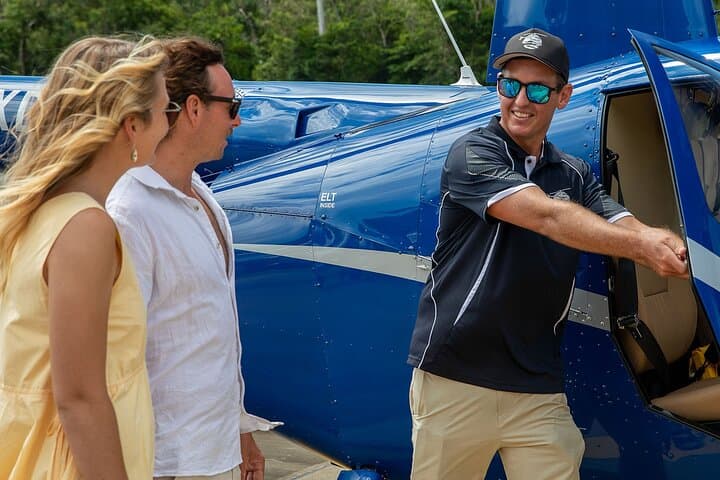
Pickup logistics vary — the meeting point is Whitsunday Airport (Flametree). Confirm transfer details at booking; some bookings include vehicle transfers, others require independent transport.
The Whitsunday Islands are part of Ngaro sea country; European charting and coastal settlement began in the 18th–19th centuries as maritime traffic increased.
Flights operate above the Great Barrier Reef Marine Park; visitors should respect zoning, never attempt to touch coral or wildlife, and follow operator guidance to minimize disturbance.
Airlie Beach Helicopters operates guided outdoor trips and adventures with an emphasis on safety, stewardship, and memorable experiences.
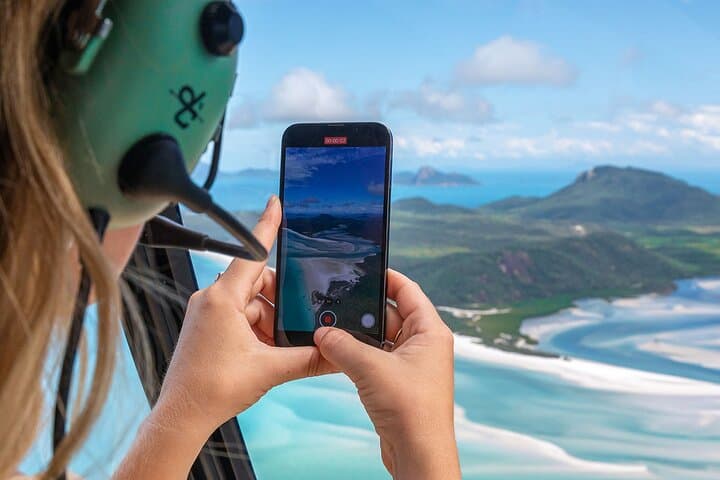
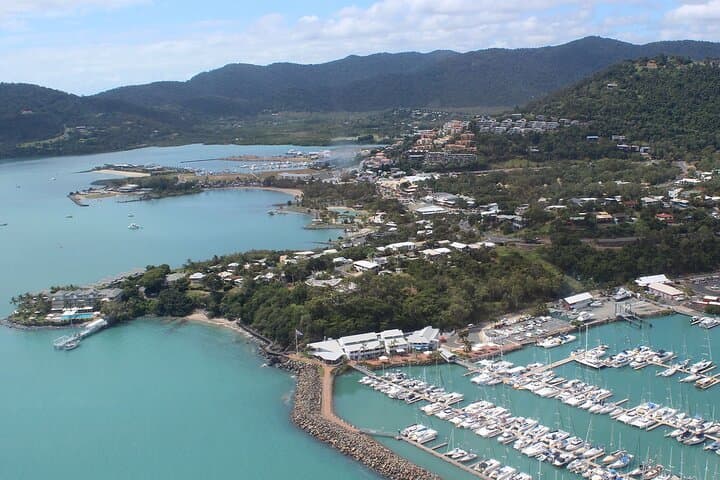
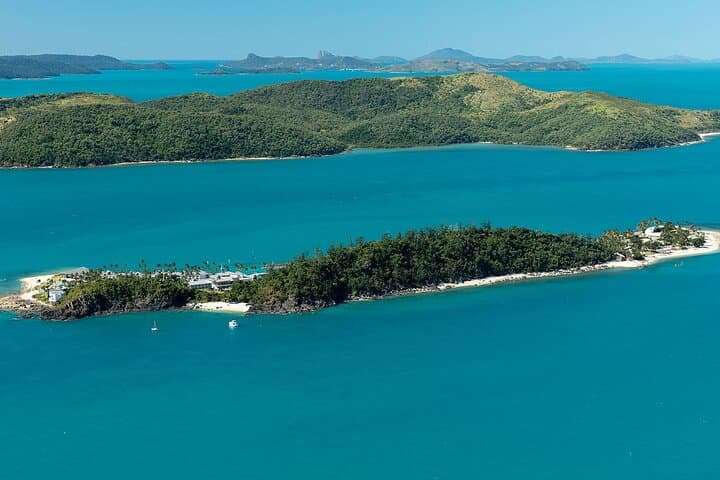
From the moment the helicopter lifts off near Flametree, the Whitsundays rearrange themselves beneath you: a scatter of islands, reefs and channels, white sand cutting clean lines into turquoise water. The pilot banks gently and Hill Inlet appears — a lace of shifting sands where currents push the ocean into complex, high-contrast patterns. In thirty minutes the route threads past Long Island, Hamilton and the broad sweep of Whitsunday Island, framing Whitehaven Beach’s silica-white curve from an angle only a few see.
From the moment the helicopter lifts off near Flametree, the Whitsundays rearrange themselves beneath you: a scatter of islands, reefs and channels, white sand cutting clean lines into turquoise water. The pilot banks gently and Hill Inlet appears — a lace of shifting sands where currents push the ocean into complex, high-contrast patterns. In thirty minutes the route threads past Long Island, Hamilton and the broad sweep of Whitsunday Island, framing Whitehaven Beach’s silica-white curve from an angle only a few see.
The islands sit on a foundation of volcanic rock overlain by coral growth and sand laid down over millennia; the sea here is part of the southern edge of the Great Barrier Reef Marine Park. This is Ngaro sea country, and the islands hold both Aboriginal sites and a history of 18th–19th century charting and coastal trade. From the air you’ll glimpse reef flats, fringing reefs and sheltered bays where dugongs and turtles feed.
Practical notes: flights operate from Whitsunday Airport (Flametree) with strict weight limits — check limits before booking. Tours run year-round but are weather dependent; expect voice-comms and in-flight commentary and keep cameras ready. Wear sun protection and a light layer for the breeze at 500–1,000 feet. If bad weather cancels, operators typically offer refunds or rebookings; plan your day with extra time for pick-up and check-in. For photographers, the best clarity is often in the dryer winter months (May–September), but every season has its rewards — just be prepared for marine stingers in summer and variable visibility in the wet season.