THE ADVENTURE COLLECTIVE® · Independent discovery and booking for outdoor travel

Walk the streets of Whitechapel with a fast-paced, costumed guide who traces the murders and social history of Victorian London. This 75-minute tour mixes grisly case detail with context about poverty, policing, and East End life—best for adults comfortable with explicit historical retellings.
Walk the streets of Whitechapel with a fast-paced, costumed guide who traces the murders and social history of Victorian London. This 75-minute tour mixes grisly case detail with context about poverty, policing, and East End life—best for adults comfortable with explicit historical retellings.
A damp evening presses against the gas lamps as a small group gathers behind the White Hart on Whitechapel High Street. The guide—costumed, direct, and unflinching—sets the pace, and the alleyways of East London pull the walker into a sharply sketched past: narrow courts, worn cobbles, the faint echo of Market voices. The city’s brick and mortar feel like pages of a ledger—records of poverty, workhouses, and the dense human traffic that fed a notorious chapter of Victorian crime.
Verified experiences and guided adventures in the surrounding area.
Operated by Jack the Ripper Walks · London, Greater London
A damp evening presses against the gas lamps as a small group gathers behind the White Hart on Whitechapel High Street. The guide—costumed, direct, and unflinching—sets the pace, and the alleyways of East London pull the walker into a sharply sketched past: narrow courts, worn cobbles, the faint echo of Market voices. The city’s brick and mortar feel like pages of a ledger—records of poverty, workhouses, and the dense human traffic that fed a notorious chapter of Victorian crime.
Whitechapel sits on reclaimed marshland where the old River Walbrook once threaded through clay and silt; buildings rose quickly in the 18th and 19th centuries to house laborers and immigrants. That social geography—overcrowded lodging houses, dim-lit alleys, and an overstretched Metropolitan Police—frames the Jack the Ripper story and informs the tour’s route. Guides balance grisly specifics with context about policing, public health reforms, and the East End’s evolving immigrant communities.
Practically, this is a brisk 75-minute guided walk across uneven pavements and short alleyways; expect frequent stops at plaques, pubs, and courtyards tied to victims’ last movements. The tour is not recommended for children under 14, or anyone sensitive to graphic detail. Dress for rain and cobbles—sturdy shoes, a warm layer, and a small light if you plan an evening slot. Meet on Whitechapel High Street near public transport: Aldgate East and Whitechapel stations are a short walk. Bring a charged phone for the digital ticket and consider arriving 10 minutes early to check accessibility needs. The tour rewards curiosity: listen closely to the social history between the sensational headlines—it’s where the real story lives.
moderate.
1–1.5 hours.
Light to moderate fitness for standing and walking on uneven urban terrain; short bursts of walking between stops.
The tour runs approximately 75 minutes at a brisk walking pace with several short stops at sites and pubs—expect to cover roughly 1–1.5 miles.
The operator lists wheelchair accessibility, but contact the provider before booking to confirm route adjustments and to arrange assistance if needed.
No under 14s are permitted due to graphic content; ages 14–16 must be accompanied by an adult.
The walk continues in light rain; bring waterproof layers. Full refunds require cancelling at least 24 hours prior per the provider’s policy.
Whitechapel’s rapid 19th-century growth—driven by industrial labor and immigration—created the dense living conditions that shaped policing and public health reforms tied to the Ripper cases.
Support local small-group guides and respect private property by staying on public footpaths; avoid intrusive photography in residential courtyards to minimize disruption.
Jack the Ripper Walks operates guided outdoor trips and adventures with an emphasis on safety, stewardship, and memorable experiences.

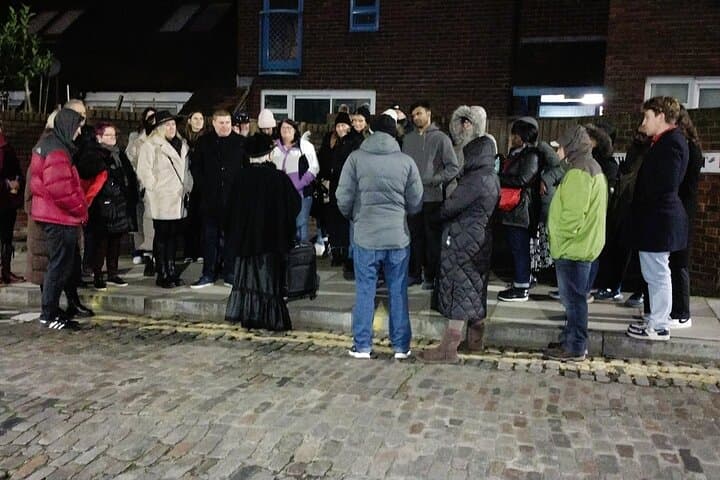
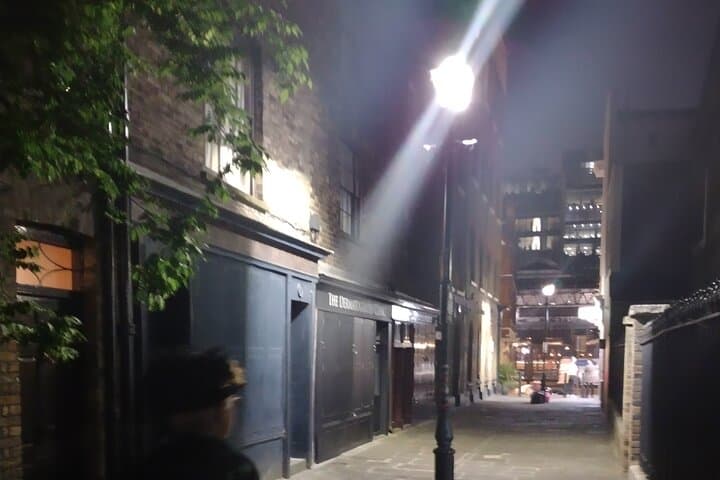
A damp evening presses against the gas lamps as a small group gathers behind the White Hart on Whitechapel High Street. The guide—costumed, direct, and unflinching—sets the pace, and the alleyways of East London pull the walker into a sharply sketched past: narrow courts, worn cobbles, the faint echo of Market voices. The city’s brick and mortar feel like pages of a ledger—records of poverty, workhouses, and the dense human traffic that fed a notorious chapter of Victorian crime.
A damp evening presses against the gas lamps as a small group gathers behind the White Hart on Whitechapel High Street. The guide—costumed, direct, and unflinching—sets the pace, and the alleyways of East London pull the walker into a sharply sketched past: narrow courts, worn cobbles, the faint echo of Market voices. The city’s brick and mortar feel like pages of a ledger—records of poverty, workhouses, and the dense human traffic that fed a notorious chapter of Victorian crime.
Whitechapel sits on reclaimed marshland where the old River Walbrook once threaded through clay and silt; buildings rose quickly in the 18th and 19th centuries to house laborers and immigrants. That social geography—overcrowded lodging houses, dim-lit alleys, and an overstretched Metropolitan Police—frames the Jack the Ripper story and informs the tour’s route. Guides balance grisly specifics with context about policing, public health reforms, and the East End’s evolving immigrant communities.
Practically, this is a brisk 75-minute guided walk across uneven pavements and short alleyways; expect frequent stops at plaques, pubs, and courtyards tied to victims’ last movements. The tour is not recommended for children under 14, or anyone sensitive to graphic detail. Dress for rain and cobbles—sturdy shoes, a warm layer, and a small light if you plan an evening slot. Meet on Whitechapel High Street near public transport: Aldgate East and Whitechapel stations are a short walk. Bring a charged phone for the digital ticket and consider arriving 10 minutes early to check accessibility needs. The tour rewards curiosity: listen closely to the social history between the sensational headlines—it’s where the real story lives.