THE ADVENTURE COLLECTIVE® · Independent discovery and booking for outdoor travel

Charge into glacial-fed rapids carved from Mt. Adams lava flows on a full-day rafting trip down the White Salmon River. Expect Class III whitewater, a riverside lunch, a challenging portage, and panoramic canyon geology.
Charge into glacial-fed rapids carved from Mt. Adams lava flows on a full-day rafting trip down the White Salmon River. Expect Class III whitewater, a riverside lunch, a challenging portage, and panoramic canyon geology.
The raft slips into cold glacial melt, and the river immediately takes charge — churning through basalt walls carved from Mt. Adams’ lava flows and the collapsed tubes that feed the White Salmon. Spray hits your face, the guide calls commands, and the canyon narrows into a staccato of Class III drops that push you to paddle and trust the boat.
Verified experiences and guided adventures in the surrounding area.
Operated by PDX Rafting · White Salmon, Washington
The raft slips into cold glacial melt, and the river immediately takes charge — churning through basalt walls carved from Mt. Adams’ lava flows and the collapsed tubes that feed the White Salmon. Spray hits your face, the guide calls commands, and the canyon narrows into a staccato of Class III drops that push you to paddle and trust the boat.
Geology here is loud: columnar basalt, former reservoir scars from a removed dam, and terraces that mark decades of volcanic runoff. The White Salmon is a designated National Wild and Scenic River, its course shaped by ice, lava, and human history. Local communities in Klickitat County and nearby White Salmon and Hood River retain a river culture built on fishing, timber, and now adventure tourism; guides often share stories of the area’s Native American heritage and the mid-20th-century dam debates.
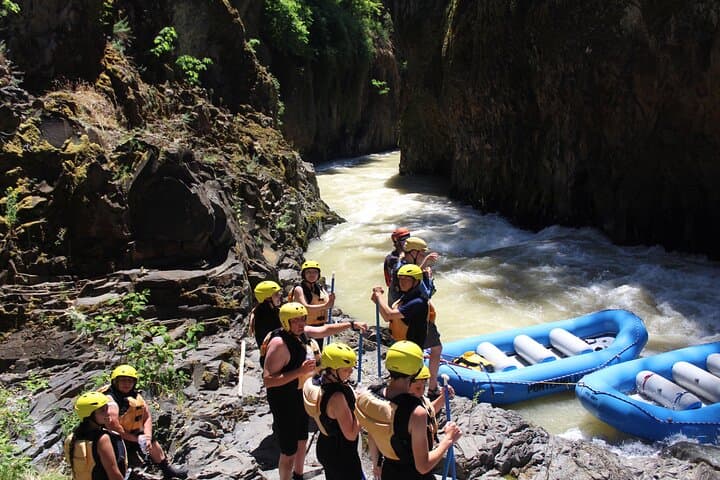
Practical reality follows the thrill. Expect two hours of continuous whitewater, a riverside burrito lunch, then another 90 minutes as you descend the Lower Canyon — a mix of technical rapids, a mandatory waterfall portage with handrails, and a mile of flatwater that can turn into a headwind challenge. Husum Falls is an optional Class IV feature when conditions allow.
Come prepared: wetsuits and splash tops are provided, but wear secure water footwear, leave valuables locked in your vehicle, and be ready to hike the portage if instructed. Minimum ages vary seasonally (typically 8–10 years). This trip suits fit paddlers comfortable with sustained exertion and following guide commands. Plan for about six hours on-site and a 90–120 minute drive from Portland. Bring hydration, a sense of teamwork, and a willingness to be led through a river that refuses to be passive.
moderate.
Approximately 6 hours.
Good cardiovascular fitness and upper-body stamina for paddling and handling sustained activity; participants must be fully mobile for portages.
Minimum age is typically 10 in spring months and 8 from July–October; check with the operator for exact seasonal policies.
Yes — water is glacial melt; wetsuits and splash tops are provided year-round, and guides will add splash jackets when needed.
Most rapids are Class III; Husum Falls is an optional Class IV feature and is only run when river conditions and guide assessment deem it safe.
Meet at Northwestern Park (40 Northwestern Lake Rd, White Salmon, WA). It’s about a 90–120 minute drive from downtown Portland depending on traffic.
The White Salmon runs through lands shaped by Mt. Adams’ eruptions and later 20th-century water management; debates over dams and river restoration influenced the canyon’s modern recreation use.
This is a National Wild and Scenic River — respect riverbanks, pack out trash, and follow your guide’s instructions to minimize impact on sensitive riparian habitat.
PDX Rafting operates guided outdoor trips and adventures with an emphasis on safety, stewardship, and memorable experiences.
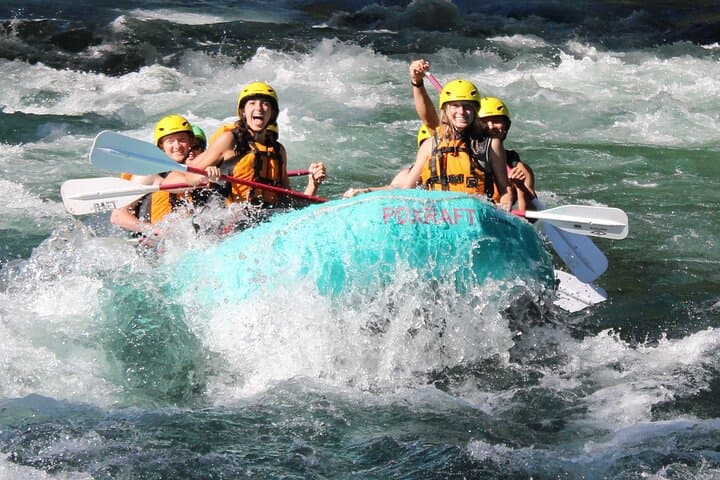
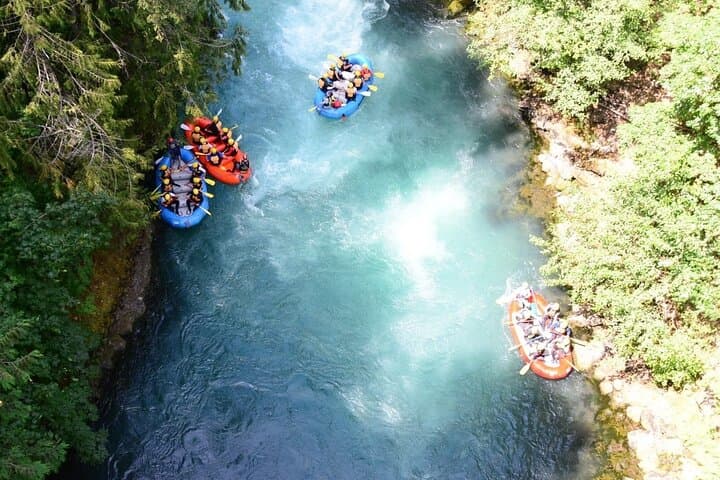
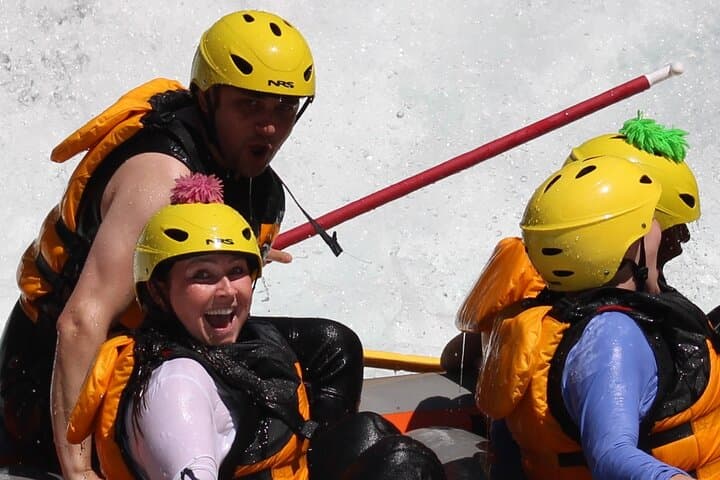
The raft slips into cold glacial melt, and the river immediately takes charge — churning through basalt walls carved from Mt. Adams’ lava flows and the collapsed tubes that feed the White Salmon. Spray hits your face, the guide calls commands, and the canyon narrows into a staccato of Class III drops that push you to paddle and trust the boat.
The raft slips into cold glacial melt, and the river immediately takes charge — churning through basalt walls carved from Mt. Adams’ lava flows and the collapsed tubes that feed the White Salmon. Spray hits your face, the guide calls commands, and the canyon narrows into a staccato of Class III drops that push you to paddle and trust the boat.
Geology here is loud: columnar basalt, former reservoir scars from a removed dam, and terraces that mark decades of volcanic runoff. The White Salmon is a designated National Wild and Scenic River, its course shaped by ice, lava, and human history. Local communities in Klickitat County and nearby White Salmon and Hood River retain a river culture built on fishing, timber, and now adventure tourism; guides often share stories of the area’s Native American heritage and the mid-20th-century dam debates.
Practical reality follows the thrill. Expect two hours of continuous whitewater, a riverside burrito lunch, then another 90 minutes as you descend the Lower Canyon — a mix of technical rapids, a mandatory waterfall portage with handrails, and a mile of flatwater that can turn into a headwind challenge. Husum Falls is an optional Class IV feature when conditions allow.
Come prepared: wetsuits and splash tops are provided, but wear secure water footwear, leave valuables locked in your vehicle, and be ready to hike the portage if instructed. Minimum ages vary seasonally (typically 8–10 years). This trip suits fit paddlers comfortable with sustained exertion and following guide commands. Plan for about six hours on-site and a 90–120 minute drive from Portland. Bring hydration, a sense of teamwork, and a willingness to be led through a river that refuses to be passive.