THE ADVENTURE COLLECTIVE® · Independent discovery and booking for outdoor travel

White Pocket is a secluded stretch of banded Navajo sandstone reachable only by 4x4. This full-day guided run delivers surreal domes and swirling layers, plus photo-friendly light without the Wave permit scramble.
White Pocket is a secluded stretch of banded Navajo sandstone reachable only by 4x4. This full-day guided run delivers surreal domes and swirling layers, plus photo-friendly light without the Wave permit scramble.
The morning light at White Pocket strips the landscape to angles and layers—pale domes and thin, banded sandstone that tilt and curl like frozen waves. The tour bumps you out of the highway onto a washboard two-track, then into a small basin where the rock formations hold light differently than the surrounding plain. You’ll step onto surfaces that feel almost sculpted by wind and water, where each fold and stripe invites a photograph or a quiet long look.
Verified experiences and guided adventures in the surrounding area.
Operated by ROAM - East Zion · Kanab, Utah
The morning light at White Pocket strips the landscape to angles and layers—pale domes and thin, banded sandstone that tilt and curl like frozen waves. The tour bumps you out of the highway onto a washboard two-track, then into a small basin where the rock formations hold light differently than the surrounding plain. You’ll step onto surfaces that feel almost sculpted by wind and water, where each fold and stripe invites a photograph or a quiet long look.
White Pocket sits on the Paria Plateau within the Vermilion Cliffs region; unlike its famous neighbor The Wave, it sits on public land that needs no lottery permit. The geology is classic cross-bedded Navajo Sandstone and Kaibab/Paria layer contrasts—thin, swirled strata shaped by ancient dunes and millennia of erosion. Local culture leans ranching and small-town guiding; many departures are from Kanab, Utah, where operators run limited-size 4x4 trips.
Expect roughly 7 hours round-trip with about 1–2 hours on-site for walking and photos. Trails are unmarked: plan short hikes of 0.5–2 miles over uneven sandstone with minimal overall elevation change but frequent slickrock footing. Carry water, a sun hat, and a camera with polarizer.
Practical logistics matter here: the road requires high-clearance 4x4 and experienced drivers — which your guide provides — and punctuality is strict; groups leave on time. Aim for morning or late-afternoon light for the best colors and cooler conditions. Respect the fragile surface: walk on harder crusts, avoid digging, and pack out all trash.
moderate.
6–7 hours.
Light to moderate fitness; you should be comfortable with short hikes over uneven, rocky ground and standing for extended photo sessions.
No permit is required for White Pocket; it’s on public land, unlike The Wave which requires a lottery permit.
Access requires high-clearance 4x4 over sandy two-tracks; guided tours provide the vehicle and driver so your own 4x4 isn’t necessary.
On-site time typically includes short, unmarked walks of roughly 0.5–2 miles total over uneven sandstone with minimal elevation gain.
Yes—White Pocket is a photographer’s site; be mindful to avoid stepping on fragile crusts and respect any guidance from your guide.
The formations are part of Navajo Sandstone and related layers shaped by ancient dunes and erosion over millions of years; ranching and guiding have long been local livelihoods.
Visitor impact is focused on fragile rock crusts and cryptobiotic soils—stay off sensitive surfaces, pack out waste, and follow guide instructions to minimize erosion and disturbance.
ROAM - East Zion operates guided outdoor trips and adventures with an emphasis on safety, stewardship, and memorable experiences.
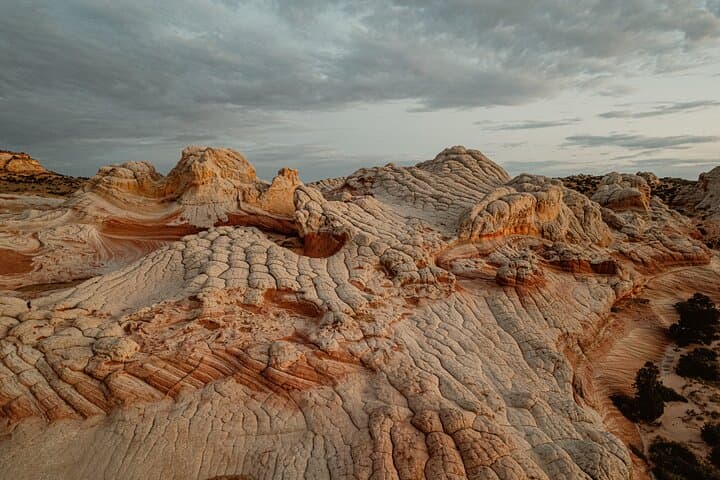
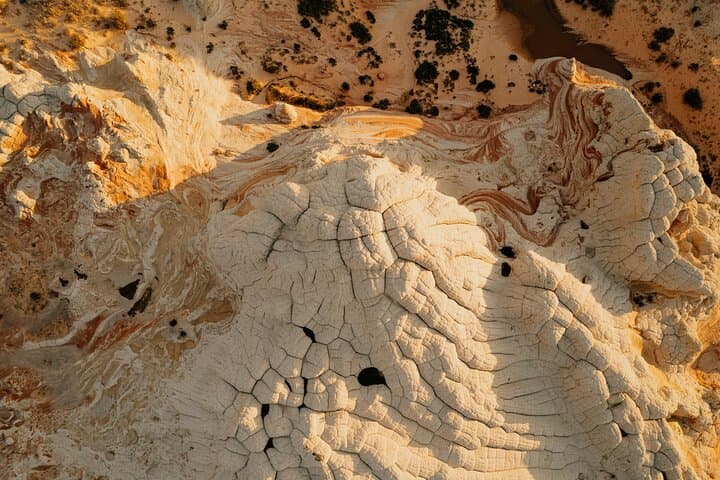
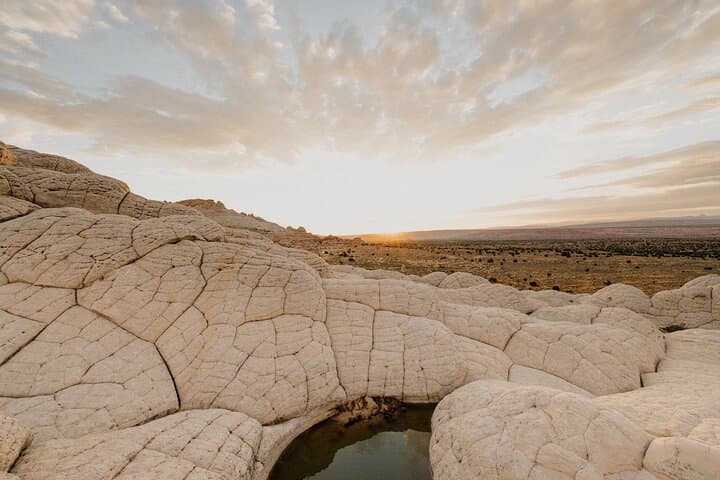
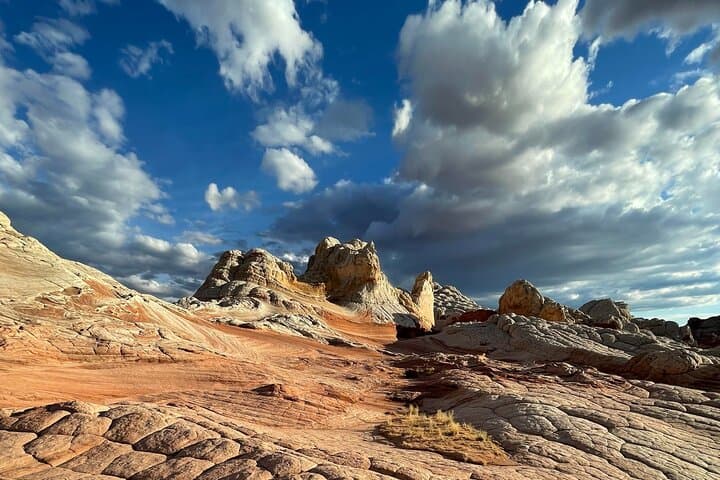
The morning light at White Pocket strips the landscape to angles and layers—pale domes and thin, banded sandstone that tilt and curl like frozen waves. The tour bumps you out of the highway onto a washboard two-track, then into a small basin where the rock formations hold light differently than the surrounding plain. You’ll step onto surfaces that feel almost sculpted by wind and water, where each fold and stripe invites a photograph or a quiet long look.
The morning light at White Pocket strips the landscape to angles and layers—pale domes and thin, banded sandstone that tilt and curl like frozen waves. The tour bumps you out of the highway onto a washboard two-track, then into a small basin where the rock formations hold light differently than the surrounding plain. You’ll step onto surfaces that feel almost sculpted by wind and water, where each fold and stripe invites a photograph or a quiet long look.
White Pocket sits on the Paria Plateau within the Vermilion Cliffs region; unlike its famous neighbor The Wave, it sits on public land that needs no lottery permit. The geology is classic cross-bedded Navajo Sandstone and Kaibab/Paria layer contrasts—thin, swirled strata shaped by ancient dunes and millennia of erosion. Local culture leans ranching and small-town guiding; many departures are from Kanab, Utah, where operators run limited-size 4x4 trips.
Expect roughly 7 hours round-trip with about 1–2 hours on-site for walking and photos. Trails are unmarked: plan short hikes of 0.5–2 miles over uneven sandstone with minimal overall elevation change but frequent slickrock footing. Carry water, a sun hat, and a camera with polarizer.
Practical logistics matter here: the road requires high-clearance 4x4 and experienced drivers — which your guide provides — and punctuality is strict; groups leave on time. Aim for morning or late-afternoon light for the best colors and cooler conditions. Respect the fragile surface: walk on harder crusts, avoid digging, and pack out all trash.