THE ADVENTURE COLLECTIVE® · Independent discovery and booking for outdoor travel

Drive from Cairo into a landscape of chalk-white rock sculptures, volcanic ridges and hidden hot springs on this two-day overnight from Cairo to the White Desert and Bahariya Oasis. Expect basic tent camping, short scrambles, dramatic sunsets and Bedouin-style breakfasts.
Drive from Cairo into a landscape of chalk-white rock sculptures, volcanic ridges and hidden hot springs on this two-day overnight from Cairo to the White Desert and Bahariya Oasis. Expect basic tent camping, short scrambles, dramatic sunsets and Bedouin-style breakfasts.
You arrive to a horizon of chalk-white sculptures: wind-carved mushroom rocks rising from flat sand, the late-afternoon sun angling shadows that make the desert seem to breathe.
Verified experiences and guided adventures in the surrounding area.
Operated by MyEgyTours · Bahariya Oasis, Giza Governorate
You arrive to a horizon of chalk-white sculptures: wind-carved mushroom rocks rising from flat sand, the late-afternoon sun angling shadows that make the desert seem to breathe.
This overnight tour drives roughly 350 km west of Cairo to Bahariya Oasis, then into the White Desert National Park where camping beneath towering limestone formations replaces city lights with a cobalt sky. The route crosses the Black Desert—volcanic hills of dark basalt—and passes the quartz outcrops of Crystal Mountain and the hot spring pools in the Valley of El Haize. Local Bedouin have guided travelers here for generations; the oases have supplied water and trade routes since Pharaonic times.
Geologically the White Desert’s shapes are soft chalk and limestone, eroded into smooth, otherworldly forms by windblown sand; elevations are modest (the oasis basins sit near 200–400 m above sea level) but expect short, uneven walking and occasional loose gravel underfoot. Culture here is simple and practical: camp meals are typically communal, and guides often share stories of desert navigation by stars.
Practical guidance: pack layered clothing for big day–night temperature swings, sun protection, at least 2 liters of water and sturdy shoes for scrambling small ridges. Camps are basic tented accommodations with sleeping mats; bring a warm sleeping layer and a headlamp. Aim to travel in spring or fall for milder temperatures, and follow leave-no-trace practices—chalk formations are fragile, so avoid climbing them and take all trash out.
This trip is immersive but accessible: expect two days of driving and light exploration, dramatic sunrises, and a true desert night under open sky.
moderate.
2 days.
Suitable for travelers in reasonable physical shape; some walking over uneven sand and gravel, short scrambles.
The transfer is about 350 km and typically takes roughly 4–5 hours each way, depending on traffic and stops.
Camps are tented with basic mattresses and a communal dining area; facilities are simple—expect a rustic overnight under the stars.
Yes, if they can tolerate long vehicle transfers and basic camping; notify the operator in advance about mobility needs.
Yes — lunch, dinner and a Bedouin-style breakfast are included; bring snacks if you have dietary preferences.
Bahariya and neighboring oases have supported humans since ancient times; caravan routes and occasional Pharaonic-era finds show long-term occupation around groundwater sources.
White Desert’s chalk formations are fragile—avoid climbing them, follow guide instructions, and pack out waste to minimize impact.
MyEgyTours operates guided outdoor trips and adventures with an emphasis on safety, stewardship, and memorable experiences.
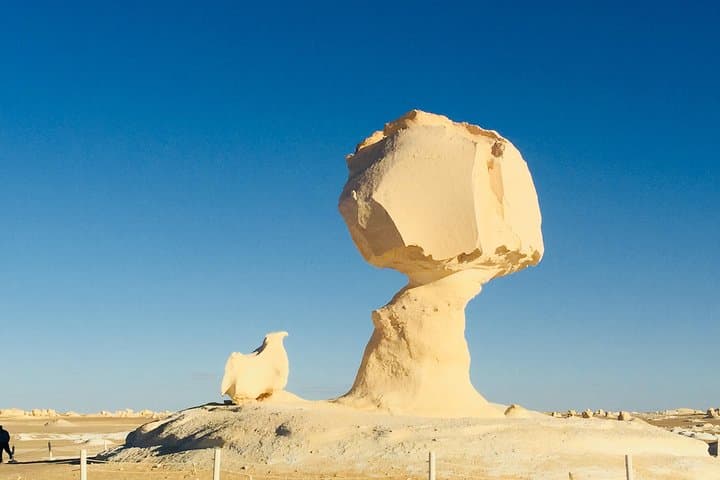
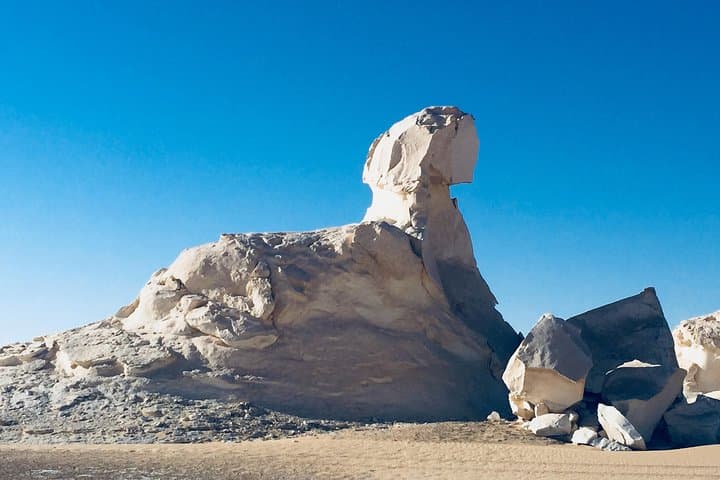
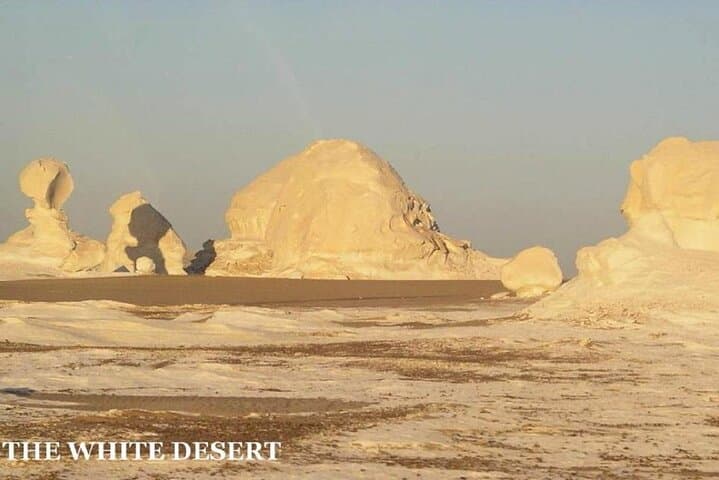
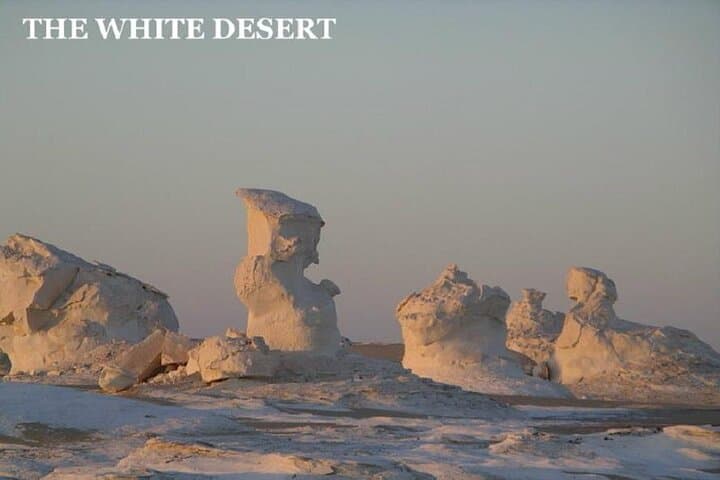
You arrive to a horizon of chalk-white sculptures: wind-carved mushroom rocks rising from flat sand, the late-afternoon sun angling shadows that make the desert seem to breathe.
You arrive to a horizon of chalk-white sculptures: wind-carved mushroom rocks rising from flat sand, the late-afternoon sun angling shadows that make the desert seem to breathe.
This overnight tour drives roughly 350 km west of Cairo to Bahariya Oasis, then into the White Desert National Park where camping beneath towering limestone formations replaces city lights with a cobalt sky. The route crosses the Black Desert—volcanic hills of dark basalt—and passes the quartz outcrops of Crystal Mountain and the hot spring pools in the Valley of El Haize. Local Bedouin have guided travelers here for generations; the oases have supplied water and trade routes since Pharaonic times.
Geologically the White Desert’s shapes are soft chalk and limestone, eroded into smooth, otherworldly forms by windblown sand; elevations are modest (the oasis basins sit near 200–400 m above sea level) but expect short, uneven walking and occasional loose gravel underfoot. Culture here is simple and practical: camp meals are typically communal, and guides often share stories of desert navigation by stars.
Practical guidance: pack layered clothing for big day–night temperature swings, sun protection, at least 2 liters of water and sturdy shoes for scrambling small ridges. Camps are basic tented accommodations with sleeping mats; bring a warm sleeping layer and a headlamp. Aim to travel in spring or fall for milder temperatures, and follow leave-no-trace practices—chalk formations are fragile, so avoid climbing them and take all trash out.
This trip is immersive but accessible: expect two days of driving and light exploration, dramatic sunrises, and a true desert night under open sky.