THE ADVENTURE COLLECTIVE® · Independent discovery and booking for outdoor travel

A sunlit day across basalt hills, glittering quartz, and surreal chalk sculptures—this long-day 4x4 safari from Cairo to Bahariya Oasis packs geology, Bedouin culture, and unforgettable desert light into one trip. Read on for what to expect and how to prepare.
A sunlit day across basalt hills, glittering quartz, and surreal chalk sculptures—this long-day 4x4 safari from Cairo to Bahariya Oasis packs geology, Bedouin culture, and unforgettable desert light into one trip. Read on for what to expect and how to prepare.
The sun is a low coin over the Sahara as your 4x4 cuts across cracked salt flats toward a skyline of chalk sculptures. Wind-carved monoliths—camels, mushrooms, icebergs—stand like frozen waves in the White Desert, their pale faces catching pink and gold at dusk. Earlier, the Black Desert’s basalt mounds rise from ochre sand, their dark shoulders punctuating the horizon; between them, the Crystal Mountain glitters with exposed quartz, a geological surprise that refracts the harsh light.
Verified experiences and guided adventures in the surrounding area.
Operated by Tamer Safari · Bahariya Oasis, Giza Governorate
The sun is a low coin over the Sahara as your 4x4 cuts across cracked salt flats toward a skyline of chalk sculptures. Wind-carved monoliths—camels, mushrooms, icebergs—stand like frozen waves in the White Desert, their pale faces catching pink and gold at dusk. Earlier, the Black Desert’s basalt mounds rise from ochre sand, their dark shoulders punctuating the horizon; between them, the Crystal Mountain glitters with exposed quartz, a geological surprise that refracts the harsh light.
This one-day route traces thousands of years of erosion and ancient seas. The white formations are soft limestone and chalk compressed and then sculpted by sand-laden winds; the black hills are volcanic basalt remnants. Culturally, the route threads Bahariya Oasis, where local Bedouin communities have guided desert travelers for generations and still pour sweet, smoky tea beneath acacia shade.
Practically, expect a long day: early pickup in Cairo, a multi-hour drive to Bahariya, off-road 4x4 sections, short hikes and photo stops, then return after sunset. Terrain ranges from compact sand to rocky scree; footing can be loose near formations. Carry at least 2–3 liters of water, sun protection, and a wind layer for late-day chills. Wear sturdy closed shoes for uneven limestone and bring a spare battery or power bank—signal is intermittent and this is prime photography country.
Guides handle navigation and local briefings; travel with a licensed operator, respect fragile rock formations, and leave no trace. The White Desert rewards patience: silence, shifting light, and a landscape that feels older than human stories.
moderate.
10–16 hours.
Suitable for travelers comfortable with long vehicle transfers and short, unpaved hikes; good mobility for uneven terrain helps.
Expect roughly 3.5–5 hours each way depending on traffic and route; most itineraries include long highway stretches and off-road segments once at the oasis.
The tour is family-friendly with private transfers, but it involves long travel times and uneven surfaces; inform the operator of mobility needs to arrange appropriate pickup and pacing.
Signal is intermittent to nonexistent inside the park; guides carry emergency communication and you should bring a power bank and offline maps or directions.
Facilities are limited—expect basic stops in Bahariya Oasis and improvised breaks in the field; bring hand sanitizer and personal supplies.
The White Desert area records ancient marine sediments and human use by nomadic groups; Bahariya Oasis has been an agricultural and caravan hub since Pharaonic times.
The park is fragile—limestone formations erode easily and graffiti or climbing accelerates damage; follow guide instructions and avoid touching delicate surfaces.
Tamer Safari operates guided outdoor trips and adventures with an emphasis on safety, stewardship, and memorable experiences.
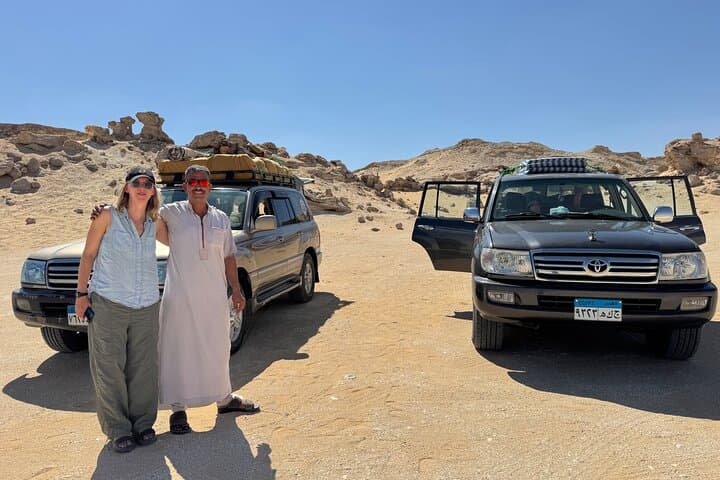
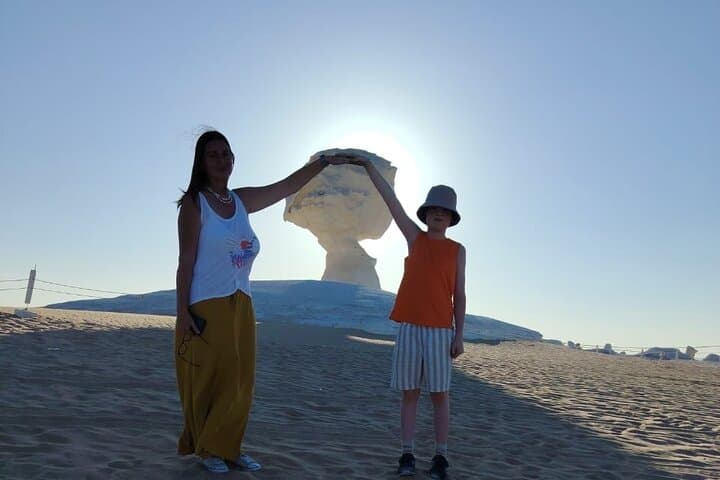
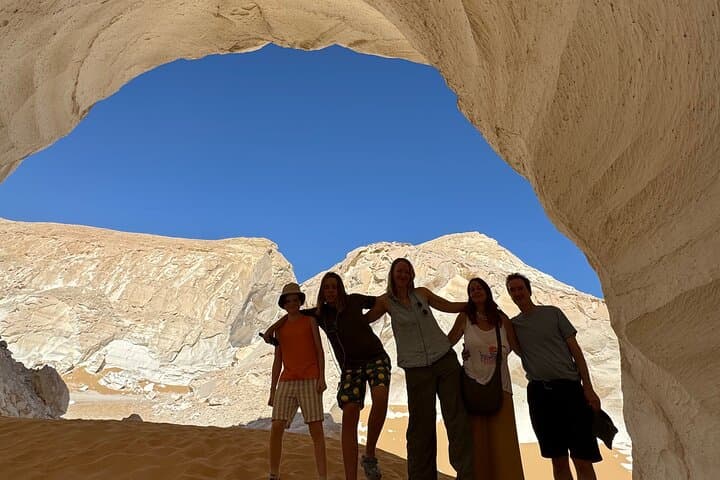
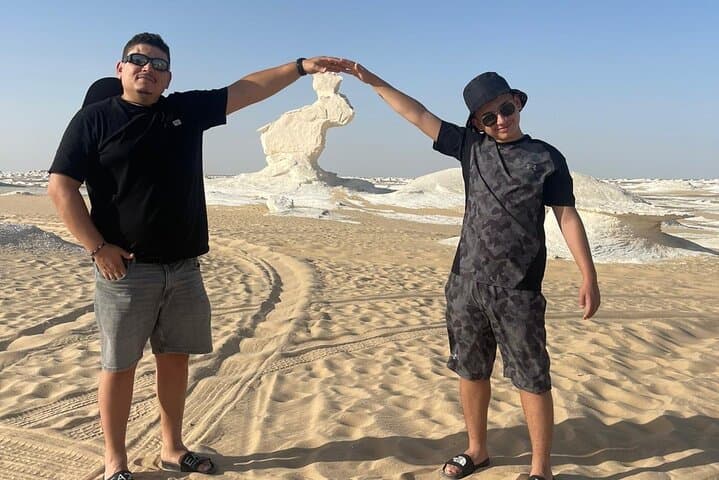
The sun is a low coin over the Sahara as your 4x4 cuts across cracked salt flats toward a skyline of chalk sculptures. Wind-carved monoliths—camels, mushrooms, icebergs—stand like frozen waves in the White Desert, their pale faces catching pink and gold at dusk. Earlier, the Black Desert’s basalt mounds rise from ochre sand, their dark shoulders punctuating the horizon; between them, the Crystal Mountain glitters with exposed quartz, a geological surprise that refracts the harsh light.
The sun is a low coin over the Sahara as your 4x4 cuts across cracked salt flats toward a skyline of chalk sculptures. Wind-carved monoliths—camels, mushrooms, icebergs—stand like frozen waves in the White Desert, their pale faces catching pink and gold at dusk. Earlier, the Black Desert’s basalt mounds rise from ochre sand, their dark shoulders punctuating the horizon; between them, the Crystal Mountain glitters with exposed quartz, a geological surprise that refracts the harsh light.
This one-day route traces thousands of years of erosion and ancient seas. The white formations are soft limestone and chalk compressed and then sculpted by sand-laden winds; the black hills are volcanic basalt remnants. Culturally, the route threads Bahariya Oasis, where local Bedouin communities have guided desert travelers for generations and still pour sweet, smoky tea beneath acacia shade.
Practically, expect a long day: early pickup in Cairo, a multi-hour drive to Bahariya, off-road 4x4 sections, short hikes and photo stops, then return after sunset. Terrain ranges from compact sand to rocky scree; footing can be loose near formations. Carry at least 2–3 liters of water, sun protection, and a wind layer for late-day chills. Wear sturdy closed shoes for uneven limestone and bring a spare battery or power bank—signal is intermittent and this is prime photography country.
Guides handle navigation and local briefings; travel with a licensed operator, respect fragile rock formations, and leave no trace. The White Desert rewards patience: silence, shifting light, and a landscape that feels older than human stories.