THE ADVENTURE COLLECTIVE® · Independent discovery and booking for outdoor travel

A compact, two‑day desert circuit from Cairo that pairs the Black Desert’s volcanic ridges with the surreal chalk pillars of the White Desert and the glittering quartz of Crystal Mountain. Expect long drives, an overnight camp, and dramatic sunrise views.
A compact, two‑day desert circuit from Cairo that pairs the Black Desert’s volcanic ridges with the surreal chalk pillars of the White Desert and the glittering quartz of Crystal Mountain. Expect long drives, an overnight camp, and dramatic sunrise views.
You step out of the cooling air of an AC minivan and into a sun-scoured bowl of wind-sculpted stone. Fine sand squeaks beneath your boots; strange chalk towers rise like oversized sculptures, and a blunt, black ridge—dolerite and volcanic debris—waits beyond the palm groves. This is the approach to Bahariya Oasis and the White Desert, where nightfall turns the plain into a starlit arena and the desert wind seems to rearrange the landscape overnight.
Verified experiences and guided adventures in the surrounding area.
Operated by Touritos™️ · Bawiti, New Valley Governorate
You step out of the cooling air of an AC minivan and into a sun-scoured bowl of wind-sculpted stone. Fine sand squeaks beneath your boots; strange chalk towers rise like oversized sculptures, and a blunt, black ridge—dolerite and volcanic debris—waits beyond the palm groves. This is the approach to Bahariya Oasis and the White Desert, where nightfall turns the plain into a starlit arena and the desert wind seems to rearrange the landscape overnight.
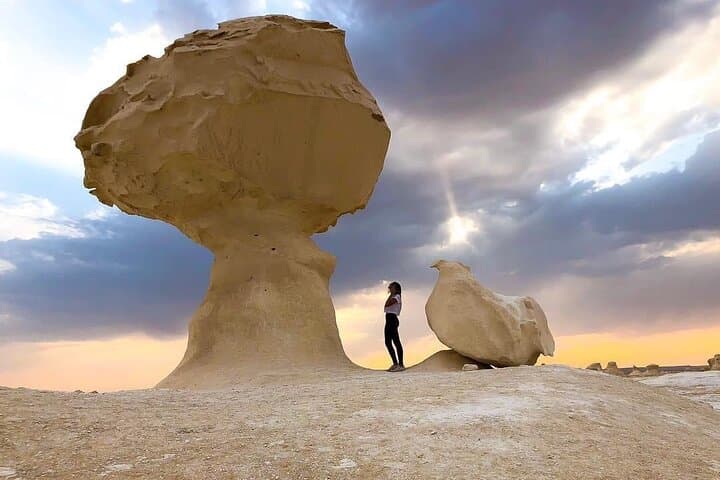
The Bahariya region has been a stop on desert trade routes since Pharaonic times and later drew Greek and Roman travelers. Geologically the area sits on Cretaceous and Eocene deposits; the White Desert’s winds have bleached and eroded soft chalk into mushroom-like forms while the nearby Black Desert shows volcanic intrusions. The Crystal Mountain is a concentrated seam of quartz and crystalline gypsum—odd shards that glitter when the sun catches them.
Culturally you'll encounter small oasis settlements—Bawiti’s residents keep date palms and maintain salt flats—while locally guided camps offer simple meals and Bedouin-style hospitality. Conservation-minded visitors are asked to camp only in permitted areas and avoid breaking formations or removing specimens.
Practically: expect long drives (roughly 4 hours from Cairo each way), dusty conditions, and large temperature swings—day heat and cold nights. Bring layered clothing, sturdy closed-toe shoes for uneven rock and sand, and at least 3 liters of water per person per day. Sunrise and sunset are the best photographic windows; sandboarding and short hikes around crystalline outcrops fill daylight hours. The trip is ideal for travelers who want dramatic desert scenery, light exploration, and an overnight under clear skies.
moderate.
2 days.
Light to moderate fitness; able to handle short walks on uneven sand and rocky surfaces and long vehicle transfers.
Expect roughly a 3.5–4.5 hour drive one way, depending on traffic and stops en route.
Camps are basic desert camps with sleeping mats/tents and communal facilities; some offer simple showers but bring toiletries and towel just in case.
The operator notes it’s suitable for most ages but not recommended for pregnant travelers due to rough roads and remote conditions.
No—removal of geological specimens is discouraged and often prohibited inside protected areas like White Desert National Park.
Bahariya has been inhabited since Pharaonic times and later hosted Greco‑Roman activity; the oasis has layers of archaeological and geological significance.
White Desert is a national park—visitors should camp only in permitted zones, avoid removing rocks or disturbing wildlife, and pack out all waste.
Touritos™️ operates guided outdoor trips and adventures with an emphasis on safety, stewardship, and memorable experiences.
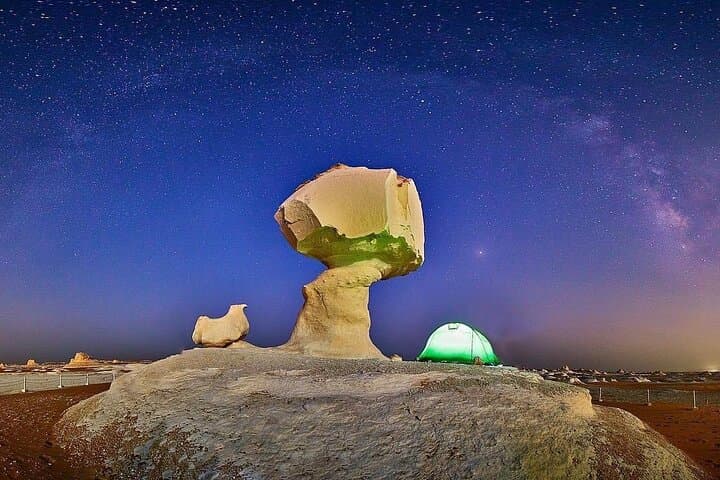
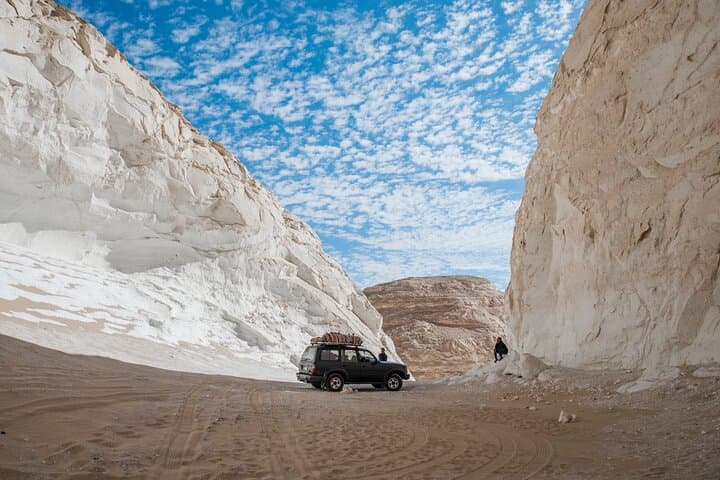
You step out of the cooling air of an AC minivan and into a sun-scoured bowl of wind-sculpted stone. Fine sand squeaks beneath your boots; strange chalk towers rise like oversized sculptures, and a blunt, black ridge—dolerite and volcanic debris—waits beyond the palm groves. This is the approach to Bahariya Oasis and the White Desert, where nightfall turns the plain into a starlit arena and the desert wind seems to rearrange the landscape overnight.
You step out of the cooling air of an AC minivan and into a sun-scoured bowl of wind-sculpted stone. Fine sand squeaks beneath your boots; strange chalk towers rise like oversized sculptures, and a blunt, black ridge—dolerite and volcanic debris—waits beyond the palm groves. This is the approach to Bahariya Oasis and the White Desert, where nightfall turns the plain into a starlit arena and the desert wind seems to rearrange the landscape overnight.
The Bahariya region has been a stop on desert trade routes since Pharaonic times and later drew Greek and Roman travelers. Geologically the area sits on Cretaceous and Eocene deposits; the White Desert’s winds have bleached and eroded soft chalk into mushroom-like forms while the nearby Black Desert shows volcanic intrusions. The Crystal Mountain is a concentrated seam of quartz and crystalline gypsum—odd shards that glitter when the sun catches them.
Culturally you'll encounter small oasis settlements—Bawiti’s residents keep date palms and maintain salt flats—while locally guided camps offer simple meals and Bedouin-style hospitality. Conservation-minded visitors are asked to camp only in permitted areas and avoid breaking formations or removing specimens.
Practically: expect long drives (roughly 4 hours from Cairo each way), dusty conditions, and large temperature swings—day heat and cold nights. Bring layered clothing, sturdy closed-toe shoes for uneven rock and sand, and at least 3 liters of water per person per day. Sunrise and sunset are the best photographic windows; sandboarding and short hikes around crystalline outcrops fill daylight hours. The trip is ideal for travelers who want dramatic desert scenery, light exploration, and an overnight under clear skies.