THE ADVENTURE COLLECTIVE® · Independent discovery and booking for outdoor travel

Drive from Cairo into volcanic ridges and chalk forests to camp one night beneath surreal limestone sculptures. This overnight runs through Black Desert features, Crystal Mountain and both the old and new White Desert formations.
Drive from Cairo into volcanic ridges and chalk forests to camp one night beneath surreal limestone sculptures. This overnight runs through Black Desert features, Crystal Mountain and both the old and new White Desert formations.
The sun lowers across flat sand and the limestone sculptures of the White Desert start to take shape like frozen waves — white pillars and mushroom caps rising from a sea of ochre.
Verified experiences and guided adventures in the surrounding area.
Operated by Tamer Safari · Al-Bawiti (Bahariya), Giza Governorate
The sun lowers across flat sand and the limestone sculptures of the White Desert start to take shape like frozen waves — white pillars and mushroom caps rising from a sea of ochre.
You begin in Cairo and drive roughly four hours southwest to Bahariya Oasis, where a 4x4 jeep replaces the paved road and kicks up the first cloud of dust. The route threads through the Black Desert’s basalt hills, past crystal-strewn ridges and the cold spring at El Hez, before entering the surreal white plains. Short walks (10–30 minutes) take you around the mushroom rocks and wind-eroded spires; at night the camp is basic but warm, the Milky Way immense above a horizon that refuses to stay flat.
Geology here reads like a timeline — marine limestone sculpted by wind, black volcanic deposits from ancient eruptions, and quartz outcrops at Crystal Mountain. The Bahariya Oasis itself has long been a waystation in Saharan trade and later archaeological interest, including fossil finds and Pharaonic-era sites.
Practical edge: expect sandy, uneven terrain and substantial daytime heat in summer, with cold nights in winter. The operator supplies transfers, a jeep for field travel, park tickets, meals and basic camping gear; bring personal layers, sun protection, at least 2–3 liters of water per person, a headlamp and sturdy footwear. Move deliberately on loose rock, keep to group plans, and leave formations as you found them — erosion here is slow but cumulative.
easy.
2 days (48 hours).
Suitable for people with basic mobility; expect short uneven walks and extended time in a vehicle.
The transfer is advertised as about four hours by air-conditioned private car each way; times vary with traffic and road conditions.
Yes — the tour includes basic camping and sleeping equipment; bring a personal sleeping liner if you prefer extra insulation.
The trip is suitable for most fitness levels—activities involve short, unmarked walks rather than sustained hiking.
Facilities are basic in the desert and phone signal is intermittent; plan accordingly and use facilities before entering remote areas.
Bahariya Oasis has long been a Saharan waystation with archaeological finds and rock art; the White Desert’s chalk formations are ancient seabed limestone sculpted by wind over millennia.
White Desert National Park is protected; visitors should avoid touching or removing formations, pack out all waste and follow guide instructions to minimize erosion and disturbance.
Tamer Safari operates guided outdoor trips and adventures with an emphasis on safety, stewardship, and memorable experiences.
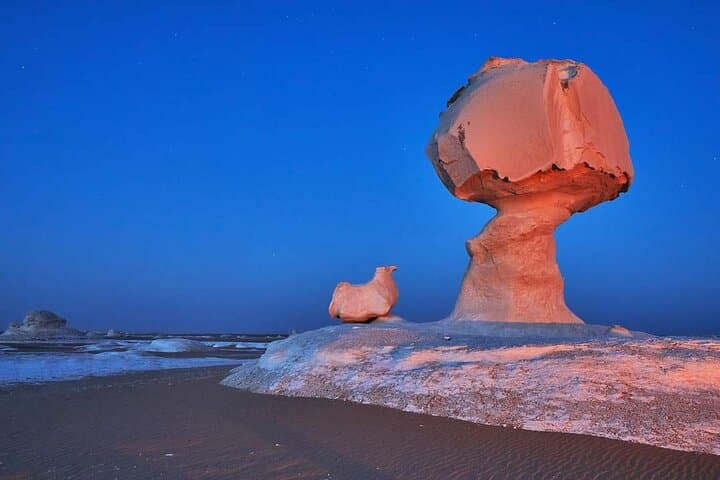
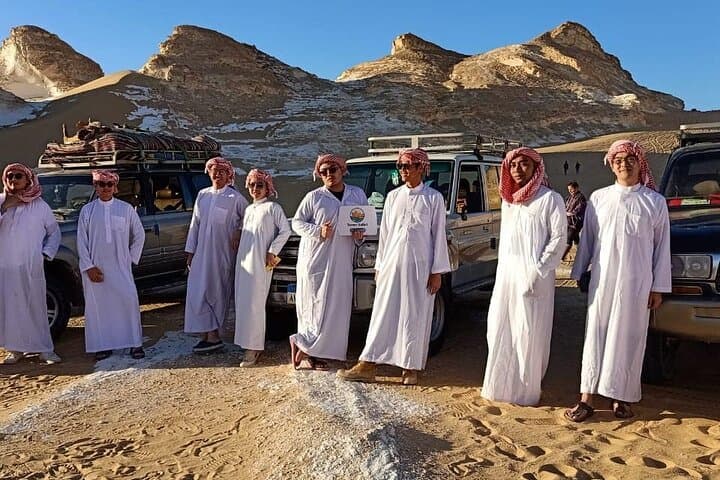
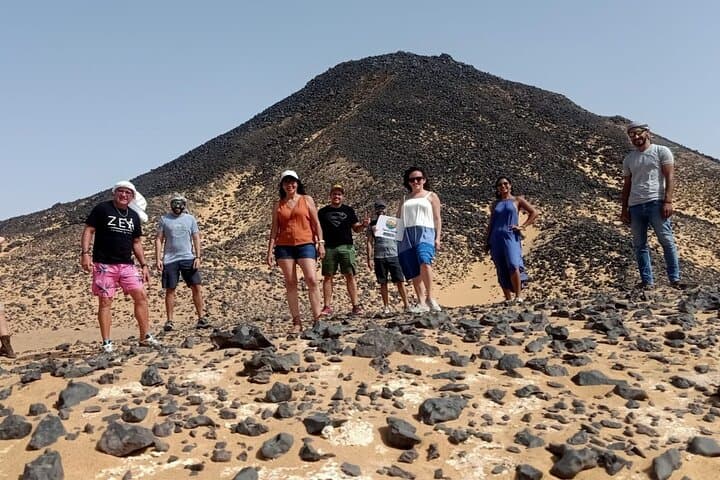
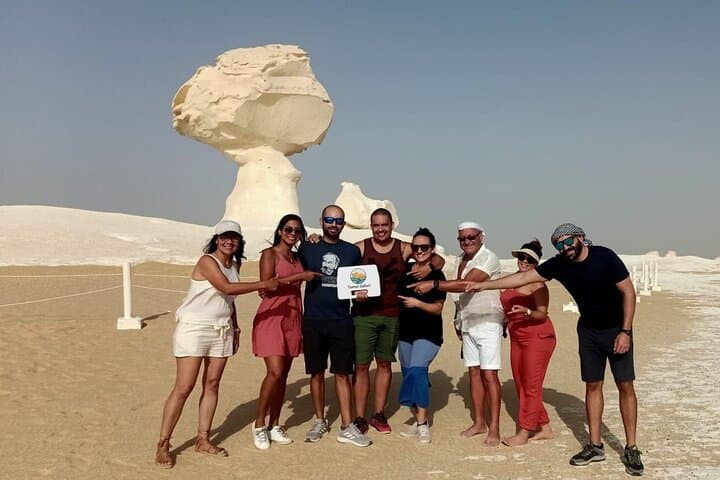
The sun lowers across flat sand and the limestone sculptures of the White Desert start to take shape like frozen waves — white pillars and mushroom caps rising from a sea of ochre.
The sun lowers across flat sand and the limestone sculptures of the White Desert start to take shape like frozen waves — white pillars and mushroom caps rising from a sea of ochre.
You begin in Cairo and drive roughly four hours southwest to Bahariya Oasis, where a 4x4 jeep replaces the paved road and kicks up the first cloud of dust. The route threads through the Black Desert’s basalt hills, past crystal-strewn ridges and the cold spring at El Hez, before entering the surreal white plains. Short walks (10–30 minutes) take you around the mushroom rocks and wind-eroded spires; at night the camp is basic but warm, the Milky Way immense above a horizon that refuses to stay flat.
Geology here reads like a timeline — marine limestone sculpted by wind, black volcanic deposits from ancient eruptions, and quartz outcrops at Crystal Mountain. The Bahariya Oasis itself has long been a waystation in Saharan trade and later archaeological interest, including fossil finds and Pharaonic-era sites.
Practical edge: expect sandy, uneven terrain and substantial daytime heat in summer, with cold nights in winter. The operator supplies transfers, a jeep for field travel, park tickets, meals and basic camping gear; bring personal layers, sun protection, at least 2–3 liters of water per person, a headlamp and sturdy footwear. Move deliberately on loose rock, keep to group plans, and leave formations as you found them — erosion here is slow but cumulative.