THE ADVENTURE COLLECTIVE® · Independent discovery and booking for outdoor travel

A full-day 4x4 journey from Cairo to Bahariya Oasis and the White Desert takes you from palms and hot springs to surreal chalk sculptures and basalt fields. Expect long drives, short walks on sand, and unforgettable late-afternoon light across wind-sculpted rock.
A full-day 4x4 journey from Cairo to Bahariya Oasis and the White Desert takes you from palms and hot springs to surreal chalk sculptures and basalt fields. Expect long drives, short walks on sand, and unforgettable late-afternoon light across wind-sculpted rock.
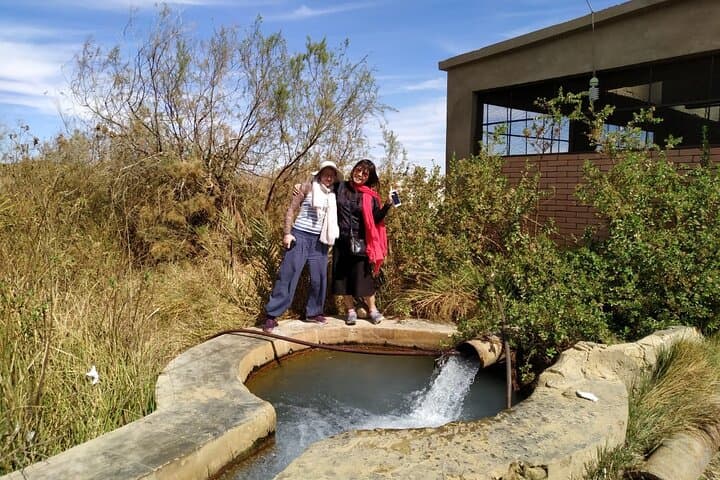
The morning air in Cairo still clings to the windows as the 4x4 punches west across the desert, and by midmorning sand takes on a different light — pale, serrated, relentless. You arrive at Bahariya Oasis first, a ribbon of date palms and mud-brick houses ringed by low desert hills, then push deeper where the black volcanic fields give way to chalk-white sculptures that look more like a lunar gallery than anything terrestrial.
Verified experiences and guided adventures in the surrounding area.
Operated by This Is Egypt · Bahariya Oasis (El-Bahariya), Giza Governorate
The morning air in Cairo still clings to the windows as the 4x4 punches west across the desert, and by midmorning sand takes on a different light — pale, serrated, relentless. You arrive at Bahariya Oasis first, a ribbon of date palms and mud-brick houses ringed by low desert hills, then push deeper where the black volcanic fields give way to chalk-white sculptures that look more like a lunar gallery than anything terrestrial.
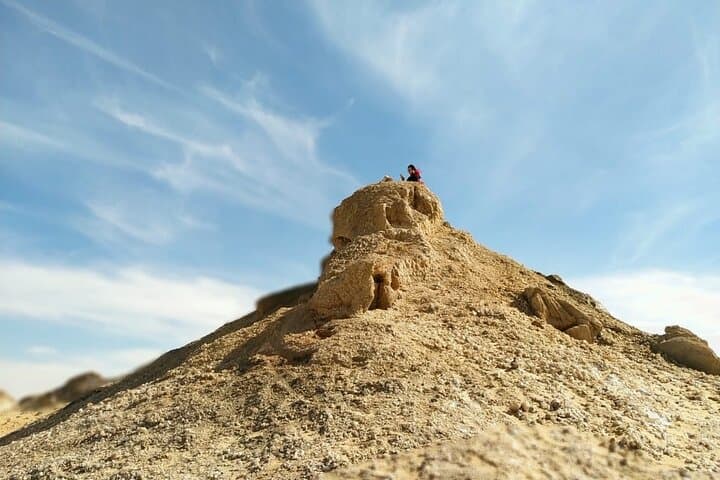
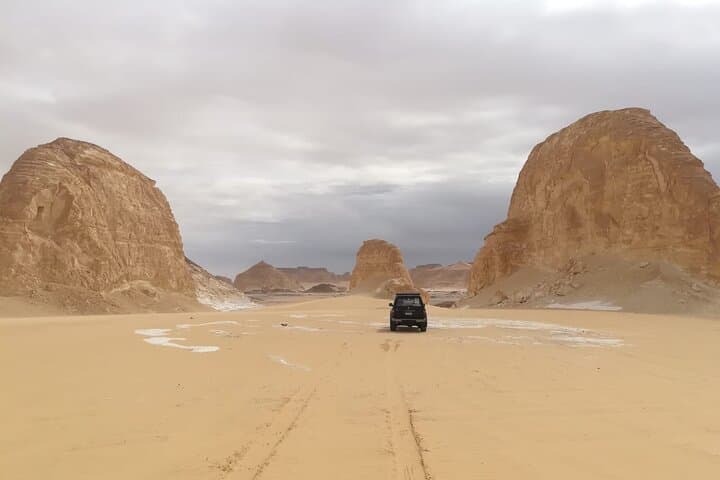
Geology here reads like a slow-motion workshop: wind and occasional flash floods carve fine-grained sandstone and selenite into mushroom caps, pillars and balancing rocks. The Black Desert is a field of basalt mounds pocked with iron-rich patina; the White Desert is a chalk arena with surreal silhouettes. Cultural traces are close at hand — ancient Greco-Roman coffins, the unusual Roman-era mummies in Bahariya’s local museum, and nomadic Bedouin routes that still guide navigation across the dunes.
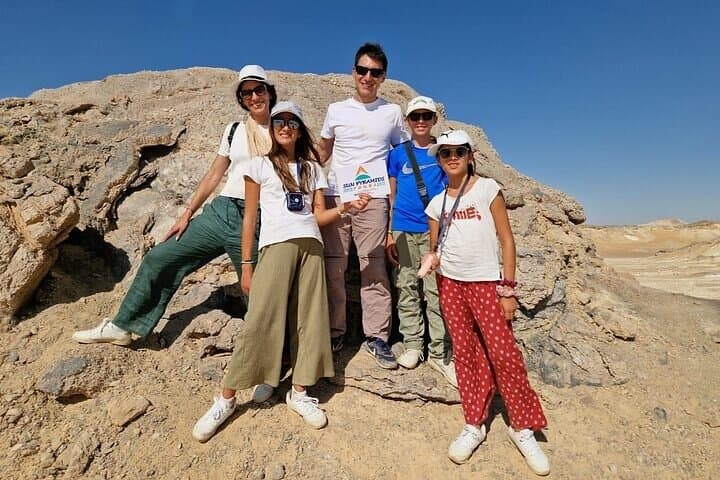
Expect a day of long driving interspersed with short walks and low scrambling over soft sand and weathered rock. Guides will pause for photography at Crystal Mountain’s quartz seams, the salty crust of local playa lakes, and the Valley of Agabat’s mazy formations. Practical notes: sun protection, layered clothing for wind and cooler desert evenings, and stable footwear are essential; hydration matters more here than elevation or distance. If you time it right, the late-afternoon light turns the white shapes to honey and copper — a quiet, otherworldly hour that rewards patience and stillness.
easy.
12–14 hours.
Suitable for travelers in average fitness—able to handle long rides and multiple short walks on sand and uneven rock.
By road it’s roughly a 3.5–4 hour drive (about 350 km) depending on traffic and stops; tours typically leave early morning.
Yes—most sections are short walks or photo stops; the long vehicle time is the main consideration, and guides can adjust pacing.
Carry ID or passport copy as tour operators often require copies for park permits and transfers; foreign passports are usually requested in advance.
A mix of packed dirt roads, sandy tracks, soft sand walking and low rock scrambling among wind-sculpted formations.
Bahariya was a caravan crossroads in Pharaonic and Greco-Roman times; several Roman-era mummies and burial sites were found here, reflecting continuous desert habitation.
White Desert is a protected national park; stick to marked routes, avoid climbing fragile chalk formations, and pack out all waste to protect the fragile desert crust.
This Is Egypt operates guided outdoor trips and adventures with an emphasis on safety, stewardship, and memorable experiences.
The morning air in Cairo still clings to the windows as the 4x4 punches west across the desert, and by midmorning sand takes on a different light — pale, serrated, relentless. You arrive at Bahariya Oasis first, a ribbon of date palms and mud-brick houses ringed by low desert hills, then push deeper where the black volcanic fields give way to chalk-white sculptures that look more like a lunar gallery than anything terrestrial.
The morning air in Cairo still clings to the windows as the 4x4 punches west across the desert, and by midmorning sand takes on a different light — pale, serrated, relentless. You arrive at Bahariya Oasis first, a ribbon of date palms and mud-brick houses ringed by low desert hills, then push deeper where the black volcanic fields give way to chalk-white sculptures that look more like a lunar gallery than anything terrestrial.
Geology here reads like a slow-motion workshop: wind and occasional flash floods carve fine-grained sandstone and selenite into mushroom caps, pillars and balancing rocks. The Black Desert is a field of basalt mounds pocked with iron-rich patina; the White Desert is a chalk arena with surreal silhouettes. Cultural traces are close at hand — ancient Greco-Roman coffins, the unusual Roman-era mummies in Bahariya’s local museum, and nomadic Bedouin routes that still guide navigation across the dunes.
Expect a day of long driving interspersed with short walks and low scrambling over soft sand and weathered rock. Guides will pause for photography at Crystal Mountain’s quartz seams, the salty crust of local playa lakes, and the Valley of Agabat’s mazy formations. Practical notes: sun protection, layered clothing for wind and cooler desert evenings, and stable footwear are essential; hydration matters more here than elevation or distance. If you time it right, the late-afternoon light turns the white shapes to honey and copper — a quiet, otherworldly hour that rewards patience and stillness.