THE ADVENTURE COLLECTIVE® · Independent discovery and booking for outdoor travel

Leave Cairo for 48 hours and trade city noise for wind-carved chalk fields, volcanic black hills and a night under a brilliant desert sky. This two-day camping safari pairs Bedouin hospitality with close-up geology and stargazing.
Leave Cairo for 48 hours and trade city noise for wind-carved chalk fields, volcanic black hills and a night under a brilliant desert sky. This two-day camping safari pairs Bedouin hospitality with close-up geology and stargazing.
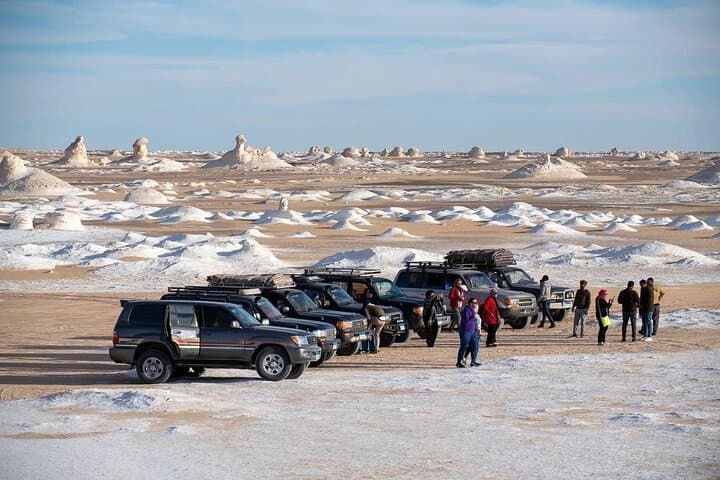
A slow ribbon of highway slips away from Cairo and the landscape opens into a broad, sun-baked plain where wind sculpts chalk into impossible sculptures. On the first afternoon the convoy pulls into Bahariya Oasis—palm-shaded fields and irrigated gardens that feel suddenly purposeful after hours of open desert.
Verified experiences and guided adventures in the surrounding area.
Operated by alfa travel · Bahariya Oasis (Al-Bawiti), Giza Governorate
A slow ribbon of highway slips away from Cairo and the landscape opens into a broad, sun-baked plain where wind sculpts chalk into impossible sculptures. On the first afternoon the convoy pulls into Bahariya Oasis—palm-shaded fields and irrigated gardens that feel suddenly purposeful after hours of open desert.
This region has long been a crossroads: Pharaonic traders, Roman expeditions and Bedouin families all read the same wells and rock. Geology here is blunt and theatrical—black volcanic hills rise from an older basalt sea, while the White Desert’s chalk formations are the work of wind and sand over millennia, polishing blocks into shapes that suggest animals or abstract figures. Local life centers on date groves and small settlements; Bedouin hosts offer tea, stories and practical desert knowledge.
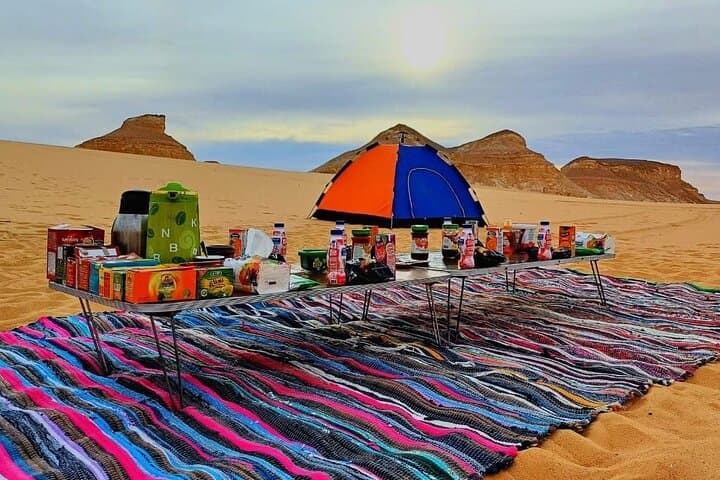
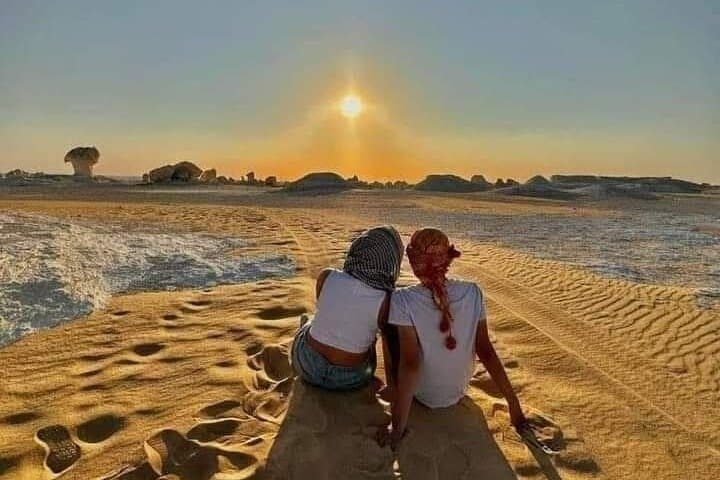
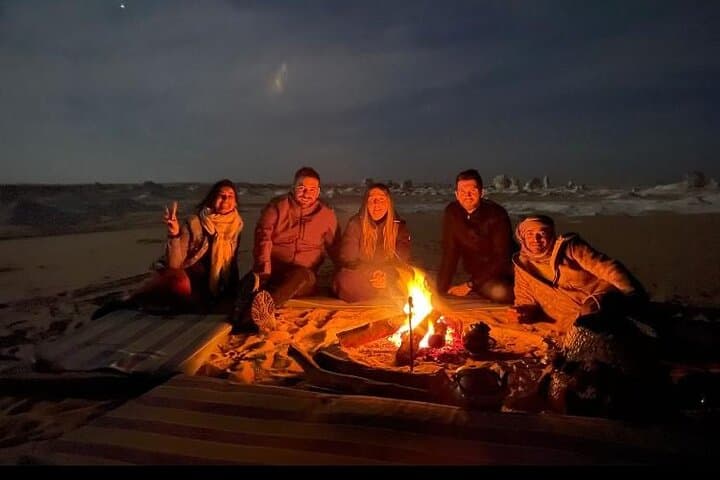
Expect a mix of highway driving, off-road 4x4 tracks and short walks among rock gardens. Key moments are a sunset in the White Desert, a campfire dinner with simple Bedouin cuisine and a cold pre-dawn walk to watch sunlight sharpen the chalk faces. Nights are cold; days can be brutally hot.
Practical guidance: pack layered clothing for large diurnal swings, bring at least 3 liters of water per day, and use closed hiking shoes for rocky ground. If you get motion sick, request a front seat in the 4x4. Respect archaeological sites and minimize impact—stay on vehicle tracks and leave no trace at camp. With basic preparation this two-day loop is a compact, accessible introduction to Egypt’s Western Desert that balances cultural contact with raw desert scenery.
moderate.
2 days, 1 night.
Suitable for travelers in average physical condition — involves vehicle travel and short walks over uneven ground.
Yes — tents, sleeping bags and mats are typically provided as part of the tour’s full-board camping night.
Most tours include hotel pick-up and drop-off in Cairo; you’ll provide a pickup point at booking.
All meals during the tour (lunch, dinner, breakfast) and tea/coffee/water are included per the itinerary.
Families with older children can usually join, but infants should be considered for vehicle comfort and shared tents; check age policies with the operator.
Bahariya has been an agricultural and caravan stop since antiquity and contains Greco-Roman archaeological finds; the contrasting Black and White Deserts reflect different volcanic and sedimentary histories.
The desert’s fragile crust and chalk formations are easily damaged — stick to vehicle tracks, avoid climbing delicate sculptures and pack out all trash.
alfa travel operates guided outdoor trips and adventures with an emphasis on safety, stewardship, and memorable experiences.
A slow ribbon of highway slips away from Cairo and the landscape opens into a broad, sun-baked plain where wind sculpts chalk into impossible sculptures. On the first afternoon the convoy pulls into Bahariya Oasis—palm-shaded fields and irrigated gardens that feel suddenly purposeful after hours of open desert.
A slow ribbon of highway slips away from Cairo and the landscape opens into a broad, sun-baked plain where wind sculpts chalk into impossible sculptures. On the first afternoon the convoy pulls into Bahariya Oasis—palm-shaded fields and irrigated gardens that feel suddenly purposeful after hours of open desert.
This region has long been a crossroads: Pharaonic traders, Roman expeditions and Bedouin families all read the same wells and rock. Geology here is blunt and theatrical—black volcanic hills rise from an older basalt sea, while the White Desert’s chalk formations are the work of wind and sand over millennia, polishing blocks into shapes that suggest animals or abstract figures. Local life centers on date groves and small settlements; Bedouin hosts offer tea, stories and practical desert knowledge.
Expect a mix of highway driving, off-road 4x4 tracks and short walks among rock gardens. Key moments are a sunset in the White Desert, a campfire dinner with simple Bedouin cuisine and a cold pre-dawn walk to watch sunlight sharpen the chalk faces. Nights are cold; days can be brutally hot.
Practical guidance: pack layered clothing for large diurnal swings, bring at least 3 liters of water per day, and use closed hiking shoes for rocky ground. If you get motion sick, request a front seat in the 4x4. Respect archaeological sites and minimize impact—stay on vehicle tracks and leave no trace at camp. With basic preparation this two-day loop is a compact, accessible introduction to Egypt’s Western Desert that balances cultural contact with raw desert scenery.