THE ADVENTURE COLLECTIVE® · Independent discovery and booking for outdoor travel

Escape Cairo for an overnight 4x4 safari to Bahariya Oasis and the White Desert. Explore crystal-strewn ridges, black volcanic flats and chalk formations, then camp beneath sweeping, unpolluted stars.
Escape Cairo for an overnight 4x4 safari to Bahariya Oasis and the White Desert. Explore crystal-strewn ridges, black volcanic flats and chalk formations, then camp beneath sweeping, unpolluted stars.
Dawn pulls the city’s last haze out of your rearview mirror and, hour by hour, the Nile valley thins into a sun-baked road that angles toward a ring of palms and black volcanic ridges. By late morning you arrive in Bahariya Oasis: a green throat in the pale Sahara, where an oasis restaurant serves fragrant, slow-cooked Egyptian lunch before the landscape simplifies into chalk and wind.
Verified experiences and guided adventures in the surrounding area.
Operated by Marca Tours · Bahariya Oasis (Bawiti), Giza Governorate
Dawn pulls the city’s last haze out of your rearview mirror and, hour by hour, the Nile valley thins into a sun-baked road that angles toward a ring of palms and black volcanic ridges. By late morning you arrive in Bahariya Oasis: a green throat in the pale Sahara, where an oasis restaurant serves fragrant, slow-cooked Egyptian lunch before the landscape simplifies into chalk and wind.
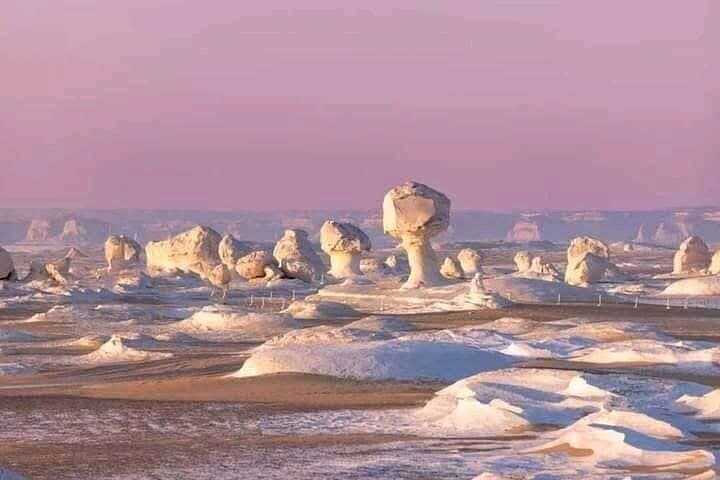
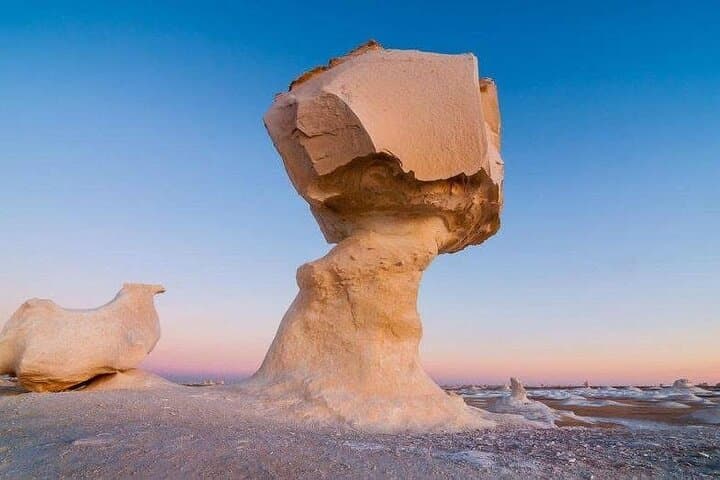
This is limestone country—ancient seabeds uplifted into surreal mushroom-shaped pillars. The White Desert’s chalk formations were carved over millennia by wind and sand; nearby Black Desert hills wear a crust of basalt and iron that looks, at a glance, like a fossilized lava field. Local communities here grew from caravan trade and oasis agriculture, and you’ll pass small villages and spring-fed palms that testify to centuries of desert survival.
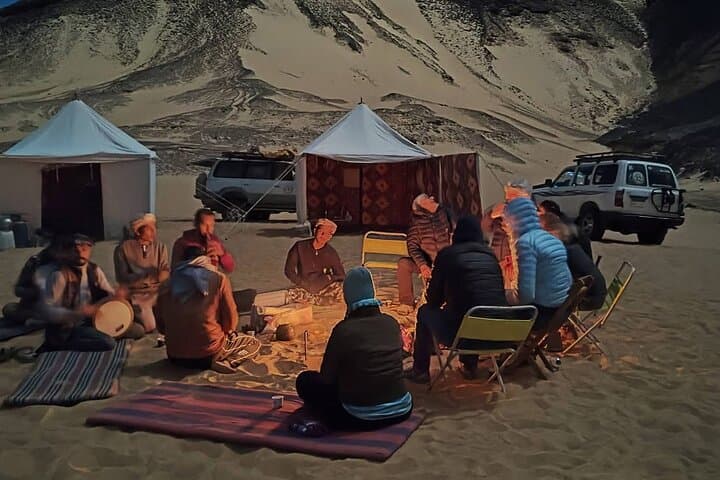
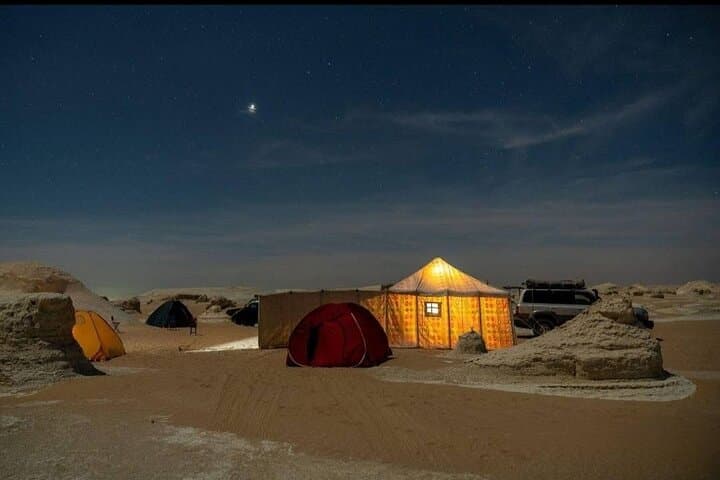
Expect purposeful pacing: a short 4x4 safari across dunes, stops at Crystal Mountain’s quartz faces and the Valley of Agabat’s petrified wood, then an evening camp where guides cook dinner while sunlight leans away and the stars take over. The night is quiet enough that the desert seems to breathe; sand dunes dare you to climb, and the cold morning sun pushes you back to the vehicle for the return to Cairo.
Practical guidance: pack layers for hot days and cold nights, sunscreen and a wide-brim hat, and sturdy shoes for rocky formations. Bring a headlamp, extra water, and a camera with a polarizer for stark light and long shadows. Follow your guide’s briefings on footing and fragile chalk formations—leave no trace and stay on established paths to protect the park’s fragile geology.
moderate.
2 days.
Suitable for travelers in general good health who can manage short hikes on uneven chalk and sand; not strenuous but expect dust and standing on uneven ground.
The drive from Cairo to the Bahariya area is roughly 4–5 hours each way depending on traffic and exact route; expect long stretches on open desert road.
Yes—one-night desert camping is included with tents and sleeping bags supplied, plus full board meals as described by the operator.
Yes—beginners can try sandboarding on gentle dunes under guide supervision; bring closed-toe shoes and be prepared to walk back up dunes.
Stops in Bahariya offer basic restaurant facilities; restroom and coffee breaks are scheduled en route but rural facilities can be simple.
Bahariya has been an agricultural and caravan stop since Pharaonic times; the oases supported trade routes and occasional Roman mining activity.
The White Desert’s chalk pinnacles are fragile—stick to established tracks, pack out all waste, and minimize campfire impact to preserve the formations.
Marca Tours operates guided outdoor trips and adventures with an emphasis on safety, stewardship, and memorable experiences.
Dawn pulls the city’s last haze out of your rearview mirror and, hour by hour, the Nile valley thins into a sun-baked road that angles toward a ring of palms and black volcanic ridges. By late morning you arrive in Bahariya Oasis: a green throat in the pale Sahara, where an oasis restaurant serves fragrant, slow-cooked Egyptian lunch before the landscape simplifies into chalk and wind.
Dawn pulls the city’s last haze out of your rearview mirror and, hour by hour, the Nile valley thins into a sun-baked road that angles toward a ring of palms and black volcanic ridges. By late morning you arrive in Bahariya Oasis: a green throat in the pale Sahara, where an oasis restaurant serves fragrant, slow-cooked Egyptian lunch before the landscape simplifies into chalk and wind.
This is limestone country—ancient seabeds uplifted into surreal mushroom-shaped pillars. The White Desert’s chalk formations were carved over millennia by wind and sand; nearby Black Desert hills wear a crust of basalt and iron that looks, at a glance, like a fossilized lava field. Local communities here grew from caravan trade and oasis agriculture, and you’ll pass small villages and spring-fed palms that testify to centuries of desert survival.
Expect purposeful pacing: a short 4x4 safari across dunes, stops at Crystal Mountain’s quartz faces and the Valley of Agabat’s petrified wood, then an evening camp where guides cook dinner while sunlight leans away and the stars take over. The night is quiet enough that the desert seems to breathe; sand dunes dare you to climb, and the cold morning sun pushes you back to the vehicle for the return to Cairo.
Practical guidance: pack layers for hot days and cold nights, sunscreen and a wide-brim hat, and sturdy shoes for rocky formations. Bring a headlamp, extra water, and a camera with a polarizer for stark light and long shadows. Follow your guide’s briefings on footing and fragile chalk formations—leave no trace and stay on established paths to protect the park’s fragile geology.