THE ADVENTURE COLLECTIVE® · Independent discovery and booking for outdoor travel

Escape Cairo for two days of volcanic ridges, chalk sculptures and star-filled campfires. This 2-day Farafra and White Desert tour blends easy off-road exploration with Bedouin-style camping and a restorative hot spring visit.
Escape Cairo for two days of volcanic ridges, chalk sculptures and star-filled campfires. This 2-day Farafra and White Desert tour blends easy off-road exploration with Bedouin-style camping and a restorative hot spring visit.
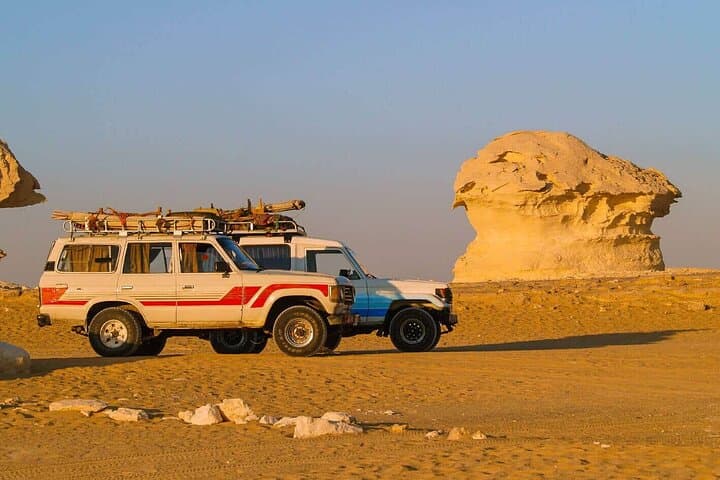
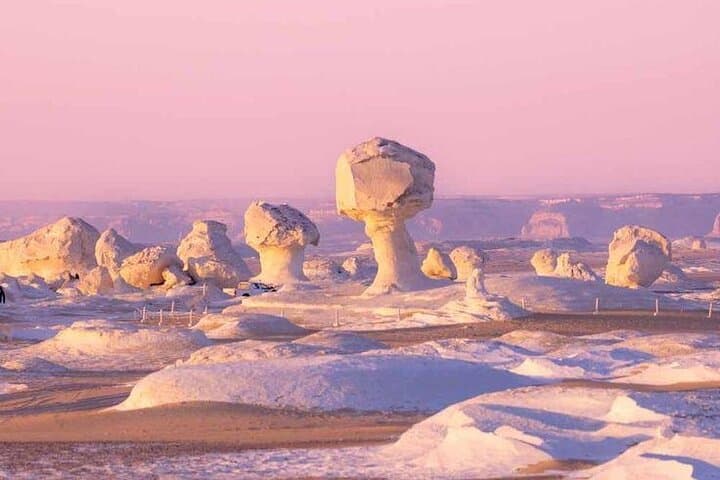
Before dawn the minivan threads past Cairo’s outskirts and the city recedes into a flat, luminous plain. By midmorning the asphalt gives way to scrub and dunes; the Black Desert’s volcanic hills rise like charred waves, their iron-rich caps catching the light. Later the landscape softens into the White Desert’s chalk moonscape — wind-sculpted pillars and mushroom rocks that shift from ivory to gold at sunset.
Verified experiences and guided adventures in the surrounding area.
Operated by tripco · Farafra, New Valley Governorate
Before dawn the minivan threads past Cairo’s outskirts and the city recedes into a flat, luminous plain. By midmorning the asphalt gives way to scrub and dunes; the Black Desert’s volcanic hills rise like charred waves, their iron-rich caps catching the light. Later the landscape softens into the White Desert’s chalk moonscape — wind-sculpted pillars and mushroom rocks that shift from ivory to gold at sunset.
This two-day trip follows routes used for centuries by traders and Bedouin caravans linking oases across Egypt’s Western Desert. Geologically the Black Desert’s dark mounds are volcanic ash and basalt, while the White Desert’s formations are compressed chalk and silica, carved by wind and sand over millennia. Farafra and Bahariya oases are small, long-inhabited settlements where springs and date palms concentrate life in an otherwise sparse expanse. Expect quiet cultural contact: shared tea, basic camp cooking, and local stories around the fire.
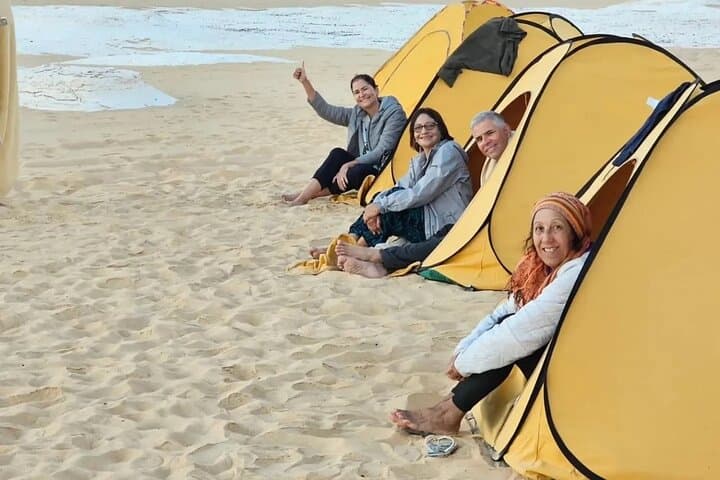
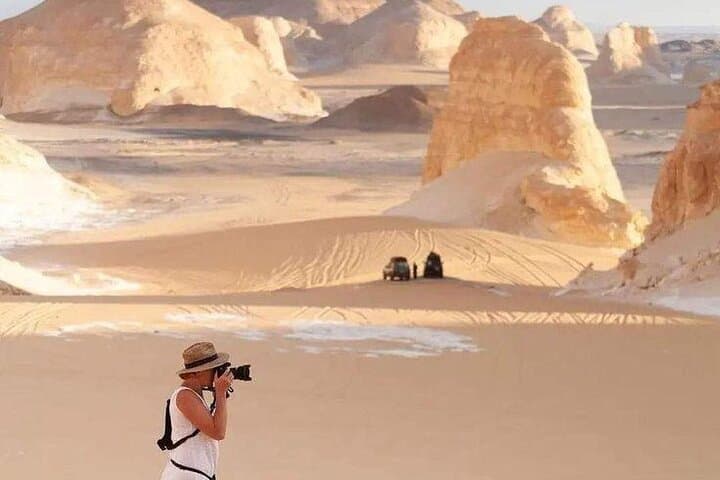
Practically, the tour runs with a 4x4 for off-road sections and includes tented camping, meals, and permits. Travel time from Cairo is about 3.5–4 hours each way; plan for significant driving and several short walks on uneven sand and hard-pan. Bring layered clothing for hot days and cold nights, plenty of water, sun protection, a headlamp, and sturdy footwear. Photograph at dawn or dusk for best light and avoid climbing fragile chalk formations — they’re porous and easily damaged. The route ends with a dip in a natural hot spring and a relaxed drive back to Cairo late afternoon, leaving you with sand in your boots and a different horizon in your memory.
easy.
2 days (1 night).
Suitable for travelers with basic mobility; requires getting into 4x4s and short walks on uneven terrain.
Plan for about 3.5–4 hours of driving to Bahariya/Farafra area each way, with short rest and photo stops en route.
Yes — the tour includes camping equipment and basic sleeping gear; you may want a personal liner for hygiene and extra warmth.
The itinerary is designed to be accessible but involves off-road travel and uneven walking; check mobility needs and cardiovascular health before booking.
Power is limited in remote camps; bring portable battery packs — plug access may be available at some stops but not reliably in camp.
Bahariya and Farafra have supported oasis life for millennia and have archaeological sites and mummified remains that highlight continuous human presence.
White Desert is a protected area: stick to trails, avoid touching or climbing chalk formations, and pack out all trash to preserve fragile desert ecosystems.
tripco operates guided outdoor trips and adventures with an emphasis on safety, stewardship, and memorable experiences.
Before dawn the minivan threads past Cairo’s outskirts and the city recedes into a flat, luminous plain. By midmorning the asphalt gives way to scrub and dunes; the Black Desert’s volcanic hills rise like charred waves, their iron-rich caps catching the light. Later the landscape softens into the White Desert’s chalk moonscape — wind-sculpted pillars and mushroom rocks that shift from ivory to gold at sunset.
Before dawn the minivan threads past Cairo’s outskirts and the city recedes into a flat, luminous plain. By midmorning the asphalt gives way to scrub and dunes; the Black Desert’s volcanic hills rise like charred waves, their iron-rich caps catching the light. Later the landscape softens into the White Desert’s chalk moonscape — wind-sculpted pillars and mushroom rocks that shift from ivory to gold at sunset.
This two-day trip follows routes used for centuries by traders and Bedouin caravans linking oases across Egypt’s Western Desert. Geologically the Black Desert’s dark mounds are volcanic ash and basalt, while the White Desert’s formations are compressed chalk and silica, carved by wind and sand over millennia. Farafra and Bahariya oases are small, long-inhabited settlements where springs and date palms concentrate life in an otherwise sparse expanse. Expect quiet cultural contact: shared tea, basic camp cooking, and local stories around the fire.
Practically, the tour runs with a 4x4 for off-road sections and includes tented camping, meals, and permits. Travel time from Cairo is about 3.5–4 hours each way; plan for significant driving and several short walks on uneven sand and hard-pan. Bring layered clothing for hot days and cold nights, plenty of water, sun protection, a headlamp, and sturdy footwear. Photograph at dawn or dusk for best light and avoid climbing fragile chalk formations — they’re porous and easily damaged. The route ends with a dip in a natural hot spring and a relaxed drive back to Cairo late afternoon, leaving you with sand in your boots and a different horizon in your memory.