THE ADVENTURE COLLECTIVE® · Independent discovery and booking for outdoor travel

A one-day escape from Cairo into Egypt’s sculpted deserts: explore the iron-streaked Black Desert, climb Gabal el Marsos, and wander the chalk spires of the White Desert with time at Bahariya’s mineral springs. Practical tips for a long, sun-drenched day included.
A one-day escape from Cairo into Egypt’s sculpted deserts: explore the iron-streaked Black Desert, climb Gabal el Marsos, and wander the chalk spires of the White Desert with time at Bahariya’s mineral springs. Practical tips for a long, sun-drenched day included.
You leave Cairo before sunrise, the highway unspooling west until the city’s hum thins and the desert takes over. By mid-morning the landscape shifts: ferruginous black rocks rise like staccato punctuation, then give way to the chalk-white sculptures of the White Desert, wind-carved into mushroom shapes and faces that seem to watch your approach.
Verified experiences and guided adventures in the surrounding area.
Operated by White desert travel · Bahariya Oasis, Giza Governorate
You leave Cairo before sunrise, the highway unspooling west until the city’s hum thins and the desert takes over. By mid-morning the landscape shifts: ferruginous black rocks rise like staccato punctuation, then give way to the chalk-white sculptures of the White Desert, wind-carved into mushroom shapes and faces that seem to watch your approach.
Geology does the storytelling here. The Black Desert’s dark dolerite and iron-rich quartzite record volcanic intrusions; the White Desert’s chalk formations were sculpted by millennia of sand and wind, with elevations between roughly 32–353 m. Bahariya Oasis, the human anchor of the route, has been a stop for caravans and local farming communities for centuries and supplies the mineral springs that warm the palms and feed small settlements.
Expect a full day: a long drive (about 5–6 hours one way from Cairo), guided walks among the white formations, a climb at Gabal el Marsos in the Black Desert, sandboarding on dunes, and time at mineral springs near Bahariya. The tour includes snacks, water, Bedouin tea, and a late lunch at a safari camp.
Practical edge: wear sturdy shoes and layered sun protection, carry at least 2–3 liters of water, and bring a charged camera with spare batteries—solar exposure drains both. Start early to avoid peak heat, and plan for sandy, uneven terrain; mobility-accessible vehicles can help reach some viewpoints, but walking routes are uneven. Leave no trace around fragile chalk formations and respect wildlife—this is a protected national park.
moderate.
10–12 hours.
Suitable for travelers in average fitness—able to walk on sandy and uneven ground and climb short rocky sections.
The tour runs about 10–12 hours; expect a 4–6 hour round trip drive from Cairo, with guided stops at Black Desert features, White Desert formations, and Bahariya’s springs, plus lunch at a safari camp.
Children can join, but walking in dunes and on uneven chalk requires supervision; parts of the route and transport are wheelchair-accessible but many viewpoints require short hikes.
Some local springs at Bahariya are suitable for a therapeutic soak—check with the guide for safe, designated swimming areas and temperatures.
You may spot desert-adapted animals like the rhim gazelle and fennec fox, especially around dawn and dusk; sightings are uncommon but possible.
Bahariya has long been a caravan oasis; the contrast between iron-rich Black Desert rocks and wind-eroded White Desert chalk records varied geological histories and ancient trade routes.
White Desert is a protected national park—stick to established routes, avoid climbing fragile formations, and pack out all trash to limit erosion and human impact.
White desert travel operates guided outdoor trips and adventures with an emphasis on safety, stewardship, and memorable experiences.
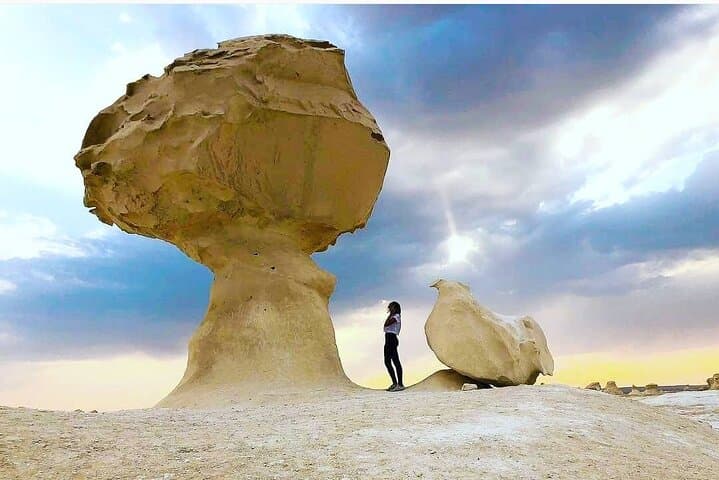
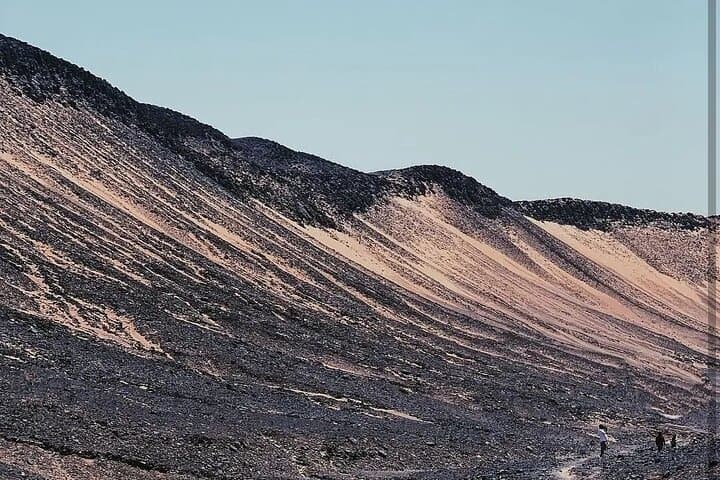
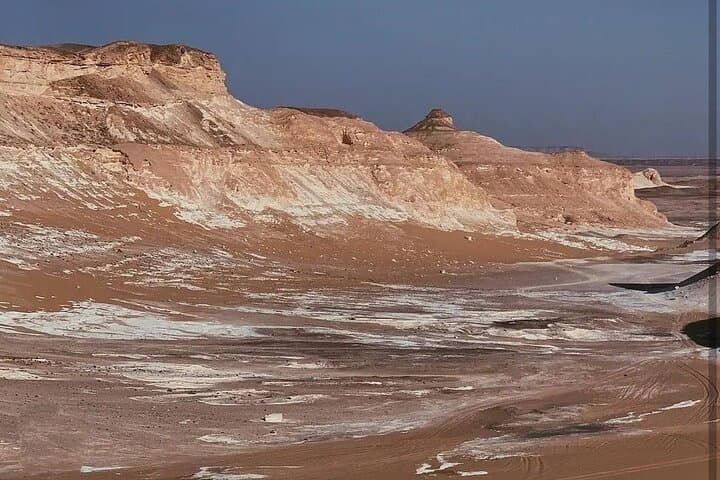
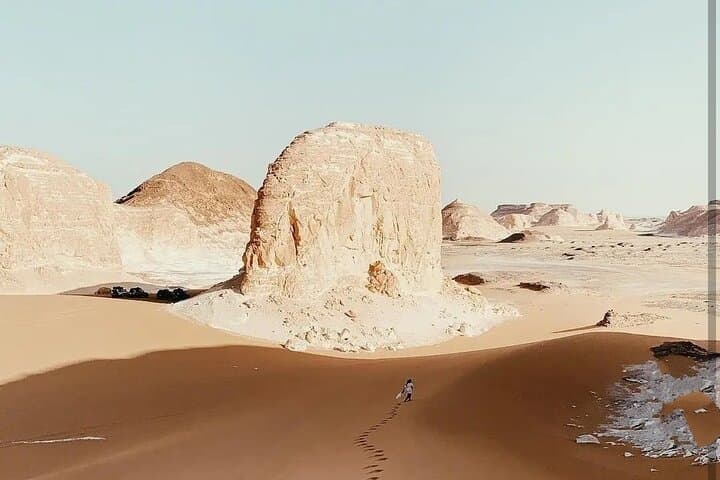
You leave Cairo before sunrise, the highway unspooling west until the city’s hum thins and the desert takes over. By mid-morning the landscape shifts: ferruginous black rocks rise like staccato punctuation, then give way to the chalk-white sculptures of the White Desert, wind-carved into mushroom shapes and faces that seem to watch your approach.
You leave Cairo before sunrise, the highway unspooling west until the city’s hum thins and the desert takes over. By mid-morning the landscape shifts: ferruginous black rocks rise like staccato punctuation, then give way to the chalk-white sculptures of the White Desert, wind-carved into mushroom shapes and faces that seem to watch your approach.
Geology does the storytelling here. The Black Desert’s dark dolerite and iron-rich quartzite record volcanic intrusions; the White Desert’s chalk formations were sculpted by millennia of sand and wind, with elevations between roughly 32–353 m. Bahariya Oasis, the human anchor of the route, has been a stop for caravans and local farming communities for centuries and supplies the mineral springs that warm the palms and feed small settlements.
Expect a full day: a long drive (about 5–6 hours one way from Cairo), guided walks among the white formations, a climb at Gabal el Marsos in the Black Desert, sandboarding on dunes, and time at mineral springs near Bahariya. The tour includes snacks, water, Bedouin tea, and a late lunch at a safari camp.
Practical edge: wear sturdy shoes and layered sun protection, carry at least 2–3 liters of water, and bring a charged camera with spare batteries—solar exposure drains both. Start early to avoid peak heat, and plan for sandy, uneven terrain; mobility-accessible vehicles can help reach some viewpoints, but walking routes are uneven. Leave no trace around fragile chalk formations and respect wildlife—this is a protected national park.