THE ADVENTURE COLLECTIVE® · Independent discovery and booking for outdoor travel

Drive across basalt mounds into fields of ghostly chalk, camp under a vast, star-rich sky, and explore Crystal Mountain and Agabat Valley on this two-day White and Black Desert safari. Ideal for travelers comfortable with rough tracks and basic overnight camping.
Drive across basalt mounds into fields of ghostly chalk, camp under a vast, star-rich sky, and explore Crystal Mountain and Agabat Valley on this two-day White and Black Desert safari. Ideal for travelers comfortable with rough tracks and basic overnight camping.
You arrive as the sun thins to a copper rim and the dunes start to throw long, clean shadows. A convoy of 4x4s threads through black volcanic mounds, the engine vibration matching the desert’s steady breath, then opens onto fields of chalk so bright they push back the dusk. Mushroom-shaped rocks and a glittering Crystal Mountain stand like geological actors on a stage of sand.
Verified experiences and guided adventures in the surrounding area.
Operated by Innovation Tours Inc · Farafra, New Valley Governorate
You arrive as the sun thins to a copper rim and the dunes start to throw long, clean shadows. A convoy of 4x4s threads through black volcanic mounds, the engine vibration matching the desert’s steady breath, then opens onto fields of chalk so bright they push back the dusk. Mushroom-shaped rocks and a glittering Crystal Mountain stand like geological actors on a stage of sand.
The White Desert is part of the Farafra depression and White Desert National Park, formed by millennia of wind and sand eroding soft chalk into whimsical shapes. Nearby the Black Desert’s basalt-capped hills recall ancient volcanic activity that left dark, pitted mounds across a 30 km belt. Oases like Farafra and Bahariya have long supported desert communities and caravan routes—today Bedouin guides and local camps keep those traditions alive while sharing simple, hearty meals by a campfire.
Expect long dirt tracks, short hikes between rock gardens, and an overnight in a basic desert camp beneath a wide, unlit sky. Temperatures swing hard—hot days, cold nights—and the landscape is exposed: shade is rare and wind can be abrasive. Practical tips: carry at least 3–4 liters of water per person, wear closed, grippy footwear for walking over chalk and gravel, and layer for 20°C+ daytime drops to near freezing at night.
Photographers will favor sunrise and late afternoon for depth and shadow; stargazers will find one of the clearest night skies in Egypt. Respect protected zones, don’t remove crystals, and come prepared for rugged, elemental camping—the desert rewards those who arrive informed and equipped.
moderate.
2 days (about 48 hours).
Moderate fitness recommended—comfortable with short hikes on uneven, sandy terrain and enduring bumpy 4x4 travel.
Camps are in the White Desert National Park and are basic—sheltered sleeping tents or mats, communal campfire meals, and simple ablutions; expect no running water or luxury amenities.
Not recommended for pregnant travelers or those with spinal/serious heart issues; children may be allowed but consider the rough 4x4 travel and extreme temperatures.
Access to the national park is regulated; your operator handles park permits and entry fees as part of the tour—confirm included permits when booking.
This is a guided multi-day itinerary using off-road vehicles; private vehicle access is possible but requires planning, local permits, and desert-driving experience.
The Farafra and Bahariya oases sat along historic caravan routes; local settlements have adapted ancient oasis agriculture to support desert travelers.
The White Desert is a protected area—respect wildlife, avoid removing geological specimens, and follow Leave No Trace practices to protect fragile chalk formations.
Innovation Tours Inc operates guided outdoor trips and adventures with an emphasis on safety, stewardship, and memorable experiences.

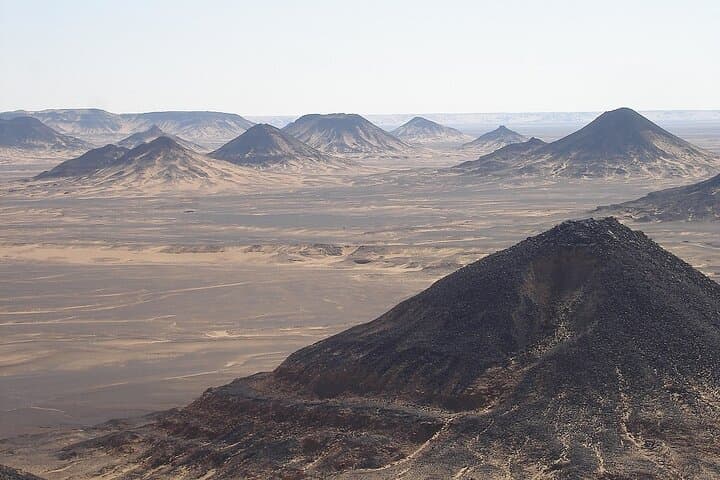


You arrive as the sun thins to a copper rim and the dunes start to throw long, clean shadows. A convoy of 4x4s threads through black volcanic mounds, the engine vibration matching the desert’s steady breath, then opens onto fields of chalk so bright they push back the dusk. Mushroom-shaped rocks and a glittering Crystal Mountain stand like geological actors on a stage of sand.
You arrive as the sun thins to a copper rim and the dunes start to throw long, clean shadows. A convoy of 4x4s threads through black volcanic mounds, the engine vibration matching the desert’s steady breath, then opens onto fields of chalk so bright they push back the dusk. Mushroom-shaped rocks and a glittering Crystal Mountain stand like geological actors on a stage of sand.
The White Desert is part of the Farafra depression and White Desert National Park, formed by millennia of wind and sand eroding soft chalk into whimsical shapes. Nearby the Black Desert’s basalt-capped hills recall ancient volcanic activity that left dark, pitted mounds across a 30 km belt. Oases like Farafra and Bahariya have long supported desert communities and caravan routes—today Bedouin guides and local camps keep those traditions alive while sharing simple, hearty meals by a campfire.
Expect long dirt tracks, short hikes between rock gardens, and an overnight in a basic desert camp beneath a wide, unlit sky. Temperatures swing hard—hot days, cold nights—and the landscape is exposed: shade is rare and wind can be abrasive. Practical tips: carry at least 3–4 liters of water per person, wear closed, grippy footwear for walking over chalk and gravel, and layer for 20°C+ daytime drops to near freezing at night.
Photographers will favor sunrise and late afternoon for depth and shadow; stargazers will find one of the clearest night skies in Egypt. Respect protected zones, don’t remove crystals, and come prepared for rugged, elemental camping—the desert rewards those who arrive informed and equipped.