THE ADVENTURE COLLECTIVE® · Independent discovery and booking for outdoor travel

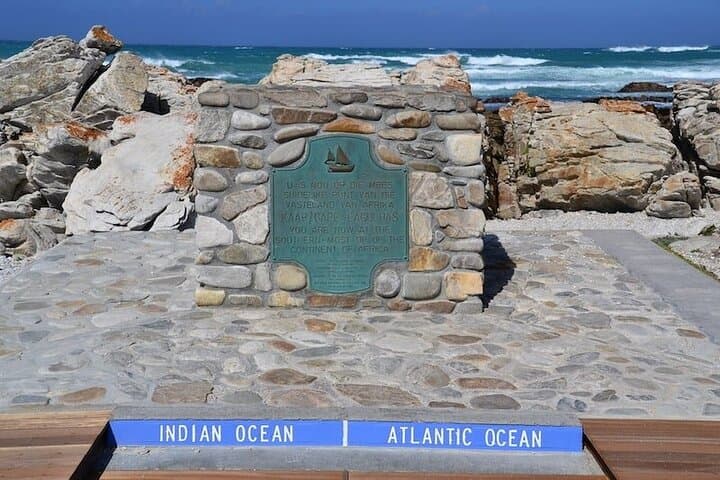
Stand at Africa’s southernmost point where the Indian and Atlantic Oceans meet. This full-day private tour to Cape Agulhas combines rugged coastline, lighthouse history, and quiet coastal villages into a compact, transportive daytrip.
Stand at Africa’s southernmost point where the Indian and Atlantic Oceans meet. This full-day private tour to Cape Agulhas combines rugged coastline, lighthouse history, and quiet coastal villages into a compact, transportive daytrip.
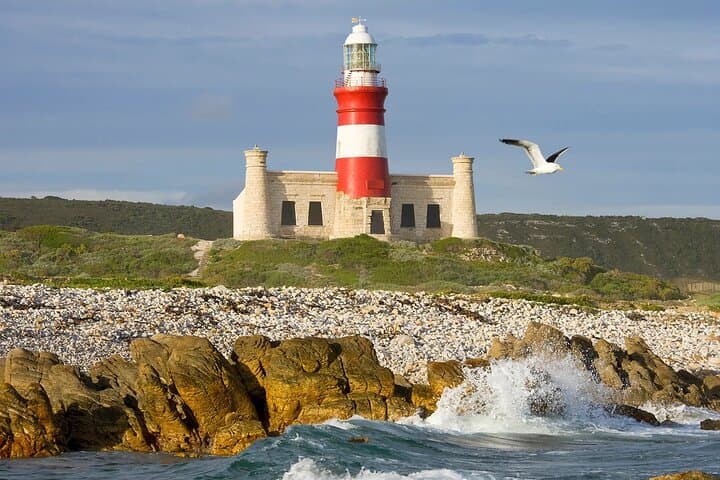
Wind and salt press against your face as the road thins and the horizon opens: here, at Cape Agulhas, the coastline tilts south and the ocean seems to decide which way to run. On a clear day the wind carries the crash of surf and the rattle of gulls; a low stone lighthouse keeps quiet watch above a scatter of rusted wrecks.
Verified experiences and guided adventures in the surrounding area.
Operated by Africa Afrika Travel · L'Agulhas, Western Cape
Wind and salt press against your face as the road thins and the horizon opens: here, at Cape Agulhas, the coastline tilts south and the ocean seems to decide which way to run. On a clear day the wind carries the crash of surf and the rattle of gulls; a low stone lighthouse keeps quiet watch above a scatter of rusted wrecks.
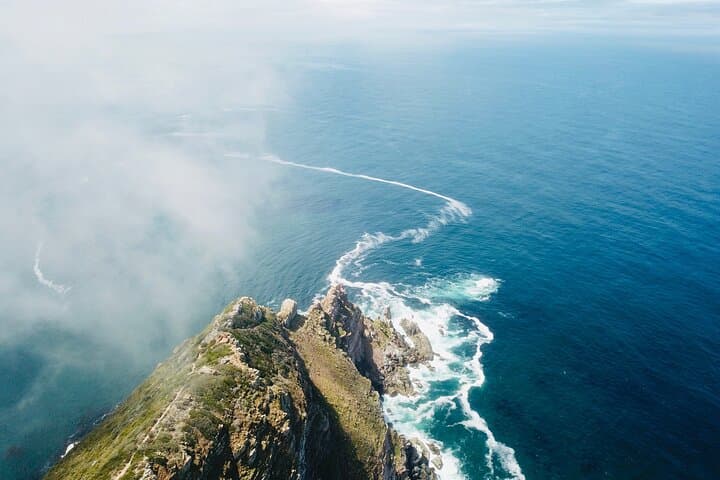
Sailors long feared this headland—Portuguese charts called it Cabo das Agulhas (Cape of the Needles) and mariners named it the Cape of Storms for the wild currents where the Indian and Atlantic meet. Geologically it’s a rocky promontory of folded sandstone and shale, a place where longshore drift and storm surf reveal old ship timbers and bones of the coastline.
Local culture is small-town Cape country: fishing villages, shipwreck lore, and family vineyards inland. The nearby Agulhas National Park protects dunes, fynbos, and a strip of coastline that’s quieter than the more famous Cape Peninsula.
Practical guidance: this private full-day tour typically runs about eight hours—plan for roughly 220 km (≈3 hours) from Cape Town each way. Wear sturdy shoes for uneven rock and boots for slippery tide zones; a windproof layer and sun protection are essential. Carry water and snacks even if refreshments are offered. Time visits for lower wind and calmer seas if you want clearer views of the dividing line; whale season (winter–spring) brings occasional blows from offshore.
Respect marked trails, avoid disturbing nesting birds and seals, and check lighthouse opening times if you want to climb. For an accessible, dramatic daytrip, Cape Agulhas delivers a clear sense of place: an edge of continent where currents argue and history is written in wreckage and rock.
moderate.
8 hours (full day).
Moderate fitness for short walks on uneven terrain and the ability to climb lighthouse steps if desired
Yes — at the official geographic marker you can pose between the Indian and Atlantic; the marker is accessible by foot from the parking area.
Expect about 220 km and roughly 3 hours driving each way from central Cape Town, depending on traffic and stops.
The lighthouse is a prominent stop but opening hours and access vary; check ahead or ask your guide to confirm climb availability and any small entrance fee.
Small towns like Struisbaai and L'Agulhas have cafés, public toilets and shops, but bring water and snacks for remote stretches of coastline.
Historically a notorious navigation hazard, Cape Agulhas marked the dividing line for ships rounding the southern tip and carries Portuguese and maritime place names.
Part of the surrounding Agulhas National Park and a protected marine zone; stick to trails, avoid trampling fynbos, and observe wildlife from a distance to reduce disturbance.
Africa Afrika Travel operates guided outdoor trips and adventures with an emphasis on safety, stewardship, and memorable experiences.
Wind and salt press against your face as the road thins and the horizon opens: here, at Cape Agulhas, the coastline tilts south and the ocean seems to decide which way to run. On a clear day the wind carries the crash of surf and the rattle of gulls; a low stone lighthouse keeps quiet watch above a scatter of rusted wrecks.
Wind and salt press against your face as the road thins and the horizon opens: here, at Cape Agulhas, the coastline tilts south and the ocean seems to decide which way to run. On a clear day the wind carries the crash of surf and the rattle of gulls; a low stone lighthouse keeps quiet watch above a scatter of rusted wrecks.
Sailors long feared this headland—Portuguese charts called it Cabo das Agulhas (Cape of the Needles) and mariners named it the Cape of Storms for the wild currents where the Indian and Atlantic meet. Geologically it’s a rocky promontory of folded sandstone and shale, a place where longshore drift and storm surf reveal old ship timbers and bones of the coastline.
Local culture is small-town Cape country: fishing villages, shipwreck lore, and family vineyards inland. The nearby Agulhas National Park protects dunes, fynbos, and a strip of coastline that’s quieter than the more famous Cape Peninsula.
Practical guidance: this private full-day tour typically runs about eight hours—plan for roughly 220 km (≈3 hours) from Cape Town each way. Wear sturdy shoes for uneven rock and boots for slippery tide zones; a windproof layer and sun protection are essential. Carry water and snacks even if refreshments are offered. Time visits for lower wind and calmer seas if you want clearer views of the dividing line; whale season (winter–spring) brings occasional blows from offshore.
Respect marked trails, avoid disturbing nesting birds and seals, and check lighthouse opening times if you want to climb. For an accessible, dramatic daytrip, Cape Agulhas delivers a clear sense of place: an edge of continent where currents argue and history is written in wreckage and rock.