THE ADVENTURE COLLECTIVE® · Independent discovery and booking for outdoor travel

Walk Sarajevo’s compact old town where Ottoman bazaars, Austro-Hungarian facades, and the site of 1914’s assassination meet. This 3–4 hour guided tour blends history, architecture, and local flavors with practical tips for first-time visitors.
Walk Sarajevo’s compact old town where Ottoman bazaars, Austro-Hungarian facades, and the site of 1914’s assassination meet. This 3–4 hour guided tour blends history, architecture, and local flavors with practical tips for first-time visitors.
You step from a narrow alley onto a cobbled square and the city seems to speak in two tongues: a mosque’s call slides past cathedral bells while the Miljacka River dares you to follow its slow curve through the old town. Morning light slants across red-tile roofs, and the steam of a freshly grilled ćevapi rises from a courtyard vendor—simple signals of Sarajevo’s layered identity.
Verified experiences and guided adventures in the surrounding area.
Operated by Kula-Turist · Sarajevo, Federation of Bosnia and Herzegovina
You step from a narrow alley onto a cobbled square and the city seems to speak in two tongues: a mosque’s call slides past cathedral bells while the Miljacka River dares you to follow its slow curve through the old town. Morning light slants across red-tile roofs, and the steam of a freshly grilled ćevapi rises from a courtyard vendor—simple signals of Sarajevo’s layered identity.
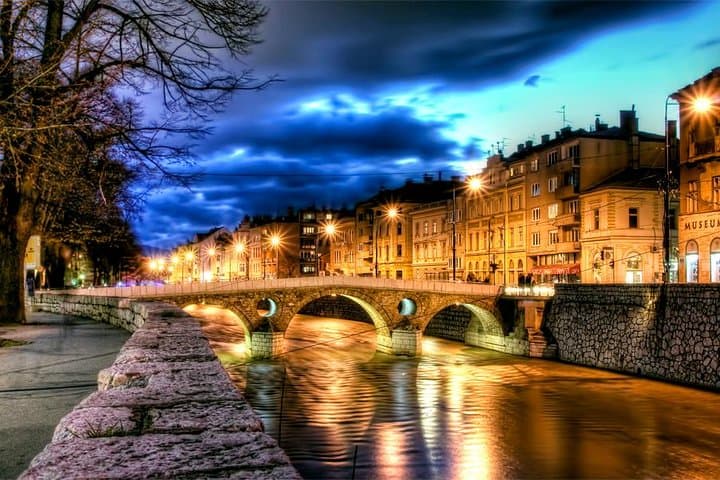
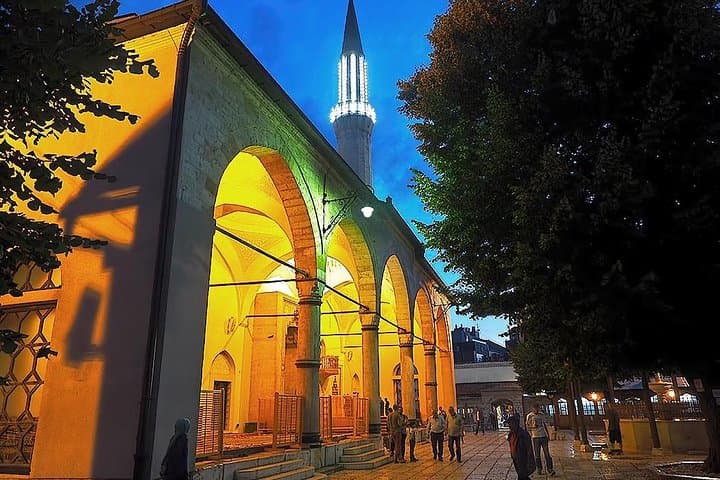
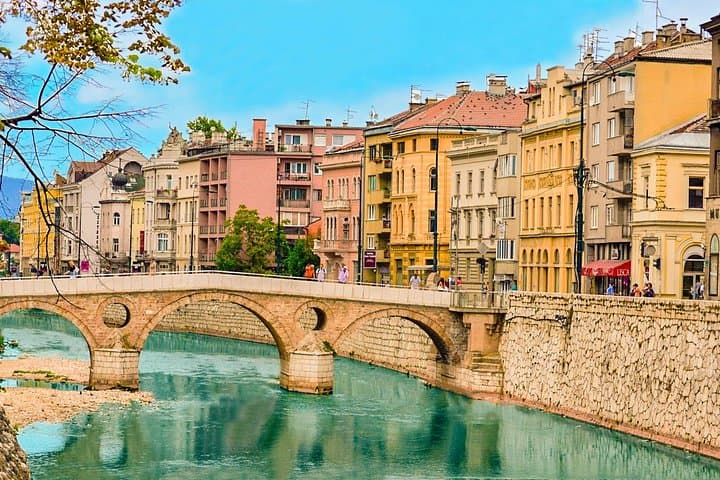
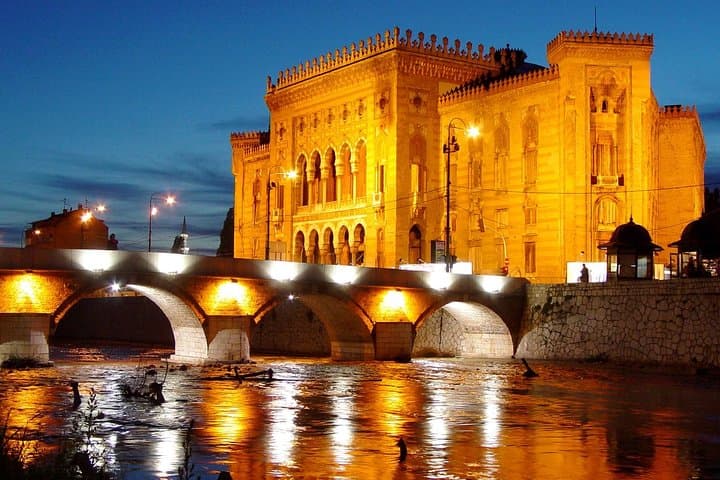
Sarajevo sits in a river valley carved into the Dinaric Alps, where Ottoman bazaars and Austro-Hungarian facades sit cheek by jowl. Centuries of trade and empire left architecture in miniature: the Ottoman-era Baščaršija, the 16th-century Gazi Husrev-beg Mosque, the neo-Moorish Vijećnica rebuilt after the 1990s siege, and the Latin Bridge—where a single assassination in 1914 accelerated the 20th century. The city’s geology—steep hills and narrow river corridors—gives many viewpoints and compact neighborhoods that invite walking.
On this 3–4 hour guided route you’ll move at an easy pace through religious sites, market lanes, and Austro-Hungarian boulevards, with pauses for context and tastings. Practical notes: bring small-denomination notes for market purchases, wear sturdy shoes for cobbles and occasional stairs, and schedule the walk for early morning or late afternoon to avoid midday crowds and heat. Respect places of worship—modest dress and quiet photography are expected. Hydrate frequently; water fountains and cafes are common but not constant.
The tour is an accessible, sensory introduction to Sarajevo’s hybrid identity—historical, human, and stubbornly alive.
easy.
3–4 hours.
Suitable for most fitness levels; requires ability to walk on uneven cobbles and climb short stairways.
Expect about 3–4 hours of mostly easy walking with short stops; the route includes cobbled streets and brief stair sections but is not strenuous.
This general guided route covers exterior stops and interpretation; specific admissions depend on the tour operator—confirm at booking for included sites.
Guides typically speak English and local languages; check the operator listing for other language options or private guide requests.
Yes—this is family-friendly; infants may need to sit on laps in transport and strollers may be difficult on cobbles, so a carrier can help.
Sarajevo’s streets reflect Ottoman trade routes and Austro-Hungarian modernization; the Latin Bridge area is historically notable as the site linked to the outbreak of World War I in 1914.
Support local guides and small businesses to keep heritage sites maintained; avoid single-use plastics and stick to marked paths to reduce wear on historic fabric.
Kula-Turist operates guided outdoor trips and adventures with an emphasis on safety, stewardship, and memorable experiences.
You step from a narrow alley onto a cobbled square and the city seems to speak in two tongues: a mosque’s call slides past cathedral bells while the Miljacka River dares you to follow its slow curve through the old town. Morning light slants across red-tile roofs, and the steam of a freshly grilled ćevapi rises from a courtyard vendor—simple signals of Sarajevo’s layered identity.
You step from a narrow alley onto a cobbled square and the city seems to speak in two tongues: a mosque’s call slides past cathedral bells while the Miljacka River dares you to follow its slow curve through the old town. Morning light slants across red-tile roofs, and the steam of a freshly grilled ćevapi rises from a courtyard vendor—simple signals of Sarajevo’s layered identity.
Sarajevo sits in a river valley carved into the Dinaric Alps, where Ottoman bazaars and Austro-Hungarian facades sit cheek by jowl. Centuries of trade and empire left architecture in miniature: the Ottoman-era Baščaršija, the 16th-century Gazi Husrev-beg Mosque, the neo-Moorish Vijećnica rebuilt after the 1990s siege, and the Latin Bridge—where a single assassination in 1914 accelerated the 20th century. The city’s geology—steep hills and narrow river corridors—gives many viewpoints and compact neighborhoods that invite walking.
On this 3–4 hour guided route you’ll move at an easy pace through religious sites, market lanes, and Austro-Hungarian boulevards, with pauses for context and tastings. Practical notes: bring small-denomination notes for market purchases, wear sturdy shoes for cobbles and occasional stairs, and schedule the walk for early morning or late afternoon to avoid midday crowds and heat. Respect places of worship—modest dress and quiet photography are expected. Hydrate frequently; water fountains and cafes are common but not constant.
The tour is an accessible, sensory introduction to Sarajevo’s hybrid identity—historical, human, and stubbornly alive.