THE ADVENTURE COLLECTIVE® · Independent discovery and booking for outdoor travel

Head to Bahía Málaga on Colombia’s Pacific coast for a full-day whale-watching tour during the humpback migration. Expect a one-hour boat crossing, local guides, and patient, close-range encounters with migratory humpbacks between August 10 and October 15.
Head to Bahía Málaga on Colombia’s Pacific coast for a full-day whale-watching tour during the humpback migration. Expect a one-hour boat crossing, local guides, and patient, close-range encounters with migratory humpbacks between August 10 and October 15.
The boat slips away from a mangrove-lined inlet and the Pacific opens, silver with morning light. In the distance a blow threads the air, then another — the rise and fall of a humpback breaking the horizon. For a few tense, thrilling minutes the sea becomes a stage and the whales the performers, arching and tail-slapping as they travel north from Antarctic feeding grounds.
Verified experiences and guided adventures in the surrounding area.
Operated by La sucursal del cielo · Buenaventura, Valle del Cauca
The boat slips away from a mangrove-lined inlet and the Pacific opens, silver with morning light. In the distance a blow threads the air, then another — the rise and fall of a humpback breaking the horizon. For a few tense, thrilling minutes the sea becomes a stage and the whales the performers, arching and tail-slapping as they travel north from Antarctic feeding grounds.
Bahía Málaga sits on Colombia’s rugged Pacific edge in Valle del Cauca, a coastline carved by tectonic uplift, heavy rain and dense rainforest. The region is part of the Chocó biogeographic zone, culturally shaped by Afro-Colombian coastal communities whose fishing traditions and small settlements line the shore. Humpback whales (Megaptera novaeangliae) arrive each year to calve and socialize between mid-August and mid-October, a migration visible from small, local boats that keep strict approach limits under Colombian regulations.
Expect a full-day excursion (about 10 hours total) with hotel pickup, a short open-boat crossing — roughly 1 hour to Bahía Málaga — and on-water viewing windows when whales surface. The water can be choppy; mornings are usually calmer. Guides provide local context, explain whale behavior, and follow distance rules to minimize disturbance. Bring binoculars, a waterproof layer, seasickness remedies and a charged camera.
This trip is less about guaranteed breaches and more about patient observation: blows, flukes, tail slaps and the slow choreography of migrating giants. Respect instructions, keep noise low, and let the ocean decide the show — the whales will come when they’re ready.
easy.
10 hours (full day).
Light fitness required — able to board small boats and stand for periods; not suitable for those with serious back or heart conditions.
Humpback whales are reliably present between August 10 and October 15; operators concentrate tours in that window for best sightings.
Tours typically depart from the Buenaventura/Malecón area or nearby pickup points; the crossing to Bahía Málaga is roughly one hour, with the full experience lasting about 10 hours including transfers and meals.
During peak season sightings are likely but not guaranteed—expect multiple blows, close approaches and occasional tail slaps, though viewing depends on animal behavior and sea conditions.
Children are permitted but must be accompanied by adults; small open boats and rough seas present risks, so parents should evaluate comfort with boat travel and follow guide instructions.
Bahía Málaga and the wider Pacific coast are part of the Chocó region, long inhabited by Afro-Colombian communities with deep connections to fishing and coastal trade.
Operators typically follow Colombian marine-mammal approach rules and collect small environmental fees; minimizing noise and maintaining distance are key to reducing disturbance.
La sucursal del cielo operates guided outdoor trips and adventures with an emphasis on safety, stewardship, and memorable experiences.
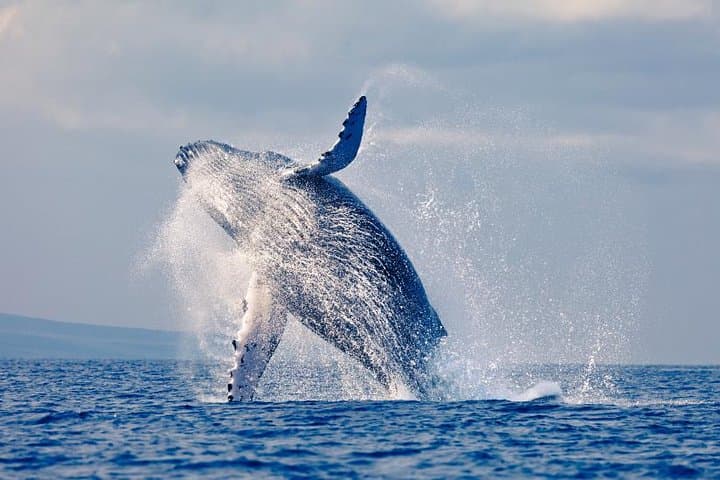
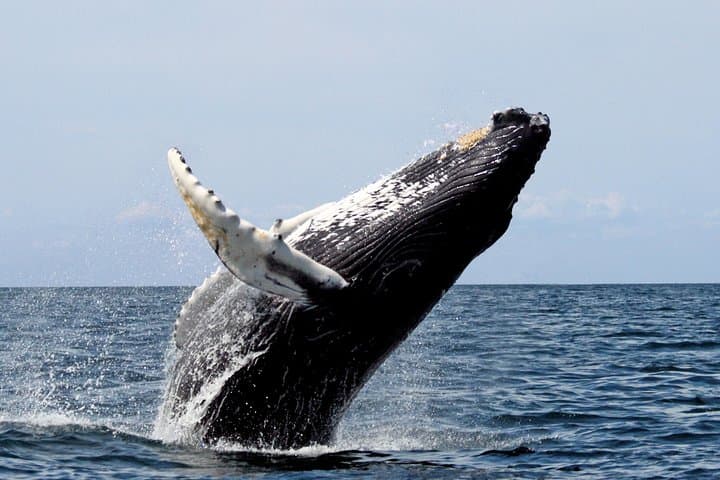
The boat slips away from a mangrove-lined inlet and the Pacific opens, silver with morning light. In the distance a blow threads the air, then another — the rise and fall of a humpback breaking the horizon. For a few tense, thrilling minutes the sea becomes a stage and the whales the performers, arching and tail-slapping as they travel north from Antarctic feeding grounds.
The boat slips away from a mangrove-lined inlet and the Pacific opens, silver with morning light. In the distance a blow threads the air, then another — the rise and fall of a humpback breaking the horizon. For a few tense, thrilling minutes the sea becomes a stage and the whales the performers, arching and tail-slapping as they travel north from Antarctic feeding grounds.
Bahía Málaga sits on Colombia’s rugged Pacific edge in Valle del Cauca, a coastline carved by tectonic uplift, heavy rain and dense rainforest. The region is part of the Chocó biogeographic zone, culturally shaped by Afro-Colombian coastal communities whose fishing traditions and small settlements line the shore. Humpback whales (Megaptera novaeangliae) arrive each year to calve and socialize between mid-August and mid-October, a migration visible from small, local boats that keep strict approach limits under Colombian regulations.
Expect a full-day excursion (about 10 hours total) with hotel pickup, a short open-boat crossing — roughly 1 hour to Bahía Málaga — and on-water viewing windows when whales surface. The water can be choppy; mornings are usually calmer. Guides provide local context, explain whale behavior, and follow distance rules to minimize disturbance. Bring binoculars, a waterproof layer, seasickness remedies and a charged camera.
This trip is less about guaranteed breaches and more about patient observation: blows, flukes, tail slaps and the slow choreography of migrating giants. Respect instructions, keep noise low, and let the ocean decide the show — the whales will come when they’re ready.