THE ADVENTURE COLLECTIVE® · Independent discovery and booking for outdoor travel

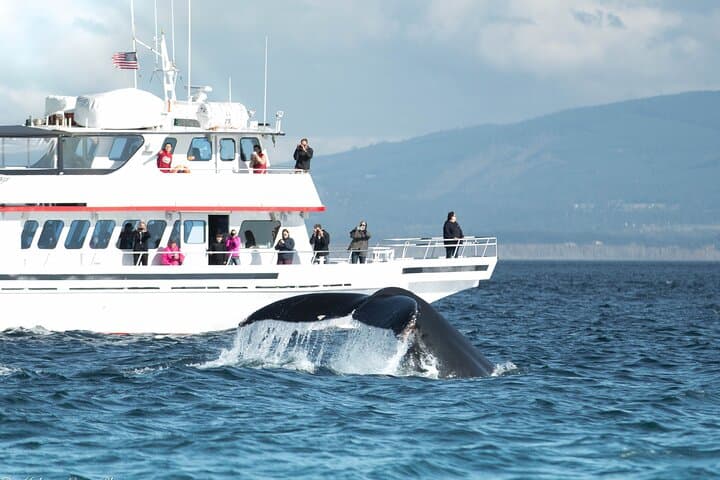
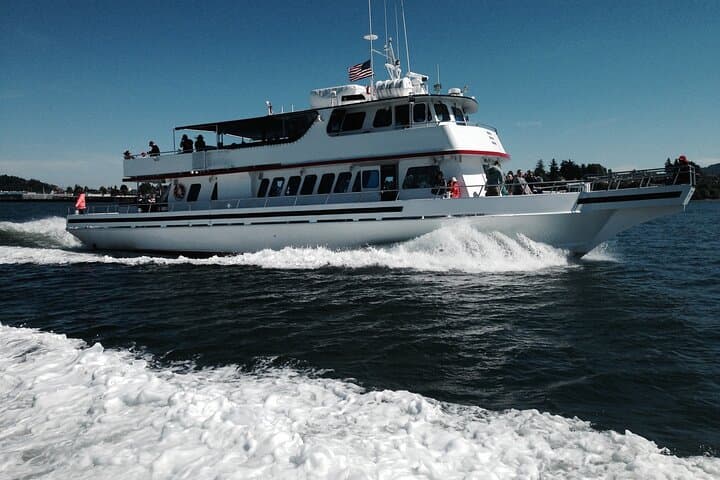
Board a heated, 55-foot whale watch from Friday Harbor and cross the nutrient-rich Salish Sea in search of orcas, humpbacks, and sea birds. This four-hour cruise combines local natural history with practical, on-deck viewing—ideal for photographers and families.
Board a heated, 55-foot whale watch from Friday Harbor and cross the nutrient-rich Salish Sea in search of orcas, humpbacks, and sea birds. This four-hour cruise combines local natural history with practical, on-deck viewing—ideal for photographers and families.
A cold wind lifts off the Salish Sea as the MV Sea Lion eases away from Friday Harbor, windows fogging where cameras are pressed to glass. The boat slips past pilings and wooden floats, the shoreline of San Juan Island sliding into a ragged ribbon of firs and rocky headlands. Within minutes the water broadens, and the river of currents that threads between islands begins to rearrange the day’s traffic—porpoises dart, gulls hover like punctuation, and the ocean reads your expectation with a practiced indifference.
Verified experiences and guided adventures in the surrounding area.
Operated by San Juan Safaris · Friday Harbor, Washington
A cold wind lifts off the Salish Sea as the MV Sea Lion eases away from Friday Harbor, windows fogging where cameras are pressed to glass. The boat slips past pilings and wooden floats, the shoreline of San Juan Island sliding into a ragged ribbon of firs and rocky headlands. Within minutes the water broadens, and the river of currents that threads between islands begins to rearrange the day’s traffic—porpoises dart, gulls hover like punctuation, and the ocean reads your expectation with a practiced indifference.
The islands sit where glacial carving meets tidal mixing: deep channels funnel nutrient-rich Pacific water into quieter bays, attracting herring, salmon, and the whales that follow them. Coast Salish peoples have tended these shores for millennia; later, 19th-century boundary disputes and island farms left a patchwork of historical sites and lighthouses. Modern whale watching follows well-worn migration and feeding patterns, and local operators work under strict guidelines to minimize disturbance.
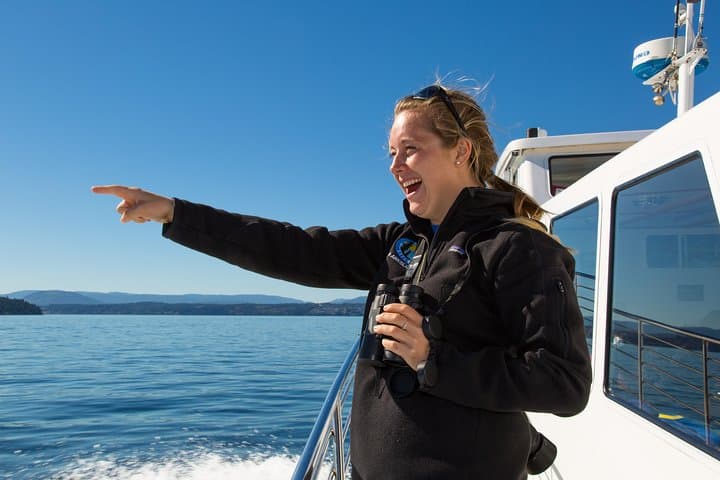
Expect a four-hour outing aboard a 55-foot vessel with a heated cabin and walk-around deck. Guides read hydrophone pings and surface signs, balancing patience with quick maneuvering when whales appear. Dress in layers for wind and spray; binoculars and a camera with a long lens help, but the real view is often right at the rail.
Practical notes: arrive early for boarding, bring motion-sickness prevention if you’re sensitive, and pack water and snacks. Operators recommend rubber-soled shoes for wet decks and remind guests to keep voice and light to a minimum near feeding animals. The trip is accessible to most fitness levels and is one of the most reliable ways to see orcas, humpbacks, and abundant seabirds in the Salish Sea.
easy.
4 hours.
Minimal fitness required; able to stand and move on a boat for several hours
The standard tour lasts about four hours from boarding to return to the dock.
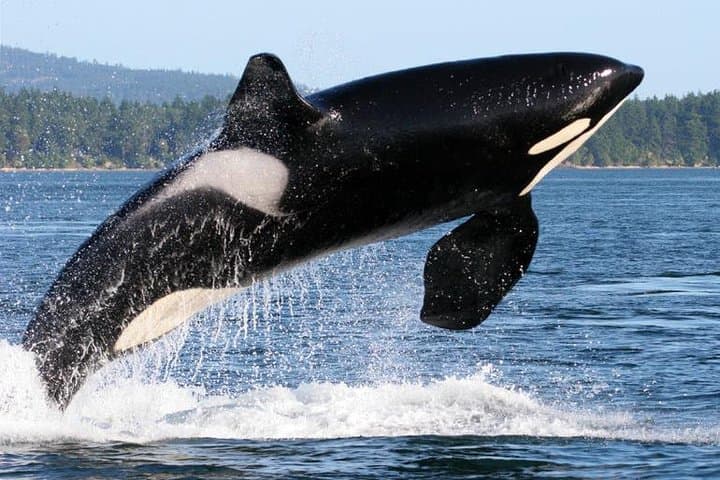
Common sightings include orcas, gray whales, humpbacks, minke whales, harbor seals, Steller sea lions, and bald eagles—though sightings cannot be guaranteed.
Yes—restrooms are on board and infant seats are available, but children under two should be in a harness carrier and supervised in the cabin for safety.
Take preventive medication before boarding, sit mid-ship where motion is lowest, focus on the horizon, and notify crew if you need assistance.
San Juan Island has long been used by Coast Salish peoples and later became a flashpoint in the 19th-century Anglo-American boundary dispute known as the Pig War; the maritime landscape shaped local settlement and seafaring livelihoods.
Resident southern resident orcas are endangered—operators follow federal and local approach rules and emphasize viewing practices that minimize noise and disruption to feeding whales.
San Juan Safaris operates guided outdoor trips and adventures with an emphasis on safety, stewardship, and memorable experiences.
A cold wind lifts off the Salish Sea as the MV Sea Lion eases away from Friday Harbor, windows fogging where cameras are pressed to glass. The boat slips past pilings and wooden floats, the shoreline of San Juan Island sliding into a ragged ribbon of firs and rocky headlands. Within minutes the water broadens, and the river of currents that threads between islands begins to rearrange the day’s traffic—porpoises dart, gulls hover like punctuation, and the ocean reads your expectation with a practiced indifference.
A cold wind lifts off the Salish Sea as the MV Sea Lion eases away from Friday Harbor, windows fogging where cameras are pressed to glass. The boat slips past pilings and wooden floats, the shoreline of San Juan Island sliding into a ragged ribbon of firs and rocky headlands. Within minutes the water broadens, and the river of currents that threads between islands begins to rearrange the day’s traffic—porpoises dart, gulls hover like punctuation, and the ocean reads your expectation with a practiced indifference.
The islands sit where glacial carving meets tidal mixing: deep channels funnel nutrient-rich Pacific water into quieter bays, attracting herring, salmon, and the whales that follow them. Coast Salish peoples have tended these shores for millennia; later, 19th-century boundary disputes and island farms left a patchwork of historical sites and lighthouses. Modern whale watching follows well-worn migration and feeding patterns, and local operators work under strict guidelines to minimize disturbance.
Expect a four-hour outing aboard a 55-foot vessel with a heated cabin and walk-around deck. Guides read hydrophone pings and surface signs, balancing patience with quick maneuvering when whales appear. Dress in layers for wind and spray; binoculars and a camera with a long lens help, but the real view is often right at the rail.
Practical notes: arrive early for boarding, bring motion-sickness prevention if you’re sensitive, and pack water and snacks. Operators recommend rubber-soled shoes for wet decks and remind guests to keep voice and light to a minimum near feeding animals. The trip is accessible to most fitness levels and is one of the most reliable ways to see orcas, humpbacks, and abundant seabirds in the Salish Sea.