THE ADVENTURE COLLECTIVE® · Independent discovery and booking for outdoor travel

Board a swift RIB from Calheta and split the Atlantic swell in search of dolphins and whales. This two-hour outing blends quick-acting boat handling with local spotter expertise to maximize close, responsible encounters.
Board a swift RIB from Calheta and split the Atlantic swell in search of dolphins and whales. This two-hour outing blends quick-acting boat handling with local spotter expertise to maximize close, responsible encounters.
A raw Atlantic swell lifts the RIB and sprays salt across your jacket as the shore of Calheta recedes into a line of terraced sugarcane fields and basalt cliffs. Binoculars sweep a horizon that can flip from glassy calm to rolling swell in minutes; the spotter on land watches like a hawk and points when a blow or a dorsal breaks the skyline.
Verified experiences and guided adventures in the surrounding area.
Operated by H2oMadeira · Calheta, Madeira
A raw Atlantic swell lifts the RIB and sprays salt across your jacket as the shore of Calheta recedes into a line of terraced sugarcane fields and basalt cliffs. Binoculars sweep a horizon that can flip from glassy calm to rolling swell in minutes; the spotter on land watches like a hawk and points when a blow or a dorsal breaks the skyline.
Madeira’s volcanic shelf drops sharply offshore, creating nutrient-rich upwellings that attract cetaceans year-round. Historically this coastline hosted a small whaling industry; today, local operators trade harpoons for research collaboration and responsible viewing. Culture here still smells of sea salt and sugarcane rum—fishermen’s traditions inform how guides read the water and weather.
On the water you’ll notice how quick a RIB is for following cues: a spotted dolphin bow-riding, a bottlenose nosing the surface, or the distant silhouette of a sperm whale. Encounters are migratory and never guaranteed, but mornings and calm seas raise the odds.
Practicalities: tours are roughly two hours, departing from Calheta harbor. Dress in layers and windproof outerwear; expect spray and a chill even in summer. If you’re prone to motion sickness, take prevention the night before and again an hour prior. Operators follow Madeira’s marine-watching guidelines—do not attempt to touch or feed animals and keep electronics on silent during approaches. Note restrictions for pregnant travelers and those with serious spinal or cardiac conditions; bring ID, arrive 20–30 minutes early, and listen to the safety briefing. With basic preparation, this brisk coastal outing is an immediate and tangible way to meet Madeira’s wild marine life.
moderate.
2 hours.
Suitable for people with a moderate level of fitness who can climb into a RIB and remain steady on a moving boat.
No—sightings depend on migratory patterns and sea conditions, but experienced spotters and a fast RIB increase the chances.
Tours depart from Calheta harbor (marina area); arrive 20–30 minutes early to check in and receive the safety briefing.
Not recommended for pregnant travelers and those with serious spinal or cardiac conditions; check operator guidance for minimum age and safety requirements.
Operators may cancel for bad weather; this tour’s policy allows a full refund if cancelled at least 24 hours before or if weather prevents sailing.
Calheta’s coastal economy was built on fishing and sugarcane; Madeira’s shores once supported small-scale whaling, a practice now replaced by conservation and research.
Responsible operators follow Madeira’s marine-guidelines to minimize disturbance, report sightings to local researchers, and avoid chasing or encircling animals.
H2oMadeira operates guided outdoor trips and adventures with an emphasis on safety, stewardship, and memorable experiences.
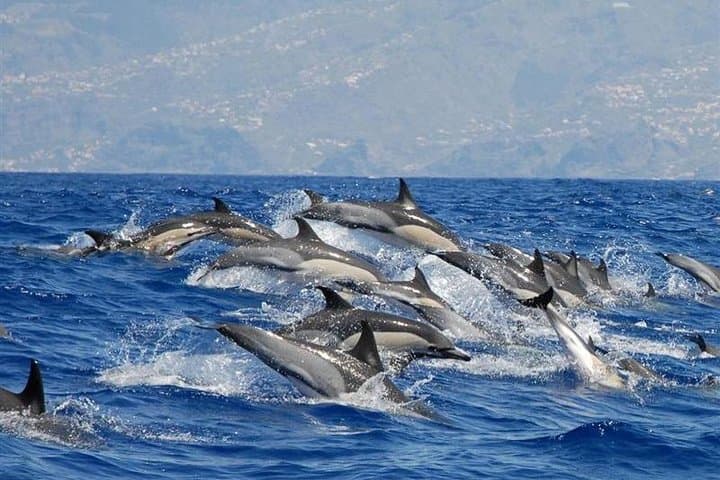


A raw Atlantic swell lifts the RIB and sprays salt across your jacket as the shore of Calheta recedes into a line of terraced sugarcane fields and basalt cliffs. Binoculars sweep a horizon that can flip from glassy calm to rolling swell in minutes; the spotter on land watches like a hawk and points when a blow or a dorsal breaks the skyline.
A raw Atlantic swell lifts the RIB and sprays salt across your jacket as the shore of Calheta recedes into a line of terraced sugarcane fields and basalt cliffs. Binoculars sweep a horizon that can flip from glassy calm to rolling swell in minutes; the spotter on land watches like a hawk and points when a blow or a dorsal breaks the skyline.
Madeira’s volcanic shelf drops sharply offshore, creating nutrient-rich upwellings that attract cetaceans year-round. Historically this coastline hosted a small whaling industry; today, local operators trade harpoons for research collaboration and responsible viewing. Culture here still smells of sea salt and sugarcane rum—fishermen’s traditions inform how guides read the water and weather.
On the water you’ll notice how quick a RIB is for following cues: a spotted dolphin bow-riding, a bottlenose nosing the surface, or the distant silhouette of a sperm whale. Encounters are migratory and never guaranteed, but mornings and calm seas raise the odds.
Practicalities: tours are roughly two hours, departing from Calheta harbor. Dress in layers and windproof outerwear; expect spray and a chill even in summer. If you’re prone to motion sickness, take prevention the night before and again an hour prior. Operators follow Madeira’s marine-watching guidelines—do not attempt to touch or feed animals and keep electronics on silent during approaches. Note restrictions for pregnant travelers and those with serious spinal or cardiac conditions; bring ID, arrive 20–30 minutes early, and listen to the safety briefing. With basic preparation, this brisk coastal outing is an immediate and tangible way to meet Madeira’s wild marine life.