THE ADVENTURE COLLECTIVE® · Independent discovery and booking for outdoor travel

A compact, five-day overland route through Egypt’s Western Desert linking Bahariya Oasis, the chalk pinnacles of the White Desert, Dakhla and Kharga oases and a final transfer to Luxor. Expect long drives, short hikes, desert camps and rich archaeological stops.
A compact, five-day overland route through Egypt’s Western Desert linking Bahariya Oasis, the chalk pinnacles of the White Desert, Dakhla and Kharga oases and a final transfer to Luxor. Expect long drives, short hikes, desert camps and rich archaeological stops.
The morning light on the asphalt ribbon from Cairo thinly paints the palms as the convoy heads west; dust rises like a promise and the air tightens around low, dark volcanic hills. By afternoon the Black Desert’s basalt mounds loom, their black crowns daring you to step closer, while the White Desert’s chalk ghosts wait beyond—wind-sculpted pillars that look like stage props arranged by time.
Verified experiences and guided adventures in the surrounding area.
Operated by Tamer Safari · Bahariya Oasis, Giza Governorate
The morning light on the asphalt ribbon from Cairo thinly paints the palms as the convoy heads west; dust rises like a promise and the air tightens around low, dark volcanic hills. By afternoon the Black Desert’s basalt mounds loom, their black crowns daring you to step closer, while the White Desert’s chalk ghosts wait beyond—wind-sculpted pillars that look like stage props arranged by time.
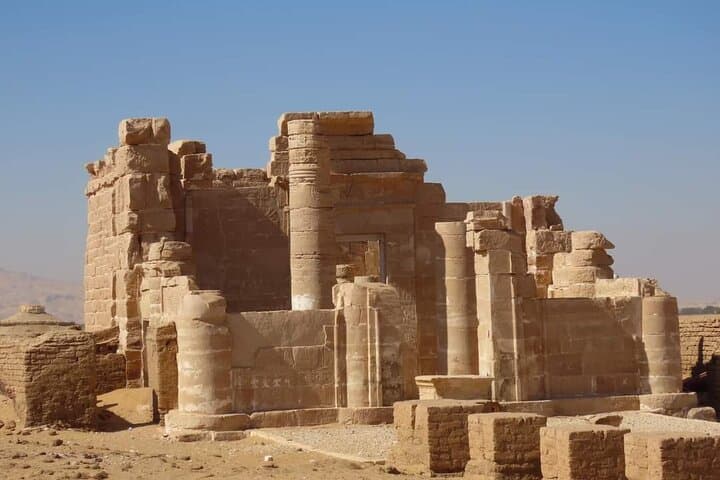
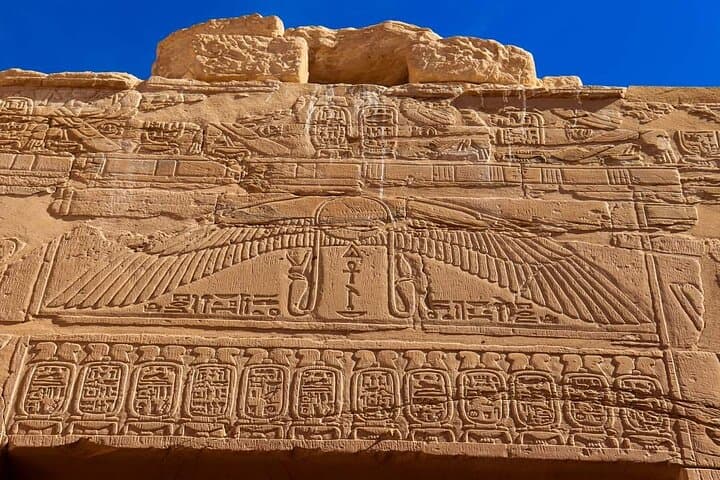
This route stitches together layers of history: Pharaonic caravan tracks that fed the Darb El-Arba’īn, Roman temples such as Deir el-Hajar, and mudbrick villages like Al-Qasr that preserve medieval life. Geologically the White Desert’s chalk formations are soft limestone shaped by salt-laden winds; the Black Desert’s volcanic remnants offer sharp contrast and sparse hardy life.
Cultural notes: oasis communities still rely on date palms, small-scale agriculture and traditional crafts; markets in Kharga and Dakhla give a live portrait of desert trade.
Expect long drives in air-conditioned 4x4s, short exploratory walks to viewpoints and archaeological sites, and two nights under canvas in simple desert camps. Nights are cold; days can be intensely hot. Practical tips—pace your daylight activity, carry layered insulation for cold desert nights, and bring a headlamp and spare water. Photography windows are early morning and late afternoon when shadows carve the landscapes.
This itinerary is an accessible but immersive desert expedition: it rewards anyone who wants geology, quiet history, and the particular stillness only the Sahara can deliver.
moderate.
4–5 days.
Suitable for travelers in decent general fitness—long drives with intermittent short walks and easy site explorations; mobility-friendly but uneven desert terrain can be demanding.
Expect several hours of driving most days—some transfers between oases take 4–6 hours; the tour balances driving with short guided stops and campsite breaks.
Camps are simple desert-style—dinner and a mat/bed provided in shared tents or hut-style accommodations in some oases; facilities can be basic with shared bathrooms.
The itinerary is family-friendly but involves long drives and uneven terrain; travelers with limited mobility should check specific site access and vehicle accommodations in advance.
Entrance fees for archaeological sites are generally included when specified, but national park permits or additional site fees can vary—confirm with your operator before departure.
The oases of Egypt were critical stops on the Darb El-Arba’īn caravan route; Roman and later Islamic settlements left temples and mudbrick towns visible across the route.
White Desert’s chalk formations are fragile—avoid climbing delicate sculptures and follow Leave No Trace practices; local guides help minimize campsite impact and support community livelihoods.
Tamer Safari operates guided outdoor trips and adventures with an emphasis on safety, stewardship, and memorable experiences.
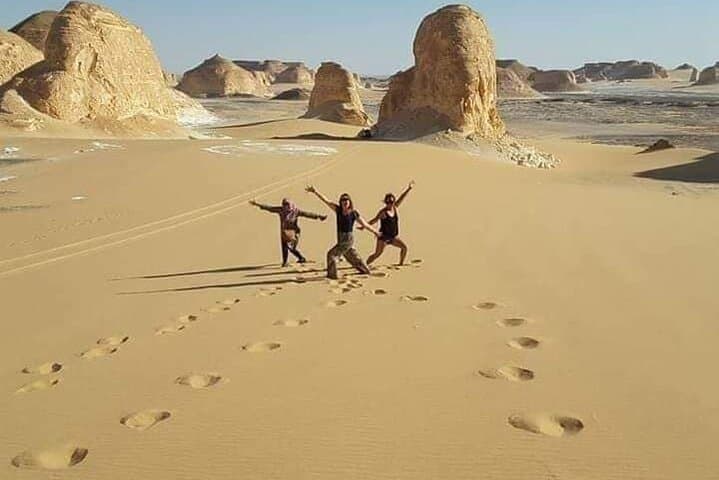
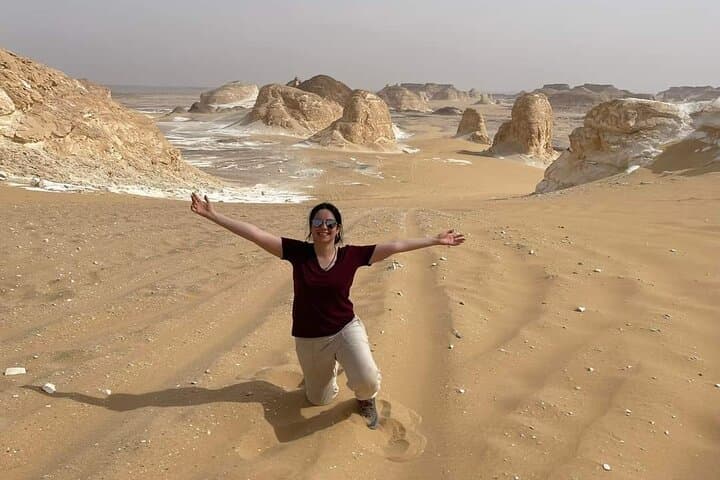
The morning light on the asphalt ribbon from Cairo thinly paints the palms as the convoy heads west; dust rises like a promise and the air tightens around low, dark volcanic hills. By afternoon the Black Desert’s basalt mounds loom, their black crowns daring you to step closer, while the White Desert’s chalk ghosts wait beyond—wind-sculpted pillars that look like stage props arranged by time.
The morning light on the asphalt ribbon from Cairo thinly paints the palms as the convoy heads west; dust rises like a promise and the air tightens around low, dark volcanic hills. By afternoon the Black Desert’s basalt mounds loom, their black crowns daring you to step closer, while the White Desert’s chalk ghosts wait beyond—wind-sculpted pillars that look like stage props arranged by time.
This route stitches together layers of history: Pharaonic caravan tracks that fed the Darb El-Arba’īn, Roman temples such as Deir el-Hajar, and mudbrick villages like Al-Qasr that preserve medieval life. Geologically the White Desert’s chalk formations are soft limestone shaped by salt-laden winds; the Black Desert’s volcanic remnants offer sharp contrast and sparse hardy life.
Cultural notes: oasis communities still rely on date palms, small-scale agriculture and traditional crafts; markets in Kharga and Dakhla give a live portrait of desert trade.
Expect long drives in air-conditioned 4x4s, short exploratory walks to viewpoints and archaeological sites, and two nights under canvas in simple desert camps. Nights are cold; days can be intensely hot. Practical tips—pace your daylight activity, carry layered insulation for cold desert nights, and bring a headlamp and spare water. Photography windows are early morning and late afternoon when shadows carve the landscapes.
This itinerary is an accessible but immersive desert expedition: it rewards anyone who wants geology, quiet history, and the particular stillness only the Sahara can deliver.