THE ADVENTURE COLLECTIVE® · Independent discovery and booking for outdoor travel

A concise West Bay bus tour that pairs colonial history, dramatic limestone at Hell, and local rum cake tastings. Ideal for travelers seeking an accessible half-day introduction to Grand Cayman’s culture and coastline.
A concise West Bay bus tour that pairs colonial history, dramatic limestone at Hell, and local rum cake tastings. Ideal for travelers seeking an accessible half-day introduction to Grand Cayman’s culture and coastline.
You step off the bus into West Bay and the air tastes like salt and citrus; palm shadows move across a colonial façade as the guide points toward the Governor’s House. The tour moves at a steady, social pace—photo stops at historic homes, short walks through public gardens, and a chance to trade jokes with locals at roadside stands.
Verified experiences and guided adventures in the surrounding area.
You step off the bus into West Bay and the air tastes like salt and citrus; palm shadows move across a colonial façade as the guide points toward the Governor’s House. The tour moves at a steady, social pace—photo stops at historic homes, short walks through public gardens, and a chance to trade jokes with locals at roadside stands.
Grand Cayman’s west shore reflects its layered past: British colonial architecture sits beside wooden homesteads that recall early planter life, and the island’s bedrock—uplifted marine limestone—creates the jagged, black-boned outcrops at Hell. Hell’s name comes from the jagged karst and scorched-looking limestone; a short stroll around the formations feels lunar, and the tiny Hell Post Office has become a playful detour for postcards and quick souvenirs.
Culturally, the route highlights the island’s blend of seafaring, plantation-era trade, and modern tourism. Expect interpretive remarks about the British Crown’s role and anecdotes about local rum production before a tasting stop at the Rumcake Store, where dense, sweet cakes showcase locally distilled flavors.
Practical guidance: the tour lasts roughly 1.5–2 hours with minimal walking and several standing-photo stops. Wear breathable footwear for short limestone scrambles, bring sun protection and a refillable water bottle, and time the tour for morning or late afternoon to avoid peak sun. Carry small bills for local vendors and your postcard at Hell—this is an easy, accessible half-day outing that blends geology, history, and local flavor.
easy.
1.5–2 hours.
Suitable for most travelers; minimal walking and short standing periods required
The tour runs about 1.5 to 2 hours with multiple short stops for photos, snacks, and light walking.
No—walking is brief and generally over flat surfaces, though there is uneven limestone at Hell that requires careful footing.
Yes; expect stops at the Rumcake Store and the Hell Post Office, where small purchases and samples are available—bring cash.
Yes; the pace and walking demands are low, but those with mobility limitations should note there are standing and short uneven-surface areas.
The West Bay shoreline preserves traces of British colonial administration and early Caymanian plantation life; small homesteads reflect 19th-century settler architecture.
Grand Cayman emphasizes reef and shoreline protection—avoid touching limestone formations at Hell and support local vendors who use sustainably sourced ingredients.
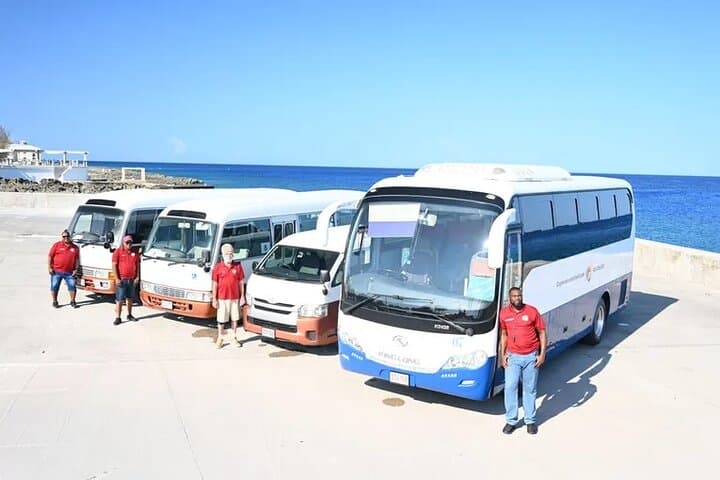
You step off the bus into West Bay and the air tastes like salt and citrus; palm shadows move across a colonial façade as the guide points toward the Governor’s House. The tour moves at a steady, social pace—photo stops at historic homes, short walks through public gardens, and a chance to trade jokes with locals at roadside stands.
You step off the bus into West Bay and the air tastes like salt and citrus; palm shadows move across a colonial façade as the guide points toward the Governor’s House. The tour moves at a steady, social pace—photo stops at historic homes, short walks through public gardens, and a chance to trade jokes with locals at roadside stands.
Grand Cayman’s west shore reflects its layered past: British colonial architecture sits beside wooden homesteads that recall early planter life, and the island’s bedrock—uplifted marine limestone—creates the jagged, black-boned outcrops at Hell. Hell’s name comes from the jagged karst and scorched-looking limestone; a short stroll around the formations feels lunar, and the tiny Hell Post Office has become a playful detour for postcards and quick souvenirs.
Culturally, the route highlights the island’s blend of seafaring, plantation-era trade, and modern tourism. Expect interpretive remarks about the British Crown’s role and anecdotes about local rum production before a tasting stop at the Rumcake Store, where dense, sweet cakes showcase locally distilled flavors.
Practical guidance: the tour lasts roughly 1.5–2 hours with minimal walking and several standing-photo stops. Wear breathable footwear for short limestone scrambles, bring sun protection and a refillable water bottle, and time the tour for morning or late afternoon to avoid peak sun. Carry small bills for local vendors and your postcard at Hell—this is an easy, accessible half-day outing that blends geology, history, and local flavor.