THE ADVENTURE COLLECTIVE® · Independent discovery and booking for outdoor travel

A focused half-day drive from Salalah across the Qara Mountains to Mughsayl, visiting Job's Tomb, frankincense stands and dramatic coastal blowholes. Ideal for travelers who want a compact introduction to Dhofar’s landscape and history.
A focused half-day drive from Salalah across the Qara Mountains to Mughsayl, visiting Job's Tomb, frankincense stands and dramatic coastal blowholes. Ideal for travelers who want a compact introduction to Dhofar’s landscape and history.
You leave Salalah behind and the road climbs into the Qara Mountains, where wind-carved ridges throw long shadows across dry valleys and frankincense trees cling to rocky terraces.
Verified experiences and guided adventures in the surrounding area.
Operated by Oman Day Tours · Salalah, Dhofar
You leave Salalah behind and the road climbs into the Qara Mountains, where wind-carved ridges throw long shadows across dry valleys and frankincense trees cling to rocky terraces.
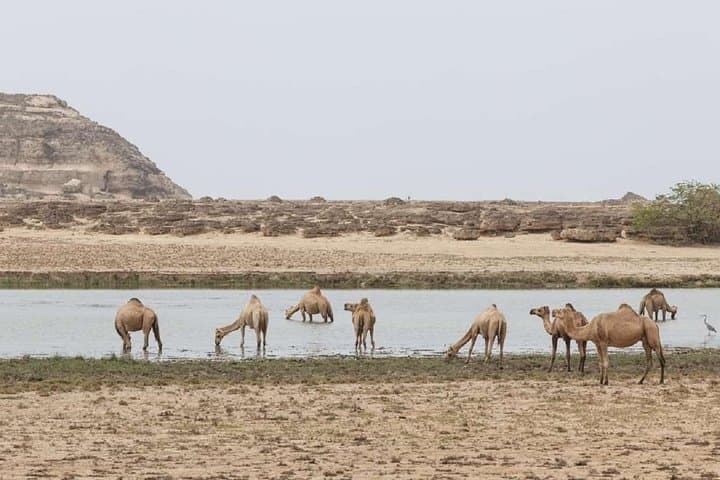
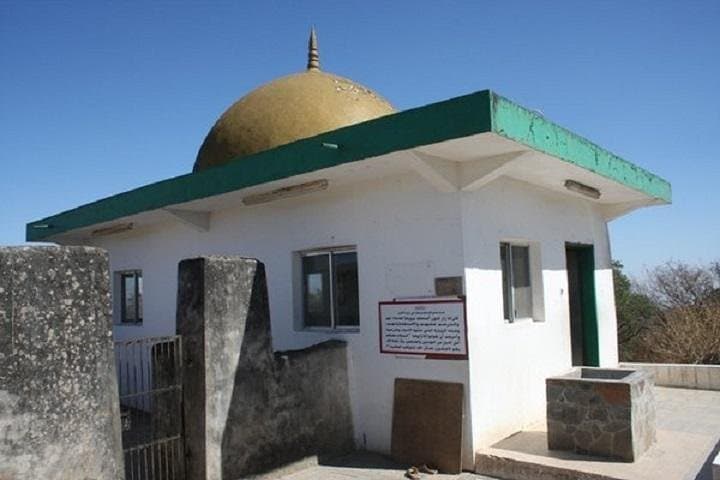
The guide slows for herds of camels and cattle that graze on scrub—small scenes of Dhofari rural life that feel unchanged by time. At Job's Tomb you step onto a plateau and look across the Al Garbīb plain; the story of Prophet Job is told here in local tradition and the slope opens into a broad, empty horizon.
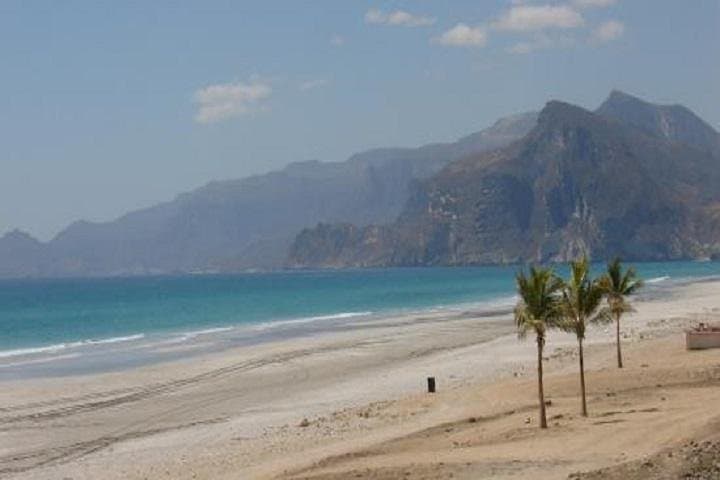
Geology in the west of Dhofar is blunt and elemental: limestone and rugged volcanic outcrops that weather into cliffs and narrow wadis. The coast near Mughsayl is where those mountains finally fall into the sea—white sand, sculpted cliffs and dramatic blowholes that can spur columns of water more than 20–30 meters high when the swell is right.
Frankincense trees dot the valleys; the resin they produce shaped Salalah’s trade history and still perfumes the air in dry months. Bird sanctuaries near Mughsayl attract shorebirds and migratory species along this coastline.
Practical edge: this is a half-day, mostly roadside touring with short walks and viewpoints—bring sun protection, sturdy shoes for uneven coastal rocks, and at least 1–2 liters of water. Khareef (monsoon) season (June–September) transforms the hills into misty green—plan for fog and damp ground. Arrive early to avoid midday heat and to see blowholes at higher tide. The tour includes private transfer and bottled water; carry a camera, light jacket and valid ID for park access.
easy.
3–5 hours.
Suitable for most fitness levels; involves short, easy walks and roadside viewpoints
This is a half-day tour, typically 3–5 hours including transfers and stops at viewpoints and Mughsayl.
National park fees are listed as included in the tour’s inclusions, but confirm at booking in case of local changes.
Job’s Tomb is a reputed religious site; visits are respectful and largely observational—dress modestly and follow your guide’s directions.
Yes; the logistics state it’s suitable for all fitness levels, but children should be supervised near cliffs and blowholes.
Salalah and Dhofar were central to the ancient frankincense trade, connecting Arabia to Mediterranean and South Asian markets for millennia.
Frankincense trees grow slowly and are sensitive to overharvest; support sustainable resin sources and avoid damaging groves while visiting.
Oman Day Tours operates guided outdoor trips and adventures with an emphasis on safety, stewardship, and memorable experiences.
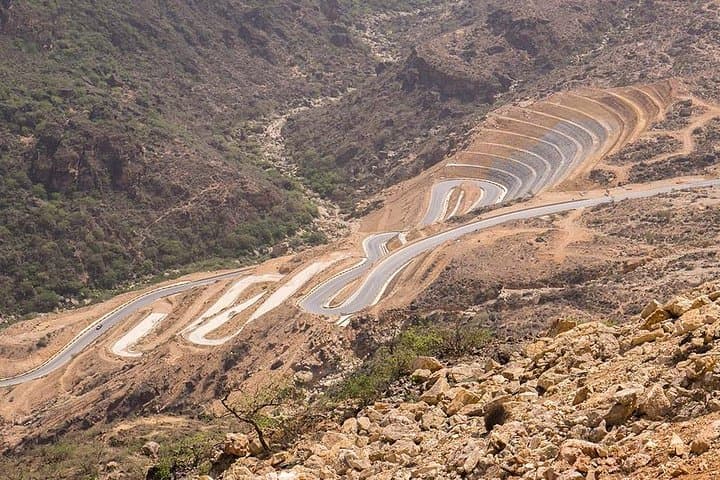
You leave Salalah behind and the road climbs into the Qara Mountains, where wind-carved ridges throw long shadows across dry valleys and frankincense trees cling to rocky terraces.
You leave Salalah behind and the road climbs into the Qara Mountains, where wind-carved ridges throw long shadows across dry valleys and frankincense trees cling to rocky terraces.
The guide slows for herds of camels and cattle that graze on scrub—small scenes of Dhofari rural life that feel unchanged by time. At Job's Tomb you step onto a plateau and look across the Al Garbīb plain; the story of Prophet Job is told here in local tradition and the slope opens into a broad, empty horizon.
Geology in the west of Dhofar is blunt and elemental: limestone and rugged volcanic outcrops that weather into cliffs and narrow wadis. The coast near Mughsayl is where those mountains finally fall into the sea—white sand, sculpted cliffs and dramatic blowholes that can spur columns of water more than 20–30 meters high when the swell is right.
Frankincense trees dot the valleys; the resin they produce shaped Salalah’s trade history and still perfumes the air in dry months. Bird sanctuaries near Mughsayl attract shorebirds and migratory species along this coastline.
Practical edge: this is a half-day, mostly roadside touring with short walks and viewpoints—bring sun protection, sturdy shoes for uneven coastal rocks, and at least 1–2 liters of water. Khareef (monsoon) season (June–September) transforms the hills into misty green—plan for fog and damp ground. Arrive early to avoid midday heat and to see blowholes at higher tide. The tour includes private transfer and bottled water; carry a camera, light jacket and valid ID for park access.