THE ADVENTURE COLLECTIVE® · Independent discovery and booking for outdoor travel

A 3–4 hour private drive from Doha takes you to Ras Brouq and Zekreet, where Richard Serra’s towering steel plates meet wind‑shaped limestone mushrooms. Explore coastal desert geology, prehistoric fort ruins and an internationally known land artwork with easy walking and big views.
A 3–4 hour private drive from Doha takes you to Ras Brouq and Zekreet, where Richard Serra’s towering steel plates meet wind‑shaped limestone mushrooms. Explore coastal desert geology, prehistoric fort ruins and an internationally known land artwork with easy walking and big views.
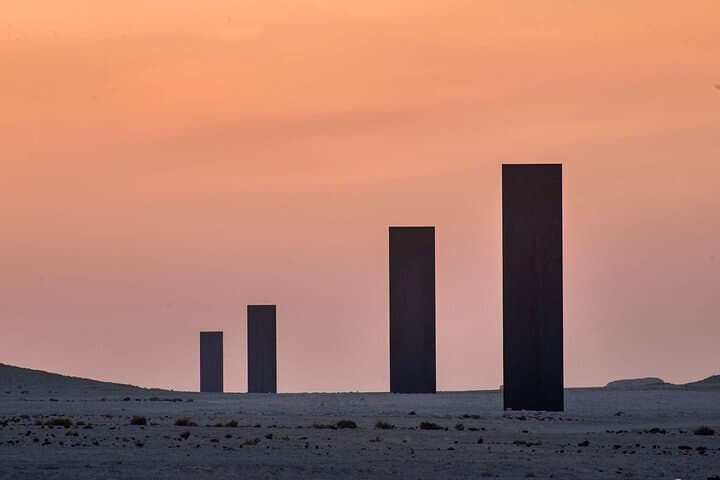
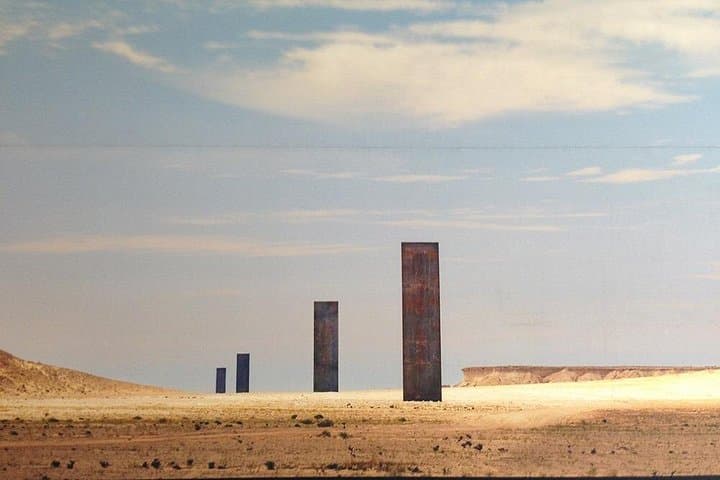
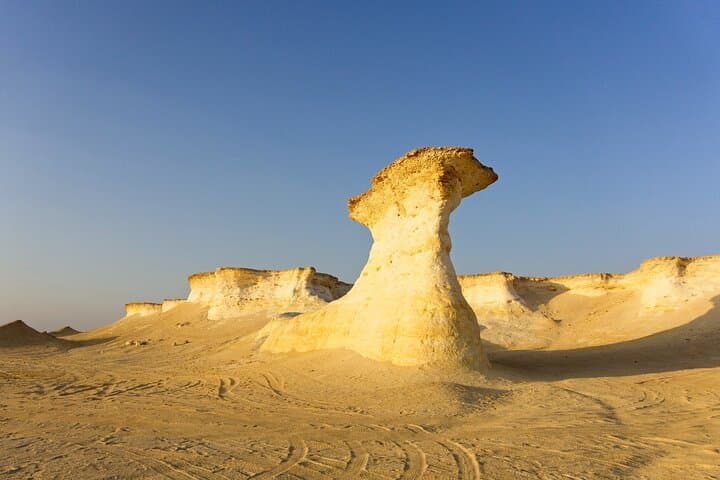
You pull away from Doha and the city glass thins into an open sweep of low hills and wind-sculpted white rock; the car hums while a line of steel plates appears on the horizon, vertical as if driven from the earth itself. The Richard Serra installation—East‑West/West‑East—cuts a human-made line through the Brouq reserve, and nearby mushroom-shaped limestone outcrops stand like weathered sentries along the coast.
Verified experiences and guided adventures in the surrounding area.
Operated by Adventure Time Tourism · Zekreet, Al Rayyan Municipality
You pull away from Doha and the city glass thins into an open sweep of low hills and wind-sculpted white rock; the car hums while a line of steel plates appears on the horizon, vertical as if driven from the earth itself. The Richard Serra installation—East‑West/West‑East—cuts a human-made line through the Brouq reserve, and nearby mushroom-shaped limestone outcrops stand like weathered sentries along the coast.
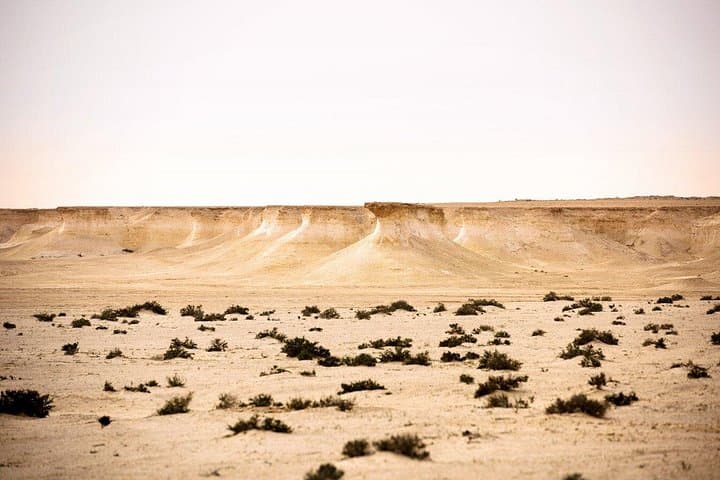
This stretch of the Qatari west coast holds traces of prehistoric occupation, with simple forts and small settlements recorded around Ras Brouq. Geologically, the peninsula is dominated by soft limestone and chalk, eroded by wind and occasional flash floods into cliffs, arches and the rounded “mushroom” pillars that give the area its local name. Zekreet village and the nearby fort show phases of construction that reflect shifting coastal life before modern development pushed industry and tourism into separate places.
Expect open desert light, strong coastal winds and broad views to the Arabian Gulf; seabirds ride thermals and small mammals slip between rock pockets. The Serra plates are best viewed on foot—allow time to walk the path between the panels and feel how scale and steel change with your perspective.
Practical notes: the tour runs about 3–4 hours with private transportation provided and bottled water included. Wear sun protection and sturdy shoes for uneven limestone; mornings or late afternoons offer gentler heat and better light for photography. Respect fragile surfaces—don’t climb the formations or approach the sculpture plates too closely—and follow local guidance about designated paths and parking.
easy.
3–4 hours.
Suitable for most fitness levels; involves short walks on uneven ground and minimal elevation change
The drive is roughly 80–110 km from central Doha depending on the route, typically 1–1.5 hours each way under normal traffic.
Yes—there are walking routes that let you view and photograph the four steel plates, but climbing on or touching the plates is discouraged for safety and conservation reasons.
Facilities are minimal; tours usually include bottled water and transport, but public restrooms and shade structures are limited. Plan accordingly.
Yes, but summer months bring extreme heat; spring and autumn are the most comfortable for outdoor exploration.
Ras Brouq and Zekreet show evidence of prehistoric occupation and later coastal fortifications; Zekreet Fort illustrates two construction phases with added corner towers.
The soft limestone and coastal habitats are fragile—stick to paths, avoid collecting rock samples, and follow local guidance to reduce erosion and disturbance to bird and mammal life.
Adventure Time Tourism operates guided outdoor trips and adventures with an emphasis on safety, stewardship, and memorable experiences.
You pull away from Doha and the city glass thins into an open sweep of low hills and wind-sculpted white rock; the car hums while a line of steel plates appears on the horizon, vertical as if driven from the earth itself. The Richard Serra installation—East‑West/West‑East—cuts a human-made line through the Brouq reserve, and nearby mushroom-shaped limestone outcrops stand like weathered sentries along the coast.
You pull away from Doha and the city glass thins into an open sweep of low hills and wind-sculpted white rock; the car hums while a line of steel plates appears on the horizon, vertical as if driven from the earth itself. The Richard Serra installation—East‑West/West‑East—cuts a human-made line through the Brouq reserve, and nearby mushroom-shaped limestone outcrops stand like weathered sentries along the coast.
This stretch of the Qatari west coast holds traces of prehistoric occupation, with simple forts and small settlements recorded around Ras Brouq. Geologically, the peninsula is dominated by soft limestone and chalk, eroded by wind and occasional flash floods into cliffs, arches and the rounded “mushroom” pillars that give the area its local name. Zekreet village and the nearby fort show phases of construction that reflect shifting coastal life before modern development pushed industry and tourism into separate places.
Expect open desert light, strong coastal winds and broad views to the Arabian Gulf; seabirds ride thermals and small mammals slip between rock pockets. The Serra plates are best viewed on foot—allow time to walk the path between the panels and feel how scale and steel change with your perspective.
Practical notes: the tour runs about 3–4 hours with private transportation provided and bottled water included. Wear sun protection and sturdy shoes for uneven limestone; mornings or late afternoons offer gentler heat and better light for photography. Respect fragile surfaces—don’t climb the formations or approach the sculpture plates too closely—and follow local guidance about designated paths and parking.