THE ADVENTURE COLLECTIVE® · Independent discovery and booking for outdoor travel

A 10-day circuit that links Mumbai’s coastal bustle to the monumental Statue of Unity via Ajanta, Ellora, Udaipur and Ahmedabad. Expect carved caves, palace-lined lakes, engineering marvels and steady travel between iconic western Indian sites.
A 10-day circuit that links Mumbai’s coastal bustle to the monumental Statue of Unity via Ajanta, Ellora, Udaipur and Ahmedabad. Expect carved caves, palace-lined lakes, engineering marvels and steady travel between iconic western Indian sites.
The tour opens in Mumbai where the city’s energy presses against the Arabian Sea — busy boulevards, colonial railway facades and the slow tide of boats leaving Gateway of India.
Verified experiences and guided adventures in the surrounding area.
Operated by Agora Voyages Pvt. Ltd. · Kevadia, Gujarat
The tour opens in Mumbai where the city’s energy presses against the Arabian Sea — busy boulevards, colonial railway facades and the slow tide of boats leaving Gateway of India.
Over ten days the route shifts inland: Aurangabad’s basalt plain gives way to cliff-carved sanctuaries at Ajanta and Ellora, where rock-cut monasteries and carved reliefs trace centuries of faith. Udaipur’s lakes and palaces sit on old lake basins of the Aravalli foothills; Ahmedabad’s stepwells and modernist buildings speak to Gujarat’s layered civic history. The final act is Kevadia, on the banks of the Narmada and the engineered sweep of Sardar Sarovar Dam, dominated by the 182‑metre Statue of Unity.
Geology and history are partner players — Deccan basalts, ancient trade routes and royal patronage shaped temples, forts and waterworks. Expect guided museum and heritage visits, short boat rides on Lake Pichola, moderate walking on uneven stone floors and several long drives or domestic flights between hubs.
Practical notes: plan flights between Mumbai–Aurangabad–Udaipur–Ahmedabad to save time, pack lightweight layers and a sun hat, and bring cash for small vendors; many monuments enforce modest dress and boot-off customs. Morning visits avoid crowds and midday heat; during monsoon (June–September) allow for wet roads and schedule flexibility. The itinerary suits travelers comfortable with multiple transfers who want concentrated cultural and architectural discovery rather than wilderness trekking.
easy.
10 days.
Suitable for travelers in average health who can handle daily walking of 2–4 km and multiple transfers.
Most international visitors require a valid Indian visa or e‑visa before arrival; check your country’s requirements and apply well in advance.
The base program mentions airport transfers and private car; internal flights (Mumbai–Aurangabad, Aurangabad–Udaipur) are part of the suggested logistics — confirm booking details with the operator.
The complex has viewing galleries with elevator access to the monument’s viewing level, but outdoor paths and surrounding viewpoints may be uneven — request accessibility options when booking.
Routine vaccinations are advised; consider Hepatitis A and consult a travel clinic about typhoid or other region-specific precautions. Carry any personal medications and insect repellent.
The route traces trade, royal patronage and religious exchange across the Deccan and western India — Ajanta and Ellora reflect Buddhist, Hindu and Jain patronage over centuries.
Many sites are UNESCO-listed or protected by the Archaeological Survey of India; visitors should avoid touching murals and follow signage to help preserve fragile rock-cut architecture.
Agora Voyages Pvt. Ltd. operates guided outdoor trips and adventures with an emphasis on safety, stewardship, and memorable experiences.
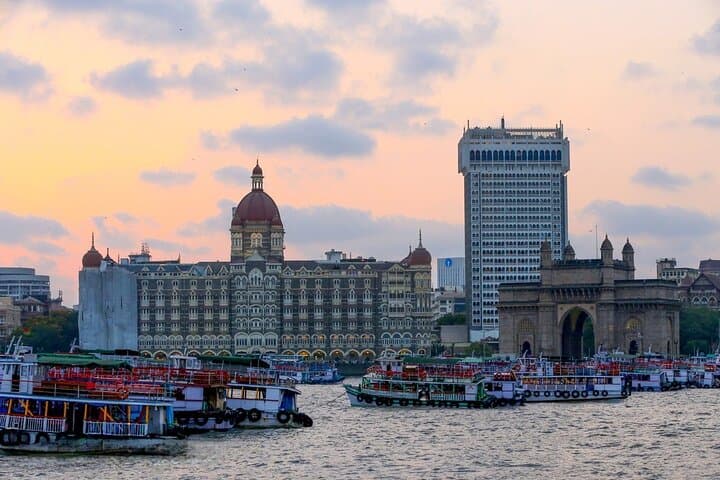
The tour opens in Mumbai where the city’s energy presses against the Arabian Sea — busy boulevards, colonial railway facades and the slow tide of boats leaving Gateway of India.
The tour opens in Mumbai where the city’s energy presses against the Arabian Sea — busy boulevards, colonial railway facades and the slow tide of boats leaving Gateway of India.
Over ten days the route shifts inland: Aurangabad’s basalt plain gives way to cliff-carved sanctuaries at Ajanta and Ellora, where rock-cut monasteries and carved reliefs trace centuries of faith. Udaipur’s lakes and palaces sit on old lake basins of the Aravalli foothills; Ahmedabad’s stepwells and modernist buildings speak to Gujarat’s layered civic history. The final act is Kevadia, on the banks of the Narmada and the engineered sweep of Sardar Sarovar Dam, dominated by the 182‑metre Statue of Unity.
Geology and history are partner players — Deccan basalts, ancient trade routes and royal patronage shaped temples, forts and waterworks. Expect guided museum and heritage visits, short boat rides on Lake Pichola, moderate walking on uneven stone floors and several long drives or domestic flights between hubs.
Practical notes: plan flights between Mumbai–Aurangabad–Udaipur–Ahmedabad to save time, pack lightweight layers and a sun hat, and bring cash for small vendors; many monuments enforce modest dress and boot-off customs. Morning visits avoid crowds and midday heat; during monsoon (June–September) allow for wet roads and schedule flexibility. The itinerary suits travelers comfortable with multiple transfers who want concentrated cultural and architectural discovery rather than wilderness trekking.