THE ADVENTURE COLLECTIVE® · Independent discovery and booking for outdoor travel

A private half-day guided tour of Luxor’s West Bank: explore tombs in the Valley of the Kings, visit Queen Hatshepsut’s terraced temple, see the Colossi of Memnon, and add a camel or horse ride through Nile-side farmland.
A private half-day guided tour of Luxor’s West Bank: explore tombs in the Valley of the Kings, visit Queen Hatshepsut’s terraced temple, see the Colossi of Memnon, and add a camel or horse ride through Nile-side farmland.
Morning light hits the sandstone cliffs on Luxor’s West Bank and the temperature climbs as the guide leads the group over hot stone paths toward ancient doorways.
Verified experiences and guided adventures in the surrounding area.
Operated by Luxor Travels · Luxor, Luxor Governorate
Morning light hits the sandstone cliffs on Luxor’s West Bank and the temperature climbs as the guide leads the group over hot stone paths toward ancient doorways.
Visitors move from the dry hush of tomb corridors to the broad terraces of Queen Hatshepsut’s temple, while the Nile, visible across fields, seems to dare travelers to cross and keep exploring. The experience combines close-up encounters with painted burial chambers in the Valley of the Kings, a study in New Kingdom funerary art, with the monolithic presence of the Colossi of Memnon and a short camel or horse ride through riverside farmland and small villages.
Historically this is the Theban Necropolis: pharaohs selected cliffs here to control the journey to the afterlife. Geologically the valley is cut into soft limestone and marl, which preserved detailed reliefs but also makes the decorations vulnerable to humidity and light. Culturally, the West Bank remains a working landscape of small farms, local markets and living villages that frame the archaeological sites.
Practical guidance: expect a roughly five-hour private tour by air-conditioned vehicle with a licensed Egyptologist; you’ll visit multiple tombs (entry choices may be limited, bring cash for special-ticket tombs), the terraced Deir el-Bahari, and the Colossi. Wear sturdy shoes, sun protection and carry water; photography rules and no-flash policies apply inside tombs. Confirm the camel/horse ride duration with your operator and arrange hotel pickup on the east bank to streamline transfers back across the Nile.
easy.
5 hours.
Suitable for most fitness levels; able to walk short distances over uneven stone and climb steps.
Standard tour admission covers transport and guide services; entry to specific tombs (and Tutankhamun’s tomb) often requires separate tickets—carry local currency.
Photography rules vary: many tombs prohibit flash to protect pigments; check with your guide and respect posted signs.
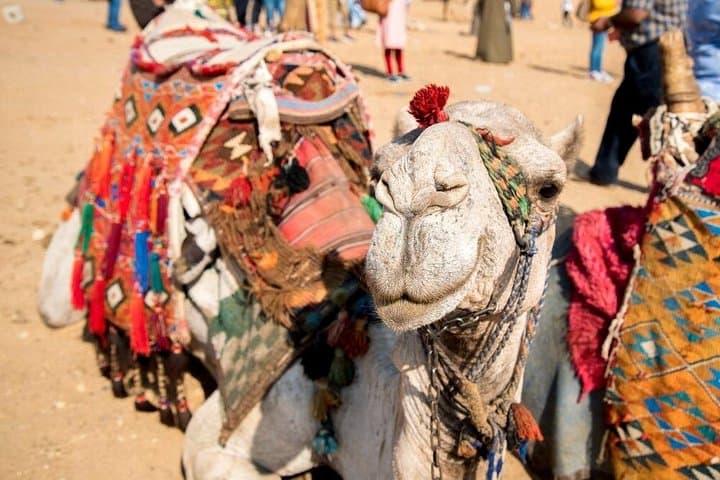
Yes—the tour offers a camel or horse ride option; confirm duration and any additional cost when booking.
The route is suitable for all fitness levels, but tombs have steep steps and uneven floors—travelers with limited mobility should check accessibility and may need assistance.
Theban rulers chose these cliffs as a necropolis during the New Kingdom; tomb architecture and wall texts are designed to guide the deceased into the afterlife.
Visitor numbers and light exposure are controlled to protect fragile pigments; avoid touching reliefs and follow guide instructions to minimize impact.
Luxor Travels operates guided outdoor trips and adventures with an emphasis on safety, stewardship, and memorable experiences.



Morning light hits the sandstone cliffs on Luxor’s West Bank and the temperature climbs as the guide leads the group over hot stone paths toward ancient doorways.
Morning light hits the sandstone cliffs on Luxor’s West Bank and the temperature climbs as the guide leads the group over hot stone paths toward ancient doorways.
Visitors move from the dry hush of tomb corridors to the broad terraces of Queen Hatshepsut’s temple, while the Nile, visible across fields, seems to dare travelers to cross and keep exploring. The experience combines close-up encounters with painted burial chambers in the Valley of the Kings, a study in New Kingdom funerary art, with the monolithic presence of the Colossi of Memnon and a short camel or horse ride through riverside farmland and small villages.
Historically this is the Theban Necropolis: pharaohs selected cliffs here to control the journey to the afterlife. Geologically the valley is cut into soft limestone and marl, which preserved detailed reliefs but also makes the decorations vulnerable to humidity and light. Culturally, the West Bank remains a working landscape of small farms, local markets and living villages that frame the archaeological sites.
Practical guidance: expect a roughly five-hour private tour by air-conditioned vehicle with a licensed Egyptologist; you’ll visit multiple tombs (entry choices may be limited, bring cash for special-ticket tombs), the terraced Deir el-Bahari, and the Colossi. Wear sturdy shoes, sun protection and carry water; photography rules and no-flash policies apply inside tombs. Confirm the camel/horse ride duration with your operator and arrange hotel pickup on the east bank to streamline transfers back across the Nile.