THE ADVENTURE COLLECTIVE® · Independent discovery and booking for outdoor travel

Drive from Swakopmund into the Moon Landscape to see ancient Welwitschia plants and stark desert geology on a four‑hour guided tour. Expect short walks, coastal fog-influenced desert life, and clear explanations from local guides.
Drive from Swakopmund into the Moon Landscape to see ancient Welwitschia plants and stark desert geology on a four‑hour guided tour. Expect short walks, coastal fog-influenced desert life, and clear explanations from local guides.
A wind-swept plain opens as the van pulls off the sealed road: ridges of baked clay and gullies look carved by an artist with a ruler and a grudge. The Moon Landscape’s bleached folds and channels catch coastal light differently every minute, and scattered among the cracked ground are the squat, ancient crowns of Welwitschia—plants that look more like survivors than vegetation.
Verified experiences and guided adventures in the surrounding area.
Operated by Charly's Desert Tours · Swakopmund, Erongo
A wind-swept plain opens as the van pulls off the sealed road: ridges of baked clay and gullies look carved by an artist with a ruler and a grudge. The Moon Landscape’s bleached folds and channels catch coastal light differently every minute, and scattered among the cracked ground are the squat, ancient crowns of Welwitschia—plants that look more like survivors than vegetation.
Geology here is recent in planetary terms but dramatic: wind and seasonal flash flows cut soft sediments into the lunar forms visitors see today. Human history is compact—Nama and Damara people have moved through these sands for generations, and German colonial towns such as Swakopmund lie a drive away, reminders of the 19th‑century scramble for southern Africa.
On a four-hour tour from Swakopmund, guides point out endemic species like Welwitschia and the Nara melon, explain the arid ecology, and show how fog from the cold Benguela Current feeds desert life. The route is vehicle-based with short, easy walks to viewing spots; no technical gear or advanced fitness is required.
Practical tips: go early for long shadows and cooler temperatures, bring sun protection and at least one liter of water, and keep cameras ready—textures and light change fast. Respect fenced areas and the plants themselves: Welwitschias can live for a thousand years and are fragile when disturbed. Tours usually include park fees and bottled water, and pickup from central Swakopmund hotels simplifies logistics—confirm your pickup point when you book.
easy.
4 hours.
Suitable for most fitness levels; involves short, gentle walks off the vehicle.
The tour runs about four hours from Swakopmund, including drives and short walks at viewpoints.
No — the experience is vehicle-based with brief, easy walks to vantage points; it’s suitable for most fitness levels.
Yes, national park fees are included in the tour price as listed in the inclusions.
Pickup is provided from hotels and designated central locations; private homes and Airbnbs are not included—confirm your pickup point when booking.
The area’s ridged forms are young, sculpted by wind and episodic flows; Swakopmund nearby reflects German colonial architecture from the late 19th century.
Welwitschia plants are long‑lived and sensitive—stay on paths, don’t touch or remove plant material, and be mindful of litter; park fees support local conservation efforts.
Charly's Desert Tours operates guided outdoor trips and adventures with an emphasis on safety, stewardship, and memorable experiences.
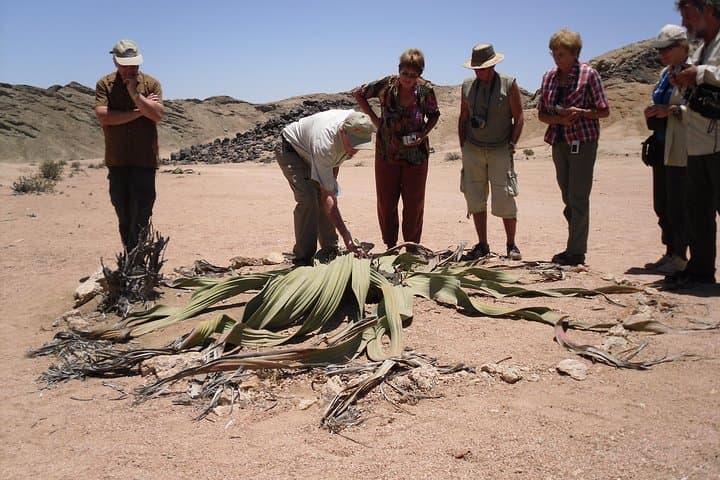
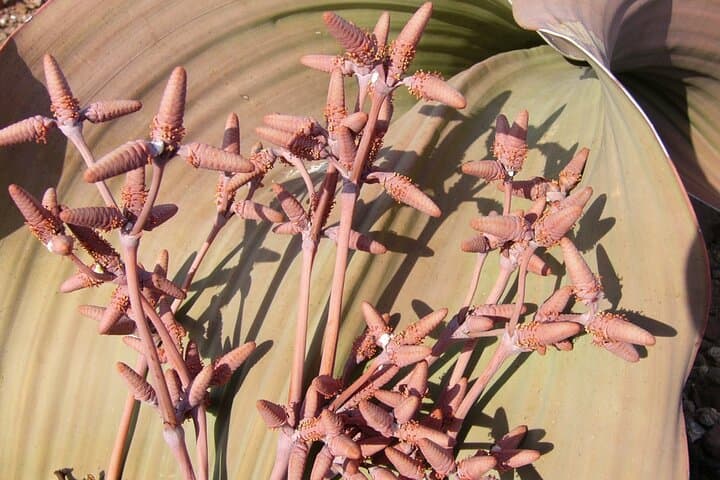
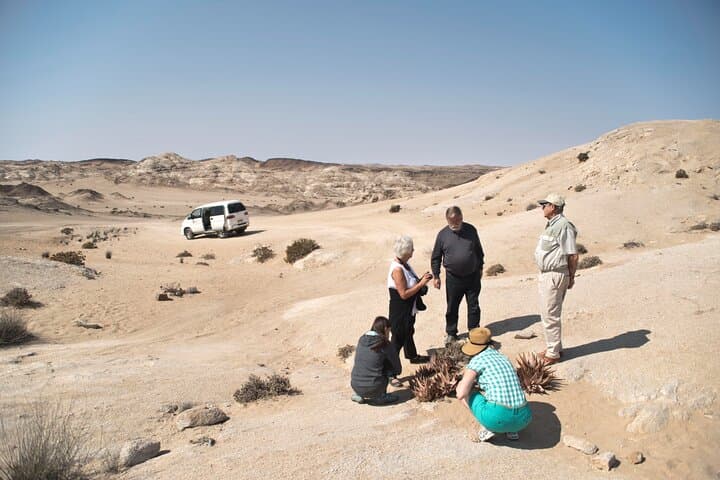
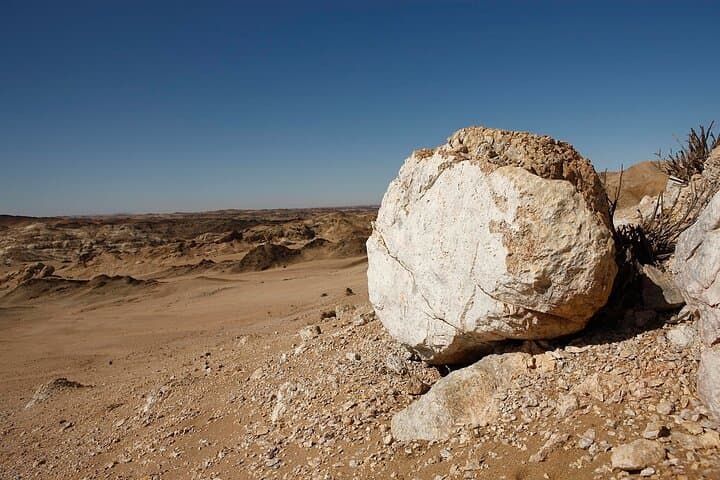
A wind-swept plain opens as the van pulls off the sealed road: ridges of baked clay and gullies look carved by an artist with a ruler and a grudge. The Moon Landscape’s bleached folds and channels catch coastal light differently every minute, and scattered among the cracked ground are the squat, ancient crowns of Welwitschia—plants that look more like survivors than vegetation.
A wind-swept plain opens as the van pulls off the sealed road: ridges of baked clay and gullies look carved by an artist with a ruler and a grudge. The Moon Landscape’s bleached folds and channels catch coastal light differently every minute, and scattered among the cracked ground are the squat, ancient crowns of Welwitschia—plants that look more like survivors than vegetation.
Geology here is recent in planetary terms but dramatic: wind and seasonal flash flows cut soft sediments into the lunar forms visitors see today. Human history is compact—Nama and Damara people have moved through these sands for generations, and German colonial towns such as Swakopmund lie a drive away, reminders of the 19th‑century scramble for southern Africa.
On a four-hour tour from Swakopmund, guides point out endemic species like Welwitschia and the Nara melon, explain the arid ecology, and show how fog from the cold Benguela Current feeds desert life. The route is vehicle-based with short, easy walks to viewing spots; no technical gear or advanced fitness is required.
Practical tips: go early for long shadows and cooler temperatures, bring sun protection and at least one liter of water, and keep cameras ready—textures and light change fast. Respect fenced areas and the plants themselves: Welwitschias can live for a thousand years and are fragile when disturbed. Tours usually include park fees and bottled water, and pickup from central Swakopmund hotels simplifies logistics—confirm your pickup point when you book.