THE ADVENTURE COLLECTIVE® · Independent discovery and booking for outdoor travel

Drive from Swakopmund into the Namib to stand amid 1,500-year-old Welwitschias and a 500-million-year-old Moonlandscape. This 3–4 hour tour mixes short walks, geology, and a riverside lunch at Goanikontes.
Drive from Swakopmund into the Namib to stand amid 1,500-year-old Welwitschias and a 500-million-year-old Moonlandscape. This 3–4 hour tour mixes short walks, geology, and a riverside lunch at Goanikontes.
A wind-dried horizon opens as your vehicle crests the gravel plain and the Namib's silence settles in — a mineral hush punctuated by the creak of low scrub and the distant rustle of lichen underfoot. You stop first at Goanikontes Oasis, where a ribbon of fresh water supports date palms and old olive trees and the day’s temperatures begin to soften beneath shaded verandas.
Verified experiences and guided adventures in the surrounding area.
Operated by Desert Dunes and Dust Tours · Swakopmund, Erongo
A wind-dried horizon opens as your vehicle crests the gravel plain and the Namib's silence settles in — a mineral hush punctuated by the creak of low scrub and the distant rustle of lichen underfoot. You stop first at Goanikontes Oasis, where a ribbon of fresh water supports date palms and old olive trees and the day’s temperatures begin to soften beneath shaded verandas.
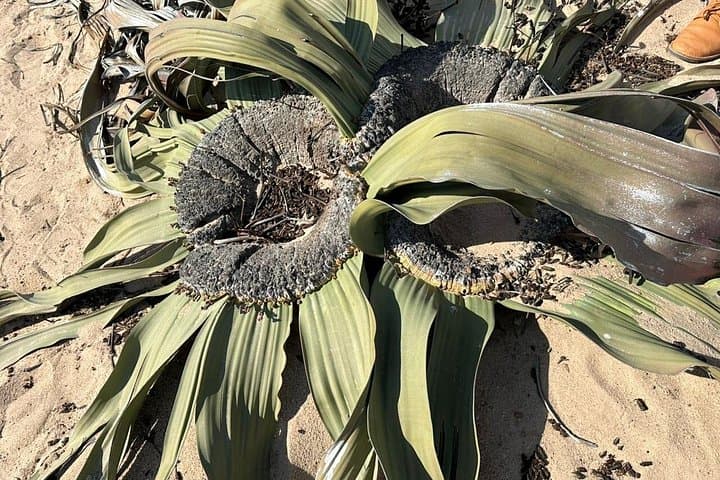
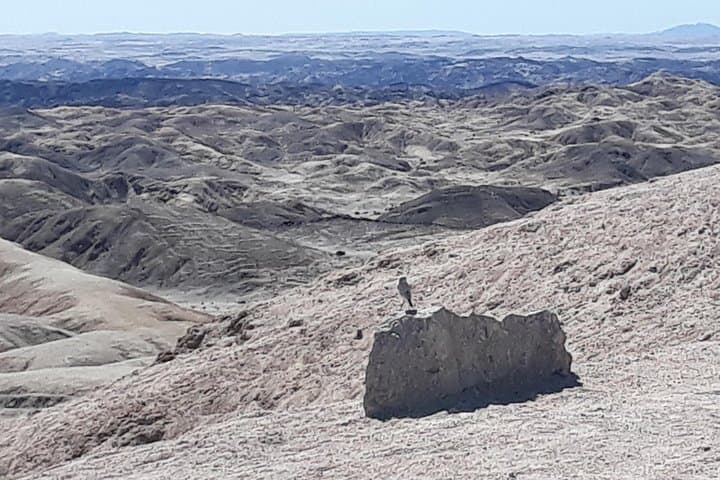
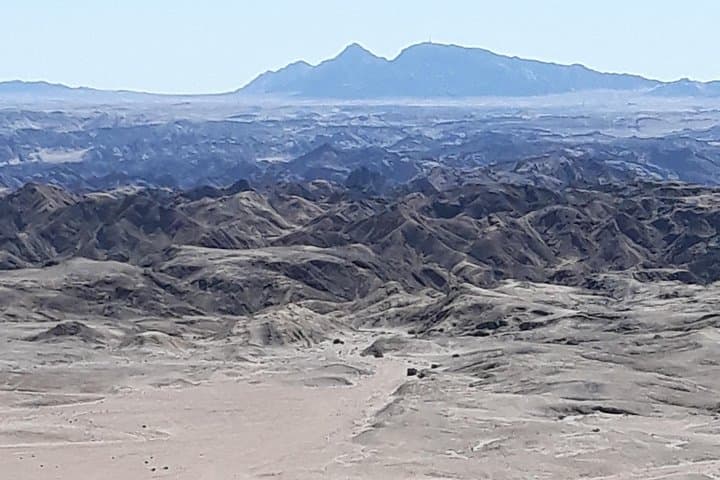
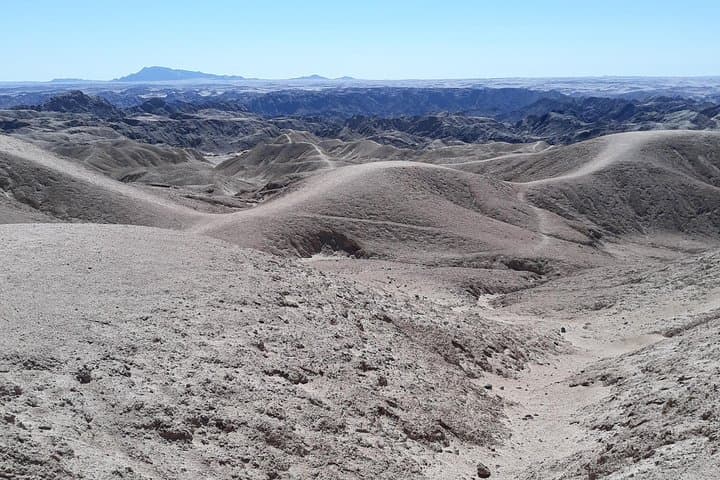
The route follows the fossilized bones of a very old world: dolomite beds, lava dykes and 400–500 million year old surfaces that survived ancient ice ages when Gondwana rearranged continents. The Moonlandscape feels eerily alien because wind and erosion have stripped it to bare rock and gravel; lichen fields cling like pale paint to fractured stones. Here the Welwitschia mirabilis appears — two leathery leaves flowing from a stout stem, sometimes more than a millennium old — a plant adapted to fog and fog-only rainfall along the coastal desert.
Culturally, the Swakopmund corridor records both indigenous desert practices and later colonial-era plantations around rare springs. Guides share how local people used the first freshwater wells and how modern conservation balances tourism and fragile desert communities.
Practical guidance: the tour is 3–4 hours with mostly vehicle transfers and short walks across uneven, loose gravel; elevation change is minimal but footing can be unstable. Expect strong sun, frequent coastal fog and occasional sand gusts. Bring layered clothing, sun protection, sturdy closed-toe shoes and at least 1–2 liters of water. The outing includes a light lunch and is suitable for most fitness levels, but not recommended for people with serious spinal or cardiovascular conditions.
moderate.
3–4 hours.
Suitable for average fitness—short walks over loose gravel and minimal elevation; not strenuous.
The experience runs about 3–4 hours; most time is spent driving with multiple 15–30 minute walks across flat but uneven gravel to view plants and rock features.
A light lunch and drinks at Goanikontes are included; specify dietary requirements at booking so the operator can prepare alternatives when possible.
Yes; pickups for cruise passengers begin one hour after docking and the tour departs within 90 minutes of pickup — late arrivals may be treated as no-shows.
Guides are primarily English-speaking; German guides are limited and not guaranteed. The tour is family-friendly but not recommended for pregnant travelers or those with serious spinal or heart conditions.
Goanikontes marks one of the few perennial freshwater points on the Swakopmund River and historically supported farms and date plantations that predate modern tourism.
This coastal desert is fragile: stick to tracks, avoid removing plant material (Welwitschia is protected), and follow guide instructions to minimize erosion and disturbance.
Desert Dunes and Dust Tours operates guided outdoor trips and adventures with an emphasis on safety, stewardship, and memorable experiences.
A wind-dried horizon opens as your vehicle crests the gravel plain and the Namib's silence settles in — a mineral hush punctuated by the creak of low scrub and the distant rustle of lichen underfoot. You stop first at Goanikontes Oasis, where a ribbon of fresh water supports date palms and old olive trees and the day’s temperatures begin to soften beneath shaded verandas.
A wind-dried horizon opens as your vehicle crests the gravel plain and the Namib's silence settles in — a mineral hush punctuated by the creak of low scrub and the distant rustle of lichen underfoot. You stop first at Goanikontes Oasis, where a ribbon of fresh water supports date palms and old olive trees and the day’s temperatures begin to soften beneath shaded verandas.
The route follows the fossilized bones of a very old world: dolomite beds, lava dykes and 400–500 million year old surfaces that survived ancient ice ages when Gondwana rearranged continents. The Moonlandscape feels eerily alien because wind and erosion have stripped it to bare rock and gravel; lichen fields cling like pale paint to fractured stones. Here the Welwitschia mirabilis appears — two leathery leaves flowing from a stout stem, sometimes more than a millennium old — a plant adapted to fog and fog-only rainfall along the coastal desert.
Culturally, the Swakopmund corridor records both indigenous desert practices and later colonial-era plantations around rare springs. Guides share how local people used the first freshwater wells and how modern conservation balances tourism and fragile desert communities.
Practical guidance: the tour is 3–4 hours with mostly vehicle transfers and short walks across uneven, loose gravel; elevation change is minimal but footing can be unstable. Expect strong sun, frequent coastal fog and occasional sand gusts. Bring layered clothing, sun protection, sturdy closed-toe shoes and at least 1–2 liters of water. The outing includes a light lunch and is suitable for most fitness levels, but not recommended for people with serious spinal or cardiovascular conditions.