THE ADVENTURE COLLECTIVE® · Independent discovery and booking for outdoor travel

Turn Wells’ narrow lanes and cathedral forecourts into a two‑hour playground. Operation City Quest sends teams on an app‑based scavenger hunt—solve riddles, snap photos, and race the leaderboard across historic streets.
Turn Wells’ narrow lanes and cathedral forecourts into a two‑hour playground. Operation City Quest sends teams on an app‑based scavenger hunt—solve riddles, snap photos, and race the leaderboard across historic streets.
A bright Saturday morning in Wells begins with the city’s stonework: narrow lanes, occasional cobbles that keep a tempo underfoot and the cathedral’s towers watching like an old guide. Participants launch the app, the screen buzzing with a list of riddles and nearly 120 objects to find; the town unfolds as a playground of details—door knockers, plaques, shopfront quirks—and the clock starts on a two‑hour chase.
Verified experiences and guided adventures in the surrounding area.
Operated by Operation City Quest Scavenger Hunts · Wells, Somerset
A bright Saturday morning in Wells begins with the city’s stonework: narrow lanes, occasional cobbles that keep a tempo underfoot and the cathedral’s towers watching like an old guide. Participants launch the app, the screen buzzing with a list of riddles and nearly 120 objects to find; the town unfolds as a playground of details—door knockers, plaques, shopfront quirks—and the clock starts on a two‑hour chase.
Wells is one of England’s smallest cities but one of its oldest civic centers. The Cathedral and the adjacent Bishop’s Palace date back to medieval times and provide the historical markers that punctuate your route. Geologically, the area sits on limestone plain with stone buildings carved from local Bath stone — expect pale masonry and compact streets rather than wide avenues.
Culturally, this game leans into local color: independent cafés, market stalls, and public squares become checkpoints. A remote guide texts hints and keeps score, while teams upload photos to climb a live leaderboard. The hunt is accessible—paved pedestrian streets, stroller‑friendly stretches, and short walking segments that total roughly 2–4 km depending on your route.
Practical guidance: bring a fully charged smartphone and a portable charger, wear comfortable walking shoes suitable for cobbles, and plan for two hours. Public transport options connect Wells to nearby Bath and Bristol, so timing your arrival and departure is straightforward. The experience rewards curiosity and quick eyes more than speed—read clues closely, be courteous in busy spots, and treat local businesses as part of the game ecosystem.
easy.
2 hours.
Suitable for most fitness levels—primarily walking with short bursts of activity; stroller‑friendly sections exist.
The guided activity is designed for two hours, but actual walking distance depends on route choices—plan on roughly 2–4 km.
Yes—play runs through a mobile app where you receive clues and submit photos; install and log in beforehand.
Yes; the route stays on public, mostly paved streets and is described as stroller‑accessible and suitable for mixed fitness levels.
A remote interactive guide is available via text during the hunt to offer hints, scoring updates, and encouragement.
Wells grew up around its cathedral and medieval institutions; much of the central architecture dates to the 12th–15th centuries and reflects local limestone construction.
Stick to public paths, avoid littering in historic sites, and support local shops encountered during the hunt—low‑impact tourism helps preserve Wells’ character.
Operation City Quest Scavenger Hunts operates guided outdoor trips and adventures with an emphasis on safety, stewardship, and memorable experiences.

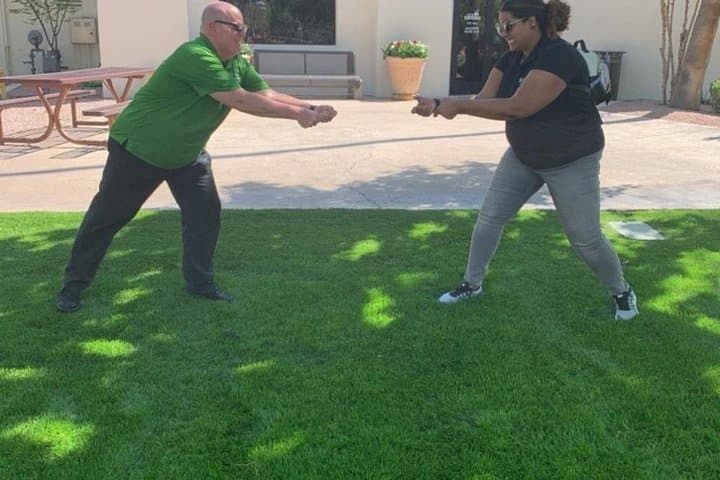


A bright Saturday morning in Wells begins with the city’s stonework: narrow lanes, occasional cobbles that keep a tempo underfoot and the cathedral’s towers watching like an old guide. Participants launch the app, the screen buzzing with a list of riddles and nearly 120 objects to find; the town unfolds as a playground of details—door knockers, plaques, shopfront quirks—and the clock starts on a two‑hour chase.
A bright Saturday morning in Wells begins with the city’s stonework: narrow lanes, occasional cobbles that keep a tempo underfoot and the cathedral’s towers watching like an old guide. Participants launch the app, the screen buzzing with a list of riddles and nearly 120 objects to find; the town unfolds as a playground of details—door knockers, plaques, shopfront quirks—and the clock starts on a two‑hour chase.
Wells is one of England’s smallest cities but one of its oldest civic centers. The Cathedral and the adjacent Bishop’s Palace date back to medieval times and provide the historical markers that punctuate your route. Geologically, the area sits on limestone plain with stone buildings carved from local Bath stone — expect pale masonry and compact streets rather than wide avenues.
Culturally, this game leans into local color: independent cafés, market stalls, and public squares become checkpoints. A remote guide texts hints and keeps score, while teams upload photos to climb a live leaderboard. The hunt is accessible—paved pedestrian streets, stroller‑friendly stretches, and short walking segments that total roughly 2–4 km depending on your route.
Practical guidance: bring a fully charged smartphone and a portable charger, wear comfortable walking shoes suitable for cobbles, and plan for two hours. Public transport options connect Wells to nearby Bath and Bristol, so timing your arrival and departure is straightforward. The experience rewards curiosity and quick eyes more than speed—read clues closely, be courteous in busy spots, and treat local businesses as part of the game ecosystem.