THE ADVENTURE COLLECTIVE® · Independent discovery and booking for outdoor travel

Paddle a quiet hour upriver on the Lower Wekiva, watch otters and herons from a guided kayak, then float back with the current. Small groups, equipment provided, and a real chance to see Florida’s wild side without the crowds.
Paddle a quiet hour upriver on the Lower Wekiva, watch otters and herons from a guided kayak, then float back with the current. Small groups, equipment provided, and a real chance to see Florida’s wild side without the crowds.
The paddle begins with the current soft under your hull and cypress knees poking like punctuation beside the channel. Early light slides across tannin-colored water; birds quarter the surface and the river seems to prod you forward. Guides keep the group tight — six kayaks max — steering a quiet upstream hour then letting the flow carry you back to the launch.
Verified experiences and guided adventures in the surrounding area.
Operated by AWA Kayak Tours · Orlando, Florida
The paddle begins with the current soft under your hull and cypress knees poking like punctuation beside the channel. Early light slides across tannin-colored water; birds quarter the surface and the river seems to prod you forward. Guides keep the group tight — six kayaks max — steering a quiet upstream hour then letting the flow carry you back to the launch.
Geologically the Wekiva flows through limestone and sand, carving shallow oxbows and quiet pools that feed into the greater St. Johns watershed. The corridor has long been home to Indigenous peoples, later shaping small-scale agriculture and local recreation near Orlando. Culturally, this stretch reads like old-Florida: low-impact day use, family outings, and a near-constant soundtrack of marsh birds.
Expect to see turtles basking on logs, river otters slipping under cuts, and the occasional alligator slipping its silhouette in the shallows; manatees turn up in deeper, slower reaches on rare occasions. Guides point out native plants, explain the river’s role in local aquifers, and flag sensitive nesting spots.
Practically: tours are two hours (roughly 1 hour upstream, 1 hour downstream). Single kayaks have a 250 lb limit; tandems available for combined weight up to 450 lb by request. Operators provide kayaks, paddles, PFDs, whistles and a dry bag for essentials. Come hydrated, wear quick-dry clothing and reef or water shoes, apply reef-safe sunscreen and insect repellent, and stagger arrival to avoid parking pinch. Keep a respectful distance from wildlife, follow guide instructions, and pack out trash — the land and water rely on small courtesies to stay wild.
easy.
2 hours.
Suitable for most fitness levels; you should be comfortable sitting and paddling for up to two hours with short breaks.
Yes — tandems are available by request; book or notify the operator in advance to confirm availability and optimal pairing.
No — tours are guided and suitable for beginners; guides teach basic strokes and safety before launch.
Tours are canceled in unsafe conditions (lightning, high winds); cancel at least 24 hours ahead for a full refund per operator policy.
Yes — a small dry bag is provided for phones and keys; secure devices to avoid drops and consider a float strap for cameras.
The Wekiva corridor was used by Indigenous peoples and later shaped local settlement patterns; its springs and tributaries supported small-scale agriculture and recreation as Orlando grew.
This river segment is sensitive to runoff and boat disturbance — practice leave-no-trace, use reef-safe sunscreen, and avoid approaching wildlife to minimize impact.
AWA Kayak Tours operates guided outdoor trips and adventures with an emphasis on safety, stewardship, and memorable experiences.


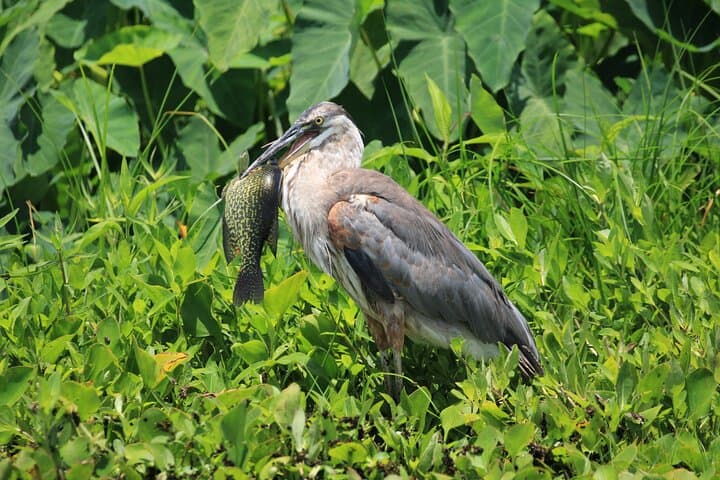

The paddle begins with the current soft under your hull and cypress knees poking like punctuation beside the channel. Early light slides across tannin-colored water; birds quarter the surface and the river seems to prod you forward. Guides keep the group tight — six kayaks max — steering a quiet upstream hour then letting the flow carry you back to the launch.
The paddle begins with the current soft under your hull and cypress knees poking like punctuation beside the channel. Early light slides across tannin-colored water; birds quarter the surface and the river seems to prod you forward. Guides keep the group tight — six kayaks max — steering a quiet upstream hour then letting the flow carry you back to the launch.
Geologically the Wekiva flows through limestone and sand, carving shallow oxbows and quiet pools that feed into the greater St. Johns watershed. The corridor has long been home to Indigenous peoples, later shaping small-scale agriculture and local recreation near Orlando. Culturally, this stretch reads like old-Florida: low-impact day use, family outings, and a near-constant soundtrack of marsh birds.
Expect to see turtles basking on logs, river otters slipping under cuts, and the occasional alligator slipping its silhouette in the shallows; manatees turn up in deeper, slower reaches on rare occasions. Guides point out native plants, explain the river’s role in local aquifers, and flag sensitive nesting spots.
Practically: tours are two hours (roughly 1 hour upstream, 1 hour downstream). Single kayaks have a 250 lb limit; tandems available for combined weight up to 450 lb by request. Operators provide kayaks, paddles, PFDs, whistles and a dry bag for essentials. Come hydrated, wear quick-dry clothing and reef or water shoes, apply reef-safe sunscreen and insect repellent, and stagger arrival to avoid parking pinch. Keep a respectful distance from wildlife, follow guide instructions, and pack out trash — the land and water rely on small courtesies to stay wild.