THE ADVENTURE COLLECTIVE® · Independent discovery and booking for outdoor travel

A full‑day private tour from Perth takes you to Wave Rock—Hyden’s 2.7 billion‑year‑old granite curl—via historic York and wheatbelt oddities. Expect long driving stretches, short walks on uneven stone, and unforgettable light for photographers.
A full‑day private tour from Perth takes you to Wave Rock—Hyden’s 2.7 billion‑year‑old granite curl—via historic York and wheatbelt oddities. Expect long driving stretches, short walks on uneven stone, and unforgettable light for photographers.
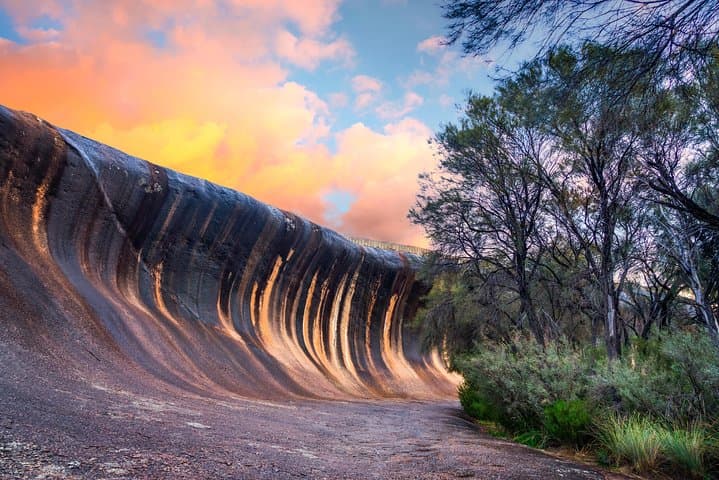
Sunlight arrives like an impatient visitor, sliding down the curved face of Wave Rock and waking pigments that look older than time itself. You step out of the air‑conditioned van into a silence shaped by stone; the wave’s lip throws a long shadow across red soil while lichen and iron stains map billions of years of weather.
Verified experiences and guided adventures in the surrounding area.
Operated by Libertino Travel · Hyden, Western Australia
Sunlight arrives like an impatient visitor, sliding down the curved face of Wave Rock and waking pigments that look older than time itself. You step out of the air‑conditioned van into a silence shaped by stone; the wave’s lip throws a long shadow across red soil while lichen and iron stains map billions of years of weather.
Wave Rock is not an artful illusion but a geological act: a 15‑metre high, roughly 200‑metre long granite wall sculpted by exfoliation, chemical weathering and ancient watercourses. Geologists date the rock at roughly 2.7 billion years—an island of gneiss and granite left behind as the surrounding land eroded away. The nearby Humps and Mulka’s Cave add local context: the same forces that made Wave Rock also carved shelters and pools that were used, and still are respected, by the Noongar people who have lived here for millennia.
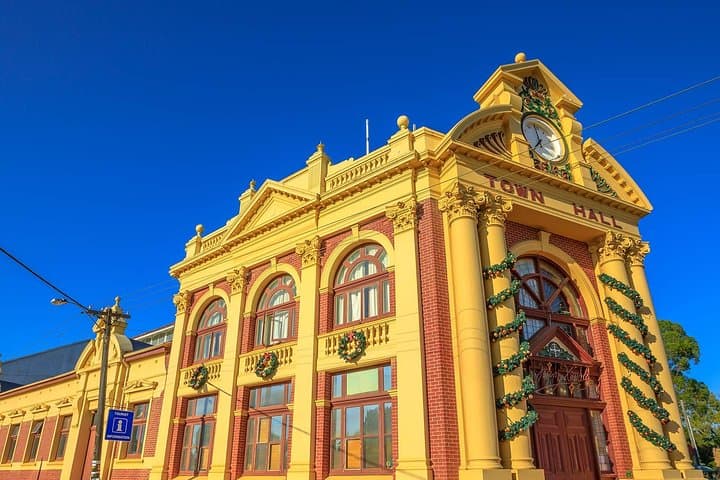
The private tour from Perth threads through the Darling Range and the wheatbelt: a stop in York for Victorian façades and Avon River crossings, roadside oddities like the Corrigin Dog Cemetery and Kondinin’s Statues Lake, and finally the wheatbelt’s open plains that announce Hyden long before the rock comes into view. Guides speak of settlers, wheat booms and Indigenous stories in measured tones—cultural context that makes a photo op feel more like a meeting.
Practicalities matter on a day like this. The full‑day private tour runs about 12 hours door‑to‑door from Perth, with pickup from central hotels; the drive is roughly 340–360 km each way depending on route, so expect long stretches behind the wheel. At Wave Rock the walking loop is short—under a kilometre if you stick to viewpoints—but surfaces are uneven, dusty and can be hot underfoot during summer. Facilities at the site include toilets, a café and shaded picnic areas, but services thin out in the surrounding towns.
Plan for sun and distance: a refillable water bottle, high SPF, sturdy shoes and a lightweight layer for early mornings or late evenings. If you’re chasing wildflowers, schedule for spring (September–November). For photographs, golden hour along the base of the wave yields dramatic low light; if you prefer less crowding, aim for an early morning arrival.
This private option is flexible—ideal for families, small groups or anyone wanting to linger at Hippo’s Yawn or Mulka’s Cave. Respect the site: don’t climb on fragile rock surfaces where protective patina and cultural values must be preserved. When the sun warms the granite you’ll feel its age under your boots, and understand why this slab of earth still stops people mid‑step.
easy.
12 hours.
Suitable for all fitness levels — minimal walking at the site but long periods in transit; be comfortable sitting for several hours.
Expect about 3.5–4.5 hours one way depending on traffic and stops; the private tour bundles the drive into a 12‑hour round trip with multiple stops.
Admission to Wave Rock is typically included in organized tours—confirm at booking; independent visitors should budget for site parking and entry.
The tour vehicle and some areas are accessible for foldable wheelchairs, but the main rock surfaces are uneven and require mobility to navigate safely.
Climbing is discouraged to protect the rock’s fragile patina and cultural values; stick to designated paths and viewing areas.
Spring brings wildflowers and milder temps; winter is cooler and rainy at times; summer is hot—bring shade and extra water.
The tour includes bottled water and stops at cafes or picnic areas; bring snacks if you prefer specific dietary choices.
Wave Rock sits on Noongar country and has been part of Indigenous stories for thousands of years; European settlement and wheatbelt development shaped nearby towns like York.
Visitor pressure can wear fragile rock surfaces and disturb local vegetation—stick to marked paths, pack out litter and avoid touching rock art or fragile lichen.
Libertino Travel operates guided outdoor trips and adventures with an emphasis on safety, stewardship, and memorable experiences.


Sunlight arrives like an impatient visitor, sliding down the curved face of Wave Rock and waking pigments that look older than time itself. You step out of the air‑conditioned van into a silence shaped by stone; the wave’s lip throws a long shadow across red soil while lichen and iron stains map billions of years of weather.
Sunlight arrives like an impatient visitor, sliding down the curved face of Wave Rock and waking pigments that look older than time itself. You step out of the air‑conditioned van into a silence shaped by stone; the wave’s lip throws a long shadow across red soil while lichen and iron stains map billions of years of weather.
Wave Rock is not an artful illusion but a geological act: a 15‑metre high, roughly 200‑metre long granite wall sculpted by exfoliation, chemical weathering and ancient watercourses. Geologists date the rock at roughly 2.7 billion years—an island of gneiss and granite left behind as the surrounding land eroded away. The nearby Humps and Mulka’s Cave add local context: the same forces that made Wave Rock also carved shelters and pools that were used, and still are respected, by the Noongar people who have lived here for millennia.
The private tour from Perth threads through the Darling Range and the wheatbelt: a stop in York for Victorian façades and Avon River crossings, roadside oddities like the Corrigin Dog Cemetery and Kondinin’s Statues Lake, and finally the wheatbelt’s open plains that announce Hyden long before the rock comes into view. Guides speak of settlers, wheat booms and Indigenous stories in measured tones—cultural context that makes a photo op feel more like a meeting.
Practicalities matter on a day like this. The full‑day private tour runs about 12 hours door‑to‑door from Perth, with pickup from central hotels; the drive is roughly 340–360 km each way depending on route, so expect long stretches behind the wheel. At Wave Rock the walking loop is short—under a kilometre if you stick to viewpoints—but surfaces are uneven, dusty and can be hot underfoot during summer. Facilities at the site include toilets, a café and shaded picnic areas, but services thin out in the surrounding towns.
Plan for sun and distance: a refillable water bottle, high SPF, sturdy shoes and a lightweight layer for early mornings or late evenings. If you’re chasing wildflowers, schedule for spring (September–November). For photographs, golden hour along the base of the wave yields dramatic low light; if you prefer less crowding, aim for an early morning arrival.
This private option is flexible—ideal for families, small groups or anyone wanting to linger at Hippo’s Yawn or Mulka’s Cave. Respect the site: don’t climb on fragile rock surfaces where protective patina and cultural values must be preserved. When the sun warms the granite you’ll feel its age under your boots, and understand why this slab of earth still stops people mid‑step.