THE ADVENTURE COLLECTIVE® · Independent discovery and booking for outdoor travel

A full-day waterfall hike from Trou d'Eau Douce that blends sugar-cane lanes, sub-tropical forest and plunge pools. Expect swims, cliff jumps and a cheeky fish foot‑massage with a licensed local guide.
A full-day waterfall hike from Trou d'Eau Douce that blends sugar-cane lanes, sub-tropical forest and plunge pools. Expect swims, cliff jumps and a cheeky fish foot‑massage with a licensed local guide.
The trail opens with the low hum of the island: cicadas, distant waves and the rustle of sugar cane as you step off the road. You cross narrow paths between towering cane stalks until the world narrows to a green corridor—ferns brush your calves, palms bend like hands clearing the way—and then the sound arrives: a constant, breathing rush. The waterfall dares you forward, first as a silver thread through foliage, then as a curtain you can walk behind.
Verified experiences and guided adventures in the surrounding area.
Operated by Vikash Bahadoor · Trou d'Eau Douce, Flacq
The trail opens with the low hum of the island: cicadas, distant waves and the rustle of sugar cane as you step off the road. You cross narrow paths between towering cane stalks until the world narrows to a green corridor—ferns brush your calves, palms bend like hands clearing the way—and then the sound arrives: a constant, breathing rush. The waterfall dares you forward, first as a silver thread through foliage, then as a curtain you can walk behind.
This is the east-coast hinterland of Mauritius, an area shaped by volcanic flows and later softened by tropical weathering. The falls carve into basalt and volcanic tuff, creating plunge pools and shelves that invite jumps and swims. The route follows old plantation lanes once used to haul cane to coastal mills; you’re walking the same lines that stitched together colonial-era agriculture and local village life. Guides here are part naturalist, part storyteller—pointing out medicinal plants and the occasional sugarcane wagon track while explaining local customs around bathing and river conservation.
The hike itself is a practical, rewarding scramble: roughly 4–6 km round-trip depending on routing, with an elevation change of about 150–300 m and several short, steep sections. Terrain shifts from packed earth through damp rock to moss-slick boulders at the water’s edge; a pair of grippy shoes and a steady step matter more than speed. At the main cascade you can stand under the falling water, slip behind its curtain, or take a long swim in the deeper pool. Locals have long prized these falls for freshwater and relaxation—the modern flourish is a playful fish “pedicure” where tiny mullet nibble dead skin from your feet in shallow shallows.
Culturally, the area is a mix of Creole coastal villages and agricultural fields. Your guide will often share notes about sugarcane seasons, and on the walk you may pass small shrines or leftover stonework from 19th-century mills—quiet markers of the island’s labor history.
Practicalities: expect a full-day outing (the tour runs about six hours), and schedule morning starts to avoid midday heat. Bring a tightly sealed dry bag for electronics, quick-dry clothes, reef-safe sunscreen and insect repellent. Hydration and steady footwear are essential; exposed rocks are deceptively slippery after rain. The operator provides a licensed guide and hotel pickup across the east coast; check cancellation and pickup details when you book.
By afternoon the light softens, and the falls—which earlier demanded your attention—relax into a lullaby. You leave with wet shoulders, a throat full of clean water air and a clearer sense of how the island’s geology and people meet at these running places.
moderate.
6 hours.
Good general fitness; comfortable on uneven terrain and short, steep sections for several hours.
The tour lasts about six hours total with a relaxed, exploratory pace; expect 4–6 km of walking with time at viewing points and swimming.
This operator advises against children under six; older kids are okay if comfortable with uneven terrain and water activities.
Swimming is optional—guides can arrange shallow areas for wading, but those uncomfortable in deep water should wear a life vest and stay near the guide.
Bring your own quick-dry towel and a change of clothes; facilities at the site are minimal and mostly natural pools and shaded clearings.
Tipping is appreciated for good service; a modest local-standard tip is customary at the end of the tour.
Tours may be canceled for heavy rain or unsafe river conditions—check the operator’s 24-hour cancellation policy before booking.
Trails follow historic sugarcane routes tied to 19th-century plantations; stonework near the stream marks former small-scale mills.
The area relies on responsible visitation—avoid soaps in pools, pack out all trash and follow guide instructions to protect fragile riverbanks.
Vikash Bahadoor operates guided outdoor trips and adventures with an emphasis on safety, stewardship, and memorable experiences.
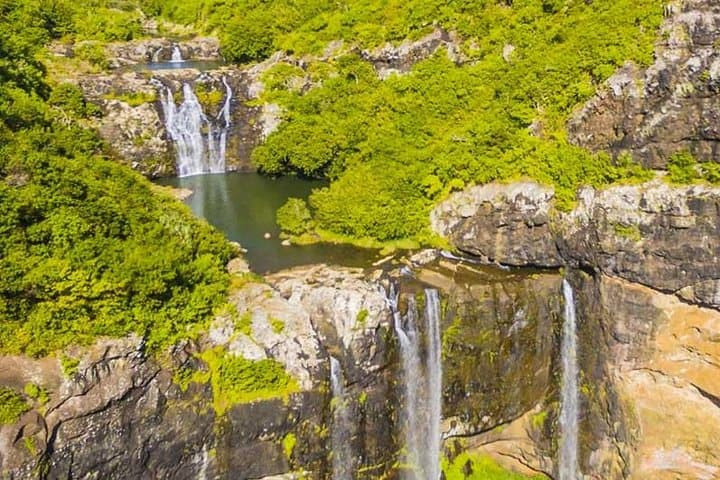
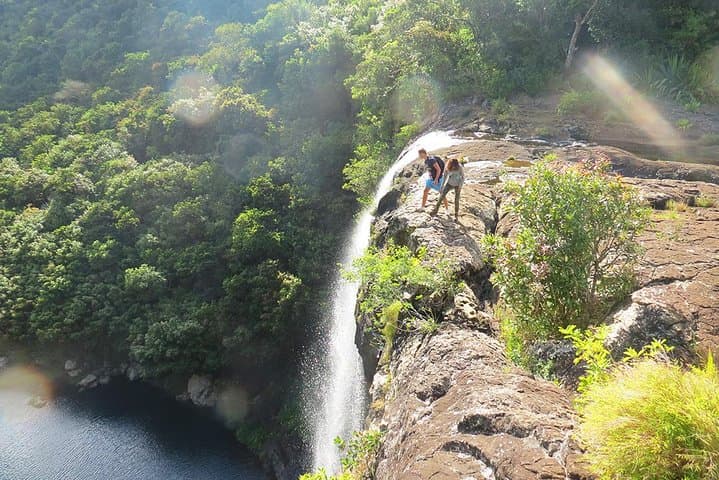
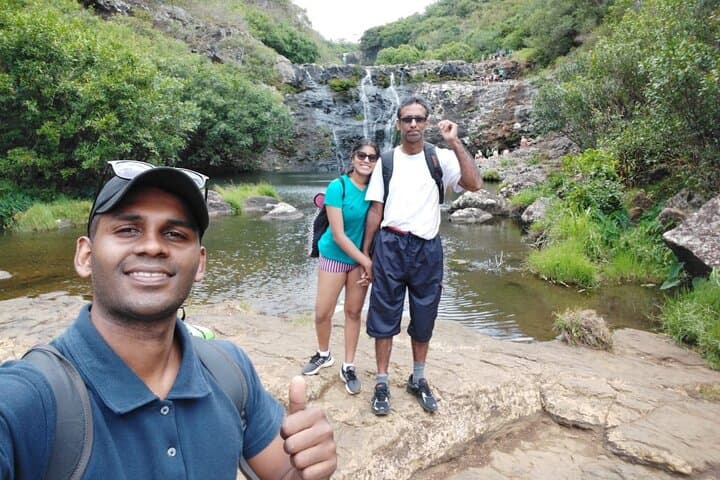
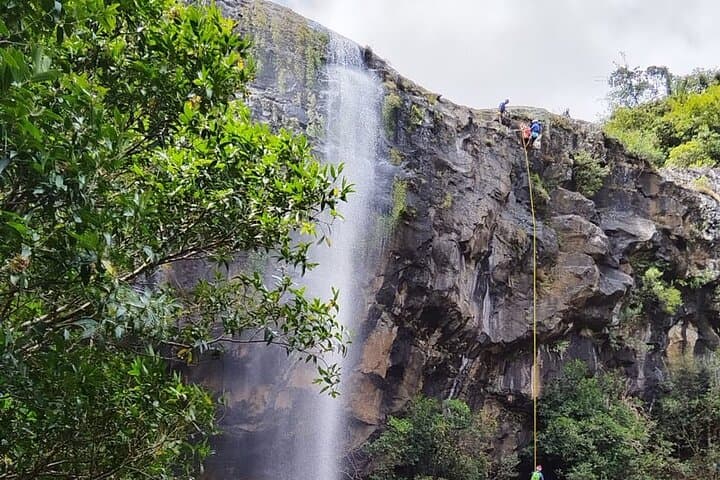
The trail opens with the low hum of the island: cicadas, distant waves and the rustle of sugar cane as you step off the road. You cross narrow paths between towering cane stalks until the world narrows to a green corridor—ferns brush your calves, palms bend like hands clearing the way—and then the sound arrives: a constant, breathing rush. The waterfall dares you forward, first as a silver thread through foliage, then as a curtain you can walk behind.
The trail opens with the low hum of the island: cicadas, distant waves and the rustle of sugar cane as you step off the road. You cross narrow paths between towering cane stalks until the world narrows to a green corridor—ferns brush your calves, palms bend like hands clearing the way—and then the sound arrives: a constant, breathing rush. The waterfall dares you forward, first as a silver thread through foliage, then as a curtain you can walk behind.
This is the east-coast hinterland of Mauritius, an area shaped by volcanic flows and later softened by tropical weathering. The falls carve into basalt and volcanic tuff, creating plunge pools and shelves that invite jumps and swims. The route follows old plantation lanes once used to haul cane to coastal mills; you’re walking the same lines that stitched together colonial-era agriculture and local village life. Guides here are part naturalist, part storyteller—pointing out medicinal plants and the occasional sugarcane wagon track while explaining local customs around bathing and river conservation.
The hike itself is a practical, rewarding scramble: roughly 4–6 km round-trip depending on routing, with an elevation change of about 150–300 m and several short, steep sections. Terrain shifts from packed earth through damp rock to moss-slick boulders at the water’s edge; a pair of grippy shoes and a steady step matter more than speed. At the main cascade you can stand under the falling water, slip behind its curtain, or take a long swim in the deeper pool. Locals have long prized these falls for freshwater and relaxation—the modern flourish is a playful fish “pedicure” where tiny mullet nibble dead skin from your feet in shallow shallows.
Culturally, the area is a mix of Creole coastal villages and agricultural fields. Your guide will often share notes about sugarcane seasons, and on the walk you may pass small shrines or leftover stonework from 19th-century mills—quiet markers of the island’s labor history.
Practicalities: expect a full-day outing (the tour runs about six hours), and schedule morning starts to avoid midday heat. Bring a tightly sealed dry bag for electronics, quick-dry clothes, reef-safe sunscreen and insect repellent. Hydration and steady footwear are essential; exposed rocks are deceptively slippery after rain. The operator provides a licensed guide and hotel pickup across the east coast; check cancellation and pickup details when you book.
By afternoon the light softens, and the falls—which earlier demanded your attention—relax into a lullaby. You leave with wet shoulders, a throat full of clean water air and a clearer sense of how the island’s geology and people meet at these running places.