THE ADVENTURE COLLECTIVE® · Independent discovery and booking for outdoor travel

Explore emerald springs, a medieval hill town, and one of Europe’s highest engineered waterfalls in a single day. This guided loop through Umbria blends natural geology, Roman engineering and compact cultural stops.
Explore emerald springs, a medieval hill town, and one of Europe’s highest engineered waterfalls in a single day. This guided loop through Umbria blends natural geology, Roman engineering and compact cultural stops.
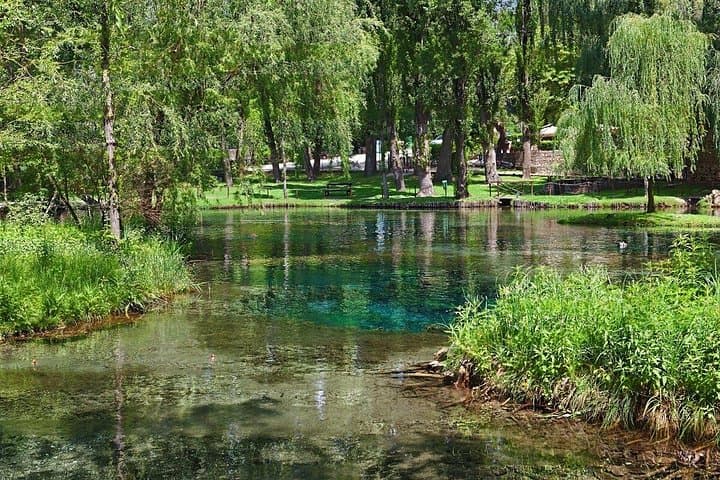
You step off an air-conditioned minivan and the first thing that hits you is the colour — a small lake of emerald so clear the shallows read like glass. The Clitunno springs push up through limestone beds, threading reed beds and willows into a calm pool that has held poets’ attention for millennia.
Verified experiences and guided adventures in the surrounding area.
Operated by ROMAETRAVEL · Spoleto, Umbria
You step off an air-conditioned minivan and the first thing that hits you is the colour — a small lake of emerald so clear the shallows read like glass. The Clitunno springs push up through limestone beds, threading reed beds and willows into a calm pool that has held poets’ attention for millennia.
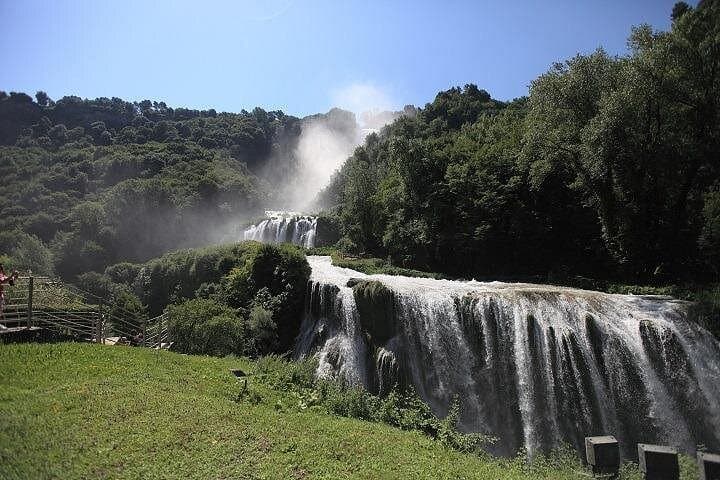
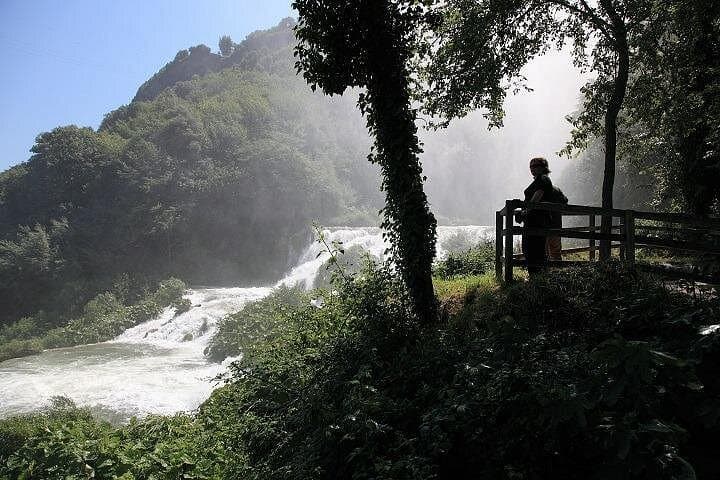
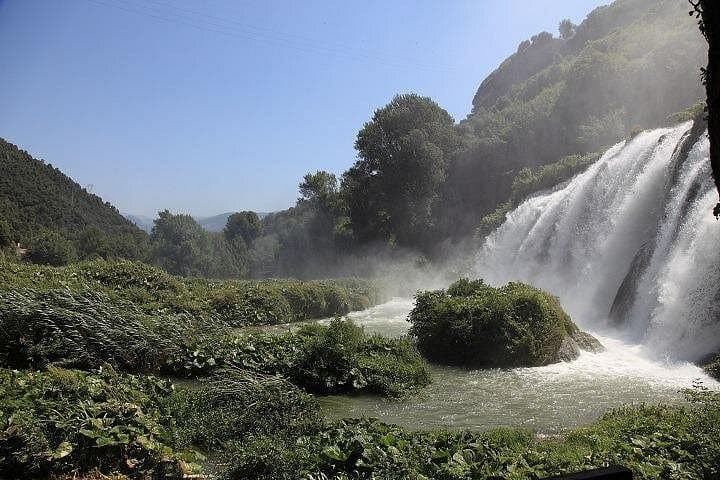
From there the day moves through layers of history: Spoleto’s Roman arches and medieval lanes, stone stairways that climb to a fortress with views over terracotta roofs, and then higher into a canyon where the Marmore Falls drops in engineered tiers. The falls were carved by Roman hands in 271 BC to drain marshland; geology and human intent combine here, the river forced over travertine steps and into spray that dares you forward.
Expect close-up contrasts — quiet, plant-rich springs teeming with aquatic herbs; a compact, art-filled hilltown with hidden piazzas; and a thunderous vertical curtain of water whose flow is managed seasonally for hydroelectric use. Local culture is spare and tactile: olive groves, farmhouse cheeses, and town markets that mark time by bell and season.
Practical notes: this is a full-day loop (around 10 hours including transport). Wear sturdy walking shoes for uneven paths and bring a lightweight rain shell for spray near the falls. Hydrate — rural Umbrian summers are warm — and plan for limited time at each stop, since access and waterfall flows are scheduled. The tour includes entrance fees, a guide, and door-to-door pickup — ideal for travelers wanting a curated, efficient survey of Umbria’s water landscapes.
moderate.
10 hours.
Moderate fitness: able to walk short uneven sections, climb stairs in Spoleto, and handle a full day of standing and brief hikes.
The full tour is about 10 hours; typical visits are ~45 minutes at Clitunno, ~3 hours in Spoleto, and ~1 hour at Marmore Falls, with transport time between sites included.
Yes—entrance fees for Clitunno Park and Marmore Falls plus guided commentary and pickup/drop-off are included.
Yes; infant seats are available and strollers can be used on flatter sections, but some viewpoints require stairs.
Flow is managed for hydroelectric needs; in summer it’s often released daily for certain hours, but schedule varies—check the guide’s timing sent before the tour.
Romans engineered the Marmore Falls in 271 BC to drain marshes; Clitunno has been celebrated by Roman and Romantic poets for its clear waters.
The area balances tourism and hydroelectric use—stay on marked paths, avoid disturbing riparian vegetation, and follow local rules about viewpoints to protect fragile aquatic habitats.
ROMAETRAVEL operates guided outdoor trips and adventures with an emphasis on safety, stewardship, and memorable experiences.
You step off an air-conditioned minivan and the first thing that hits you is the colour — a small lake of emerald so clear the shallows read like glass. The Clitunno springs push up through limestone beds, threading reed beds and willows into a calm pool that has held poets’ attention for millennia.
You step off an air-conditioned minivan and the first thing that hits you is the colour — a small lake of emerald so clear the shallows read like glass. The Clitunno springs push up through limestone beds, threading reed beds and willows into a calm pool that has held poets’ attention for millennia.
From there the day moves through layers of history: Spoleto’s Roman arches and medieval lanes, stone stairways that climb to a fortress with views over terracotta roofs, and then higher into a canyon where the Marmore Falls drops in engineered tiers. The falls were carved by Roman hands in 271 BC to drain marshland; geology and human intent combine here, the river forced over travertine steps and into spray that dares you forward.
Expect close-up contrasts — quiet, plant-rich springs teeming with aquatic herbs; a compact, art-filled hilltown with hidden piazzas; and a thunderous vertical curtain of water whose flow is managed seasonally for hydroelectric use. Local culture is spare and tactile: olive groves, farmhouse cheeses, and town markets that mark time by bell and season.
Practical notes: this is a full-day loop (around 10 hours including transport). Wear sturdy walking shoes for uneven paths and bring a lightweight rain shell for spray near the falls. Hydrate — rural Umbrian summers are warm — and plan for limited time at each stop, since access and waterfall flows are scheduled. The tour includes entrance fees, a guide, and door-to-door pickup — ideal for travelers wanting a curated, efficient survey of Umbria’s water landscapes.