THE ADVENTURE COLLECTIVE® · Independent discovery and booking for outdoor travel

Pedal across thin air: a three-hour water-bike excursion from Puno to the Uros floating islands on Lake Titicaca. Expect high-altitude sun, reed-island culture, and 90 minutes of scenic water time each way.
Pedal across thin air: a three-hour water-bike excursion from Puno to the Uros floating islands on Lake Titicaca. Expect high-altitude sun, reed-island culture, and 90 minutes of scenic water time each way.
You push off from the small pier at Esteves Island and the lake takes hold—cool spray teasing the toes, wind pressing gently against the pedals. Ahead, low-lying reed islands drift like compact villages; behind, the ragged spine of the Andes frames the horizon. The rhythm of the water bike sets the pace: steady, engaging, and unusually intimate with Lake Titicaca's high-altitude surface.
Verified experiences and guided adventures in the surrounding area.
Operated by Tangol · Puno, Puno
You push off from the small pier at Esteves Island and the lake takes hold—cool spray teasing the toes, wind pressing gently against the pedals. Ahead, low-lying reed islands drift like compact villages; behind, the ragged spine of the Andes frames the horizon. The rhythm of the water bike sets the pace: steady, engaging, and unusually intimate with Lake Titicaca's high-altitude surface.
Lake Titicaca sits at about 3,812 m (12,507 ft), a vast inland sea carved by tectonics and glacial sculpting. The Uros are man-made reed islands with a cultural history that predates the Inca: communities construct and maintain floating platforms from totora reeds, keeping centuries-old fishing, boatmaking, and weaving traditions alive. Along the route you'll pass volcanic rock outcrops like Foroba (Devil Island) and see waterbirds claim the wind-swept shallows.
Practically, the tour is a three-hour outing (about 1.5 hours underway each way to the islands in itinerary order), run from Puno with hotel pickup from central hotels. Guides supply helmets, life jackets and a briefing; moderate fitness and basic balance are required. Expect strong sun, sharp altitude, and variable winds—short, focused bursts of pedaling alternate with steady cruising.
Bring layered clothing for cold mornings, sun protection, and plenty of water to prevent altitude headaches. Time your trip for morning calm if you prefer smoother water; afternoons can freshen with crosswinds. On arrival at the Uros you’ll have time to walk the reed decks, meet residents, and observe weaving and reed-house construction—an up-close cultural stop that adds texture to the pedal across one of South America’s most singular landscapes.
moderate.
3 hours.
Moderate—able to pedal for sustained periods and maintain balance on an unstable platform; basic cardiovascular fitness recommended.
The tour runs about 3 hours total, with roughly 90 minutes of pedaling and cruising on the water to reach the Uros islands as described in the itinerary.
Yes—guides provide life jackets and helmets, and wearing a life jacket is mandatory for all participants.
No prior experience is necessary; guides give a briefing and the craft require basic balance and pedaling—moderate fitness helps for comfort.
Hydrate well in the days before, avoid alcohol the night before, eat light meals, and consider resting one full day in Puno before the activity; if you have heart or respiratory issues consult a doctor.
The Uros people constructed floating islands from totora reeds for centuries before the rise of the Inca, maintaining a boat-centered lifestyle adapted to Titicaca’s expansive wetlands.
The reed beds are a living resource that require sustainable harvesting; visitors should avoid trampling reed edges and support local guides who practice responsible tourism.
Tangol operates guided outdoor trips and adventures with an emphasis on safety, stewardship, and memorable experiences.
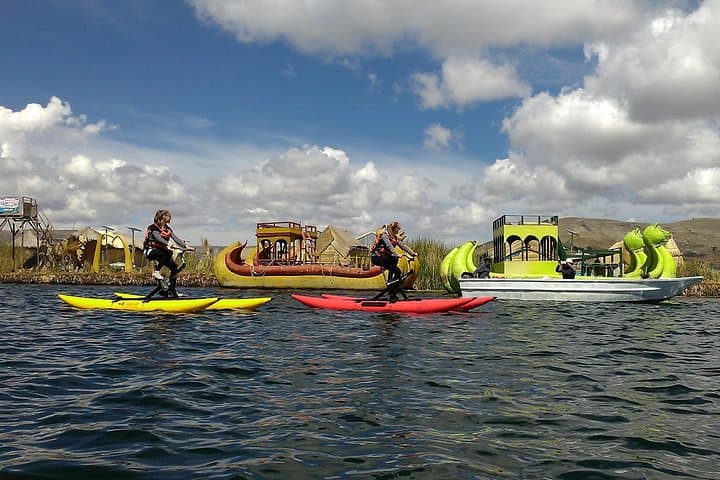
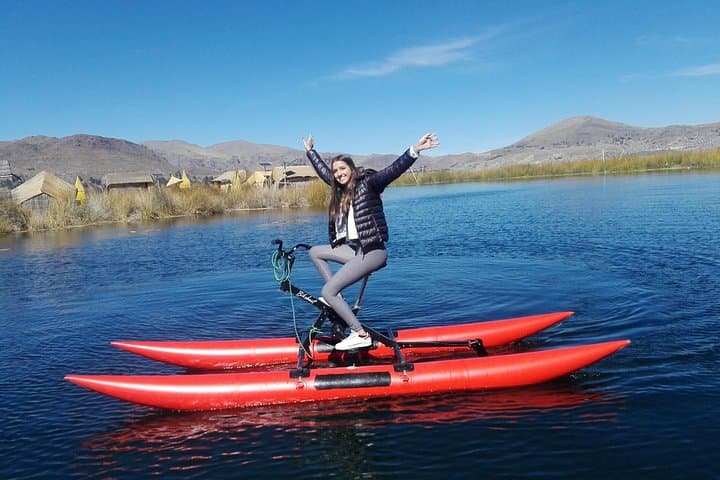
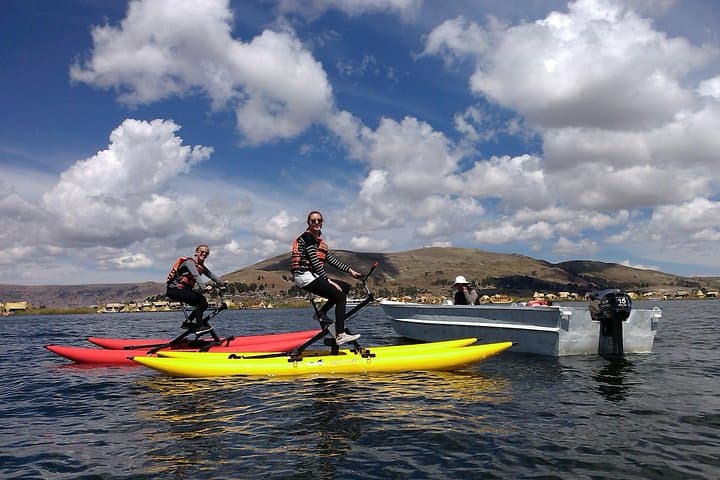
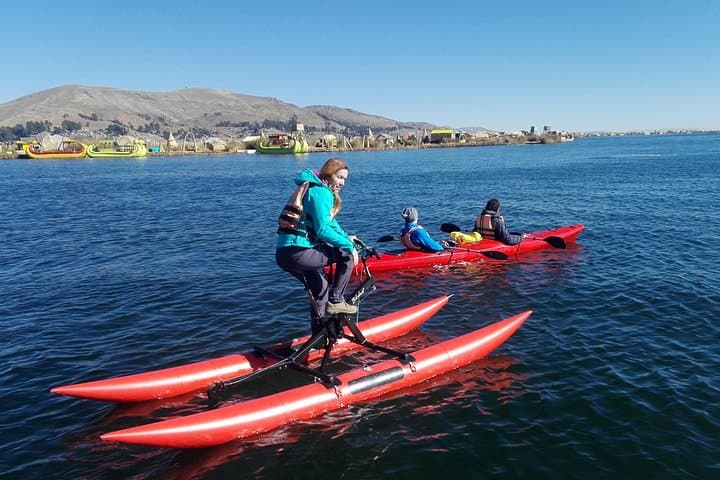
You push off from the small pier at Esteves Island and the lake takes hold—cool spray teasing the toes, wind pressing gently against the pedals. Ahead, low-lying reed islands drift like compact villages; behind, the ragged spine of the Andes frames the horizon. The rhythm of the water bike sets the pace: steady, engaging, and unusually intimate with Lake Titicaca's high-altitude surface.
You push off from the small pier at Esteves Island and the lake takes hold—cool spray teasing the toes, wind pressing gently against the pedals. Ahead, low-lying reed islands drift like compact villages; behind, the ragged spine of the Andes frames the horizon. The rhythm of the water bike sets the pace: steady, engaging, and unusually intimate with Lake Titicaca's high-altitude surface.
Lake Titicaca sits at about 3,812 m (12,507 ft), a vast inland sea carved by tectonics and glacial sculpting. The Uros are man-made reed islands with a cultural history that predates the Inca: communities construct and maintain floating platforms from totora reeds, keeping centuries-old fishing, boatmaking, and weaving traditions alive. Along the route you'll pass volcanic rock outcrops like Foroba (Devil Island) and see waterbirds claim the wind-swept shallows.
Practically, the tour is a three-hour outing (about 1.5 hours underway each way to the islands in itinerary order), run from Puno with hotel pickup from central hotels. Guides supply helmets, life jackets and a briefing; moderate fitness and basic balance are required. Expect strong sun, sharp altitude, and variable winds—short, focused bursts of pedaling alternate with steady cruising.
Bring layered clothing for cold mornings, sun protection, and plenty of water to prevent altitude headaches. Time your trip for morning calm if you prefer smoother water; afternoons can freshen with crosswinds. On arrival at the Uros you’ll have time to walk the reed decks, meet residents, and observe weaving and reed-house construction—an up-close cultural stop that adds texture to the pedal across one of South America’s most singular landscapes.