THE ADVENTURE COLLECTIVE® · Independent discovery and booking for outdoor travel

Watch high-speed camel racing in Kabd, Kuwait—a Saturday ritual from September through spring with photo opportunities, close-up camel access and a sunset buggy ride. Expect dust, sun, and a lively local atmosphere; come prepared with sun protection and respect for handlers and animals.
Watch high-speed camel racing in Kabd, Kuwait—a Saturday ritual from September through spring with photo opportunities, close-up camel access and a sunset buggy ride. Expect dust, sun, and a lively local atmosphere; come prepared with sun protection and respect for handlers and animals.
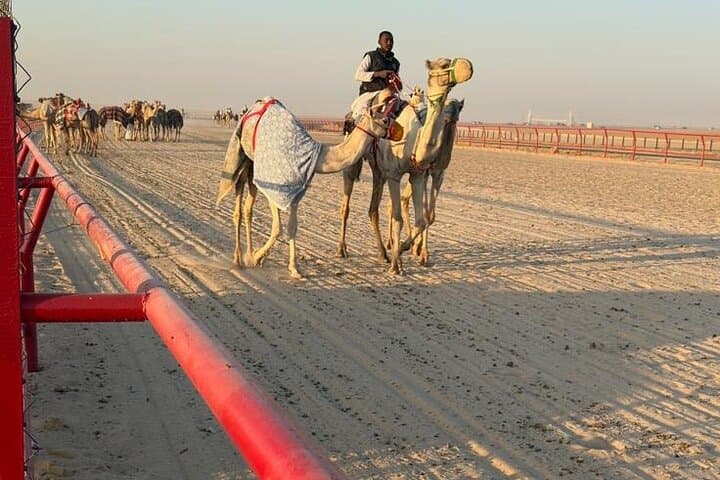
The sun is low and the track is already a band of churned sand; a ribbon of dust rises as camels line up, necks long and eyes bright against the pale desert sky.
Verified experiences and guided adventures in the surrounding area.
Operated by Mohamed · Kabd, Al Ahmadi Governorate
The sun is low and the track is already a band of churned sand; a ribbon of dust rises as camels line up, necks long and eyes bright against the pale desert sky.
At Kabd, Saturdays during the season feel like a local sporting ritual—families on shaded stands, photographers kneeling at the fence, and handlers preparing the animals for the run. Races begin with a crackle of radio calls; modern robot jockeys make the sport faster and more regulated, but the pulse of tradition remains.
Camel racing here sits at the intersection of Gulf history and desert geography. Camels were once essential transport and livestock; the flat, hard-packed plains around Kabd make for an ideal speedway, while nearby dunes show the wind’s slow hand in shaping the land. Culturally, the sport remains an expression of pride and community—international championships draw larger stables, but weekly meets keep the rhythm local.
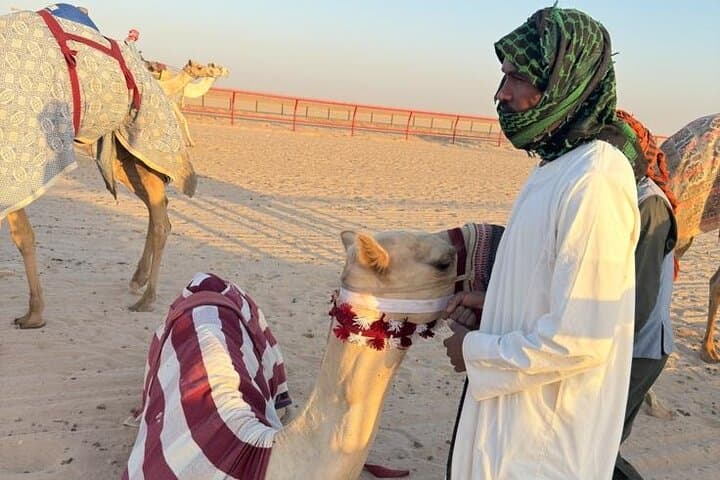
Practical guidance: the season runs from September into spring, and events typically start on Saturday mornings and stretch into late afternoon. Expect sun, sand, and close-up animal encounters—ask permission before touching camels and stay behind barriers during heats. Bring ample water, sun protection, a long lens for photos, and sturdy shoes for walking between viewpoints.
After the final heat, many tours include a buggy ride across the dunes at sunset—an easy way to cap the day with a wide desert horizon. The experience is accessible for families and photographers, and it gives a direct look at a living Gulf sport that balances heritage with modern regulation.
easy.
4 hours.
Suitable for all fitness levels; involves standing, short walks over sandy/packed terrain, and optional buggy rides.
Races typically run weekly on Saturdays during the sports season, which starts in September and continues into spring; check local listings for special championship dates.
Yes—many events allow photos with camels before races, but always ask handlers for permission and follow staff direction for safety.
Yes. The meet is suitable for families; facilities vary, and many tours note stroller and infant seat access.
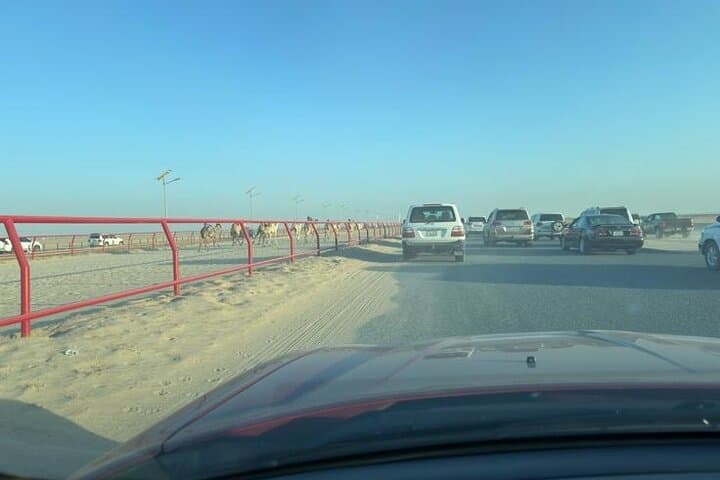
Not strictly—public transport options exist—but guided tours or private transfers simplify timing and access to buggy rides and photo stops.
Camel racing evolved from Bedouin traditions of camel breeding and transport; in Kuwait, modern races now use robot jockeys and run on organized tracks like Martyr Fahad Al-Ahmad Field.
Respect designated spectator areas to avoid trampling fragile desert vegetation; avoid feeding or startling animals and take all trash with you to protect the habitat.
Mohamed operates guided outdoor trips and adventures with an emphasis on safety, stewardship, and memorable experiences.

The sun is low and the track is already a band of churned sand; a ribbon of dust rises as camels line up, necks long and eyes bright against the pale desert sky.
The sun is low and the track is already a band of churned sand; a ribbon of dust rises as camels line up, necks long and eyes bright against the pale desert sky.
At Kabd, Saturdays during the season feel like a local sporting ritual—families on shaded stands, photographers kneeling at the fence, and handlers preparing the animals for the run. Races begin with a crackle of radio calls; modern robot jockeys make the sport faster and more regulated, but the pulse of tradition remains.
Camel racing here sits at the intersection of Gulf history and desert geography. Camels were once essential transport and livestock; the flat, hard-packed plains around Kabd make for an ideal speedway, while nearby dunes show the wind’s slow hand in shaping the land. Culturally, the sport remains an expression of pride and community—international championships draw larger stables, but weekly meets keep the rhythm local.
Practical guidance: the season runs from September into spring, and events typically start on Saturday mornings and stretch into late afternoon. Expect sun, sand, and close-up animal encounters—ask permission before touching camels and stay behind barriers during heats. Bring ample water, sun protection, a long lens for photos, and sturdy shoes for walking between viewpoints.
After the final heat, many tours include a buggy ride across the dunes at sunset—an easy way to cap the day with a wide desert horizon. The experience is accessible for families and photographers, and it gives a direct look at a living Gulf sport that balances heritage with modern regulation.