THE ADVENTURE COLLECTIVE® · Independent discovery and booking for outdoor travel

Climb or cable-car to Wat Doi Suthep’s golden chedi, then follow a trail of artisans in San Kamphaeng and Bo Sang. This half-day tour pairs sweeping views, cultural context, and hands-on handicrafts for a compact Chiang Mai experience.
Climb or cable-car to Wat Doi Suthep’s golden chedi, then follow a trail of artisans in San Kamphaeng and Bo Sang. This half-day tour pairs sweeping views, cultural context, and hands-on handicrafts for a compact Chiang Mai experience.
You crest a low ridge and the city opens below: a grid of tin roofs, palm fronds, and temple rooftops catching light. The mountain air tugs at your shirt, and the golden chedi of Wat Phra That Doi Suthep gleams against a wide sky—an early reward for the climb or the cable car ride.
Verified experiences and guided adventures in the surrounding area.
Operated by Bangkok Travel Agency · Chiang Mai, Chiang Mai Province
You crest a low ridge and the city opens below: a grid of tin roofs, palm fronds, and temple rooftops catching light. The mountain air tugs at your shirt, and the golden chedi of Wat Phra That Doi Suthep gleams against a wide sky—an early reward for the climb or the cable car ride.
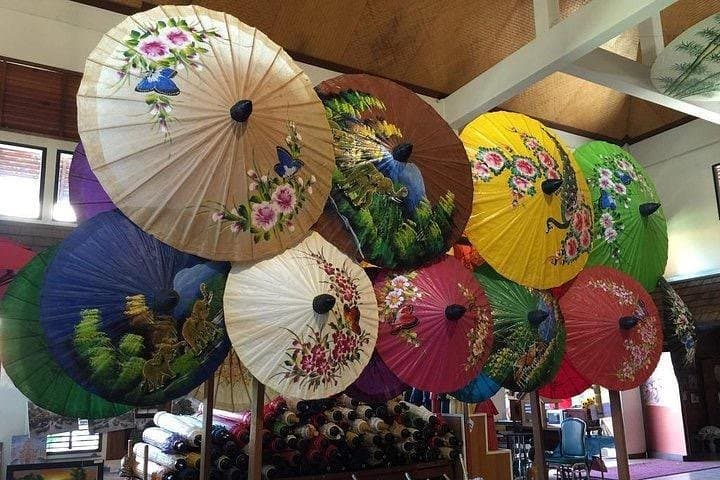
The temple sits on Doi Suthep, part of a volcanic range that lifted Chiang Mai’s skyline over millennia. The site’s history folds together Lanna kings and a local legend of a white elephant that chose the hilltop as a sacred resting place—its tusk's discovery reputedly marking the temple’s foundation in the 14th century. Below, San Kamphaeng and Bo Sang villages keep older crafts alive: silk looms, silversmith shops, teakcarvers and the paper-umbrella painters who steady a brush with practiced calm.
Expect a mix of steep stone steps and paved viewpoints, intermittent shops and friendly artisans demonstrating techniques up close. The route is short but sensory—temple bells, incense smoke, lacquerware polish, and markets of color that reward patient browsing.
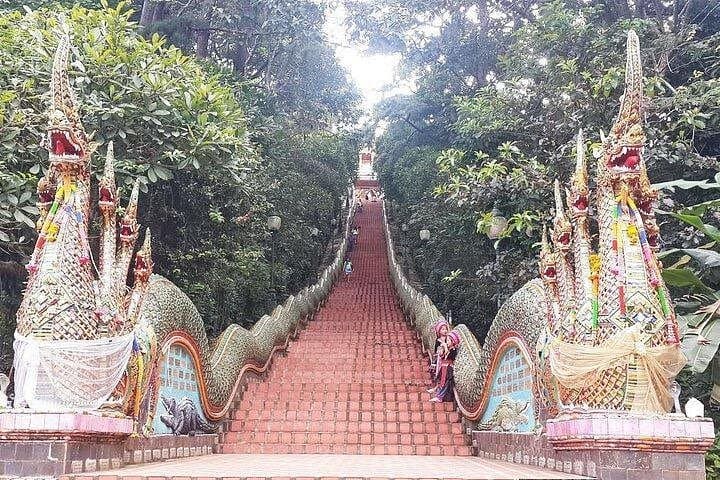
Practical edge: wear sturdy shoes for the 306-step naga staircase if you plan to walk, or take the cable car for a gentler ascent. Hydrate before you start; Chiang Mai’s sun intensifies midday. Bring cash for small workshop purchases and allow time to remove shoes at temple halls. The half-day format fits into a longer Chiang Mai itinerary—pair it with an afternoon market visit or a cool‑season hike in nearby national park slopes.
moderate.
4–5 hours.
Suitable for people in average fitness; stair ascent can be strenuous for those unaccustomed to steps or heat.
The tour runs about 4–5 hours, typically including hotel pickup and return to Chiang Mai.
Yes—most visitors can choose to climb the 306-step naga staircase or ride the cable car to the temple summit.
Admission to Wat Doi Suthep and hotel pickup/drop-off (for selected hotels) are included in the tour price.
Yes, it’s generally suitable for all ages; consider the cable car for those who cannot manage stairs.
Wat Phra That Doi Suthep dates back to the 14th century and is tied to Lanna dynastic history and a local legend involving a sacred white elephant.
Doi Suthep–Pui National Park protects the mountain’s forest; stick to marked paths, avoid feeding wildlife, and support local artisans to help sustain cultural landscapes.
Bangkok Travel Agency operates guided outdoor trips and adventures with an emphasis on safety, stewardship, and memorable experiences.


You crest a low ridge and the city opens below: a grid of tin roofs, palm fronds, and temple rooftops catching light. The mountain air tugs at your shirt, and the golden chedi of Wat Phra That Doi Suthep gleams against a wide sky—an early reward for the climb or the cable car ride.
You crest a low ridge and the city opens below: a grid of tin roofs, palm fronds, and temple rooftops catching light. The mountain air tugs at your shirt, and the golden chedi of Wat Phra That Doi Suthep gleams against a wide sky—an early reward for the climb or the cable car ride.
The temple sits on Doi Suthep, part of a volcanic range that lifted Chiang Mai’s skyline over millennia. The site’s history folds together Lanna kings and a local legend of a white elephant that chose the hilltop as a sacred resting place—its tusk's discovery reputedly marking the temple’s foundation in the 14th century. Below, San Kamphaeng and Bo Sang villages keep older crafts alive: silk looms, silversmith shops, teakcarvers and the paper-umbrella painters who steady a brush with practiced calm.
Expect a mix of steep stone steps and paved viewpoints, intermittent shops and friendly artisans demonstrating techniques up close. The route is short but sensory—temple bells, incense smoke, lacquerware polish, and markets of color that reward patient browsing.
Practical edge: wear sturdy shoes for the 306-step naga staircase if you plan to walk, or take the cable car for a gentler ascent. Hydrate before you start; Chiang Mai’s sun intensifies midday. Bring cash for small workshop purchases and allow time to remove shoes at temple halls. The half-day format fits into a longer Chiang Mai itinerary—pair it with an afternoon market visit or a cool‑season hike in nearby national park slopes.