THE ADVENTURE COLLECTIVE® · Independent discovery and booking for outdoor travel

Catch the Washington Commanders in the renewed atmosphere of Northwest Stadium — an electric mix of loud stands, neighborhood tailgates, and practical logistics. Read on for what to expect, where to go, and how to plan a smooth game day.
Catch the Washington Commanders in the renewed atmosphere of Northwest Stadium — an electric mix of loud stands, neighborhood tailgates, and practical logistics. Read on for what to expect, where to go, and how to plan a smooth game day.
A late-afternoon sun hits the parking lots and the scent of charcoal and spice rides the breeze as fans unfurl flags and set up grills outside Northwest Stadium. Inside, the bowl hums: percussion from marching bands, the snap of gloves, and roars that travel across the flat, river plain of Prince George’s County. You feel the crowd before you see the play — a living pulse that drives each kickoff and fourth-down stand.
Verified experiences and guided adventures in the surrounding area.
A late-afternoon sun hits the parking lots and the scent of charcoal and spice rides the breeze as fans unfurl flags and set up grills outside Northwest Stadium. Inside, the bowl hums: percussion from marching bands, the snap of gloves, and roars that travel across the flat, river plain of Prince George’s County. You feel the crowd before you see the play — a living pulse that drives each kickoff and fourth-down stand.
The stadium opened in the late 1990s and was long one of the NFL’s largest venues; recent changes in ownership and a new stadium name mark a fresh chapter for the franchise. Geologically the site sits on the Atlantic coastal plain — a low, even landscape that funnels sound and weather across broad sightlines. Culturally, Commanders games are as much about the tailgate community as the on-field action: neighborhood groups, alumni clubs, and visiting fans converge for a rowdy, social experience.
Plan to arrive early to secure a parking spot and a tailgate patch; security lines and bag checks are strict and can add 30–60 minutes. Transit options, ride-shares, and stadium shuttles are practical alternatives to driving on game days. Dress in layers — stadium wind off nearby marshes can drop temps quickly — and bring ear protection if you’re near the student sections or band.
Food concessions cover classic stadium fare; cashless payments are standard. For first-timers, pick a spot with clear sightlines (upper sideline or end-zone corners balance price and view) and leave time after the final whistle for traffic to thin. The experience is unapologetically communal: the plays matter, but the shared rhythms of cheering, chanting, and tailgate rituals are the enduring memory.
easy.
3–4 hours.
Minimal fitness required; expect standing, walking between lots and gates, and some stairs
Arrive 60–90 minutes before kickoff to allow for parking, tailgating, and security screenings; bigger rivalry games may require more time.
Yes — transit, shuttles, and ride-shares can be faster than driving on game day, especially for evening kickoffs, though routes may be crowded at peak times.
Most NFL stadiums enforce a clear-bag policy and limited bag sizes; check the Commanders' official stadium page before packing to avoid confiscation or delays.
Tailgating in designated lots permits grills and food, but once inside the stadium outside food is typically prohibited; follow lot rules and stadium policies.
Opened in the late 1990s and long one of the NFL’s larger venues, the stadium has hosted the Washington franchise through multiple eras and name changes.
Game days generate significant waste; use recycling stations in lots when available and consider public transit to reduce congestion and emissions.
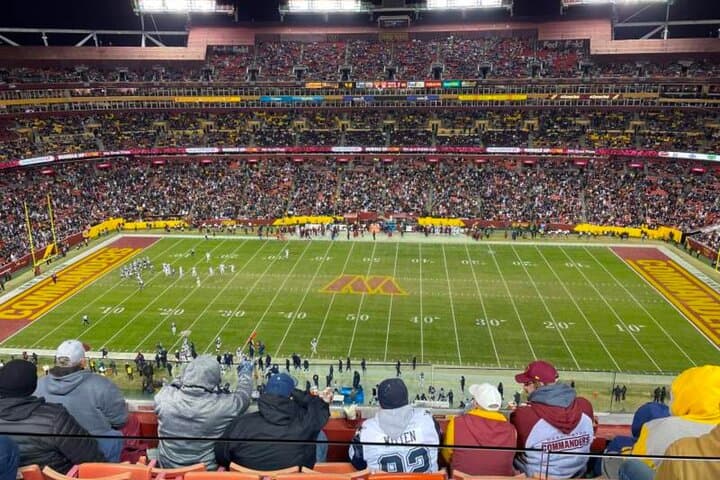
A late-afternoon sun hits the parking lots and the scent of charcoal and spice rides the breeze as fans unfurl flags and set up grills outside Northwest Stadium. Inside, the bowl hums: percussion from marching bands, the snap of gloves, and roars that travel across the flat, river plain of Prince George’s County. You feel the crowd before you see the play — a living pulse that drives each kickoff and fourth-down stand.
A late-afternoon sun hits the parking lots and the scent of charcoal and spice rides the breeze as fans unfurl flags and set up grills outside Northwest Stadium. Inside, the bowl hums: percussion from marching bands, the snap of gloves, and roars that travel across the flat, river plain of Prince George’s County. You feel the crowd before you see the play — a living pulse that drives each kickoff and fourth-down stand.
The stadium opened in the late 1990s and was long one of the NFL’s largest venues; recent changes in ownership and a new stadium name mark a fresh chapter for the franchise. Geologically the site sits on the Atlantic coastal plain — a low, even landscape that funnels sound and weather across broad sightlines. Culturally, Commanders games are as much about the tailgate community as the on-field action: neighborhood groups, alumni clubs, and visiting fans converge for a rowdy, social experience.
Plan to arrive early to secure a parking spot and a tailgate patch; security lines and bag checks are strict and can add 30–60 minutes. Transit options, ride-shares, and stadium shuttles are practical alternatives to driving on game days. Dress in layers — stadium wind off nearby marshes can drop temps quickly — and bring ear protection if you’re near the student sections or band.
Food concessions cover classic stadium fare; cashless payments are standard. For first-timers, pick a spot with clear sightlines (upper sideline or end-zone corners balance price and view) and leave time after the final whistle for traffic to thin. The experience is unapologetically communal: the plays matter, but the shared rhythms of cheering, chanting, and tailgate rituals are the enduring memory.