THE ADVENTURE COLLECTIVE® · Independent discovery and booking for outdoor travel

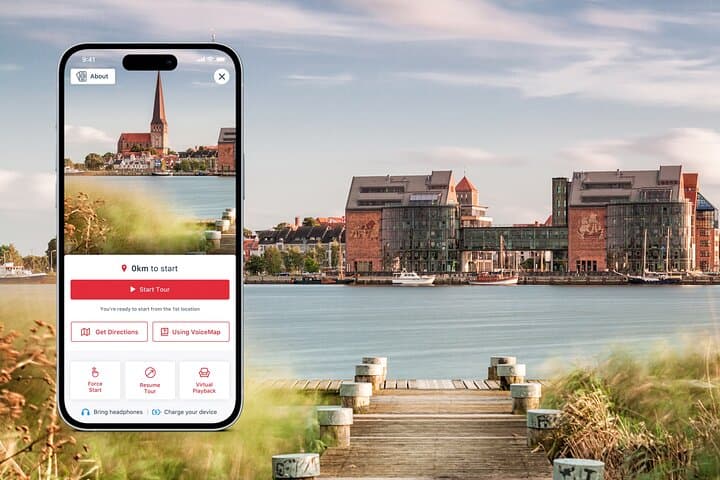
Trace Warnemünde’s journey from medieval fishing hamlet to lively Baltic resort with a GPS-guided audio stroll. This self-guided tour mixes seaside panoramas, maritime history and quiet corners away from the cruise-ship crowds.
Trace Warnemünde’s journey from medieval fishing hamlet to lively Baltic resort with a GPS-guided audio stroll. This self-guided tour mixes seaside panoramas, maritime history and quiet corners away from the cruise-ship crowds.
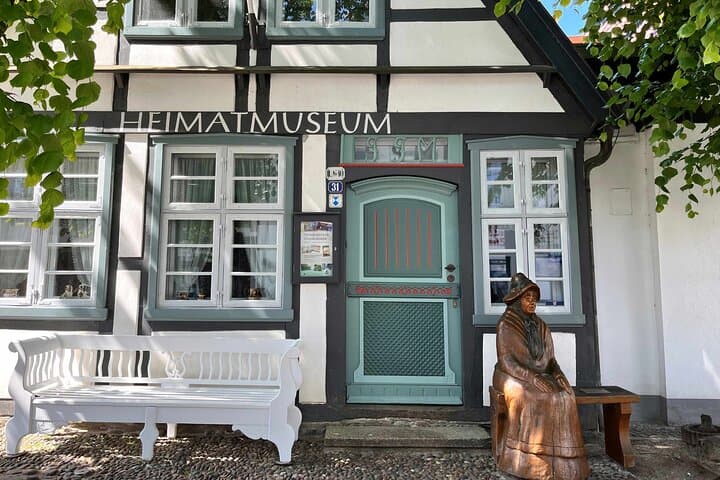
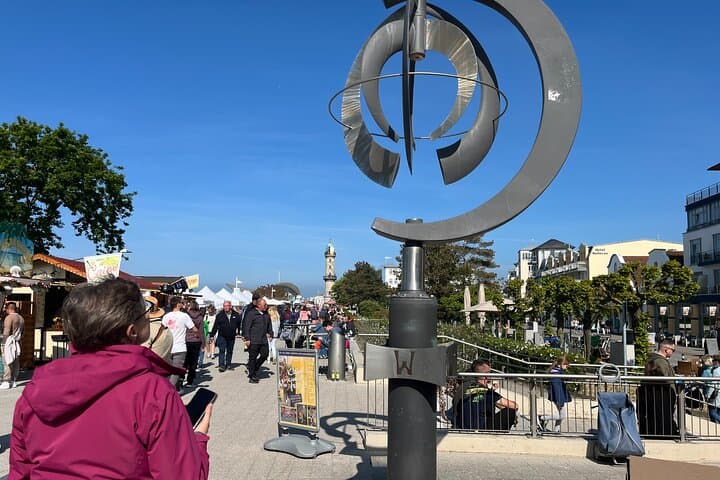
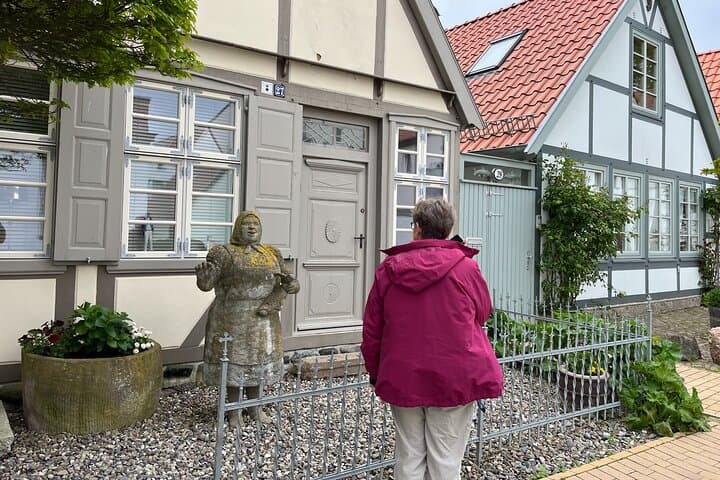
The Baltic wind nudges toward the pier as the self-guided audio awakens: cobbled lanes, low-slung fishermen’s houses and the broad sweep of sand all unfold at a measured pace. Listeners follow GPS cues through a village that still argues with the scale of passing cruise ships, trading harbor bustle for quiet courtyards and the slow pulse of sea air.
Verified experiences and guided adventures in the surrounding area.
Operated by VoiceMap Audio Tours · Warnemünde, Mecklenburg-Vorpommern
The Baltic wind nudges toward the pier as the self-guided audio awakens: cobbled lanes, low-slung fishermen’s houses and the broad sweep of sand all unfold at a measured pace. Listeners follow GPS cues through a village that still argues with the scale of passing cruise ships, trading harbor bustle for quiet courtyards and the slow pulse of sea air.
Warnemünde began as a small fishing settlement more than 800 years ago; its oldest house keeps foundations from the 1300s while the lighthouse—reachable by 140 steps—marks centuries of maritime navigation. Geologically the shoreline is a classic southern Baltic coast: narrow dunes, shifting sands and a shallow seabed that shapes long, gently shelving beaches. Cultural notes surface in unexpected places: an artist's room once occupied by Edvard Munch, a church with local Neptune lore, and the teapot-shaped café that frames sea views.
Practical guidance is straightforward. The route is flat and largely paved, covering roughly 3–4 km and designed for a 60–75 minute stroll at a leisurely pace. The GPS-driven audio frees travelers to pause at cafés, climb the lighthouse for a wide-angle Baltic view, or detour to Kurpark for a quieter stretch.
Expect changeable weather—wind and sudden showers are typical—so layer up and carry a charged device for playback. Peak season brings cruise-day crowds; early morning or late afternoon yields cleaner light and more breathing room. The tour privileges observation over admission: it points out architecture and local stories, then leaves exploration in the walker’s hands.
easy.
60–75 minutes.
Suitable for most fitness levels; light walking on flat, paved and sandy surfaces.
The audio specifies a central bridge/start point in Warnemünde’s harbor area; directions to the exact starting spot are included when you download the tour.
The route covers roughly 3–4 km and typically takes 60–75 minutes at a relaxed pace, with optional stops that extend the time.
Yes—offline access to audio, maps and geodata is provided so you can use the tour without a constant internet connection.
Much of the promenade and main streets are accessible, but some cobbled lanes and the lighthouse stairs are not; check local access points before starting.
Warnemünde grew from a medieval fishing village into a seaside resort over 800 years, retaining early timber and stone houses alongside 19th–20th century resort architecture.
Dune systems and beach grasses are fragile—stay on boardwalks and respect signage. Local groups run beach cleanups and the town manages beach-chair zones to limit erosion and habitat disturbance.
VoiceMap Audio Tours operates guided outdoor trips and adventures with an emphasis on safety, stewardship, and memorable experiences.
The Baltic wind nudges toward the pier as the self-guided audio awakens: cobbled lanes, low-slung fishermen’s houses and the broad sweep of sand all unfold at a measured pace. Listeners follow GPS cues through a village that still argues with the scale of passing cruise ships, trading harbor bustle for quiet courtyards and the slow pulse of sea air.
The Baltic wind nudges toward the pier as the self-guided audio awakens: cobbled lanes, low-slung fishermen’s houses and the broad sweep of sand all unfold at a measured pace. Listeners follow GPS cues through a village that still argues with the scale of passing cruise ships, trading harbor bustle for quiet courtyards and the slow pulse of sea air.
Warnemünde began as a small fishing settlement more than 800 years ago; its oldest house keeps foundations from the 1300s while the lighthouse—reachable by 140 steps—marks centuries of maritime navigation. Geologically the shoreline is a classic southern Baltic coast: narrow dunes, shifting sands and a shallow seabed that shapes long, gently shelving beaches. Cultural notes surface in unexpected places: an artist's room once occupied by Edvard Munch, a church with local Neptune lore, and the teapot-shaped café that frames sea views.
Practical guidance is straightforward. The route is flat and largely paved, covering roughly 3–4 km and designed for a 60–75 minute stroll at a leisurely pace. The GPS-driven audio frees travelers to pause at cafés, climb the lighthouse for a wide-angle Baltic view, or detour to Kurpark for a quieter stretch.
Expect changeable weather—wind and sudden showers are typical—so layer up and carry a charged device for playback. Peak season brings cruise-day crowds; early morning or late afternoon yields cleaner light and more breathing room. The tour privileges observation over admission: it points out architecture and local stories, then leaves exploration in the walker’s hands.