THE ADVENTURE COLLECTIVE® · Independent discovery and booking for outdoor travel

Leave Cusco before dawn for a full-day hike to Waqra Pukara, an Inca terrace complex set on a steep ridge above the Apurímac Canyon. This 12–14 hour outing combines a long mountain drive, a two-hour uphill trek, and panoramic canyon views — ideal as training for longer Andean treks.
Leave Cusco before dawn for a full-day hike to Waqra Pukara, an Inca terrace complex set on a steep ridge above the Apurímac Canyon. This 12–14 hour outing combines a long mountain drive, a two-hour uphill trek, and panoramic canyon views — ideal as training for longer Andean treks.
Morning light slices canyon walls as a convoy leaves Cusco before dawn; the paved road gives way to hairpin dirt as the Andes tighten around the Apurímac gorge. By the time hikers unload near Sangarará, the air is thin and clear, and the trail climbs steep switchbacks toward a rocky ridge where Waqra Pukara perches like a stubborn watchman.
Verified experiences and guided adventures in the surrounding area.
Operated by Into Peru · Cusco, Cusco Region
Morning light slices canyon walls as a convoy leaves Cusco before dawn; the paved road gives way to hairpin dirt as the Andes tighten around the Apurímac gorge. By the time hikers unload near Sangarará, the air is thin and clear, and the trail climbs steep switchbacks toward a rocky ridge where Waqra Pukara perches like a stubborn watchman.
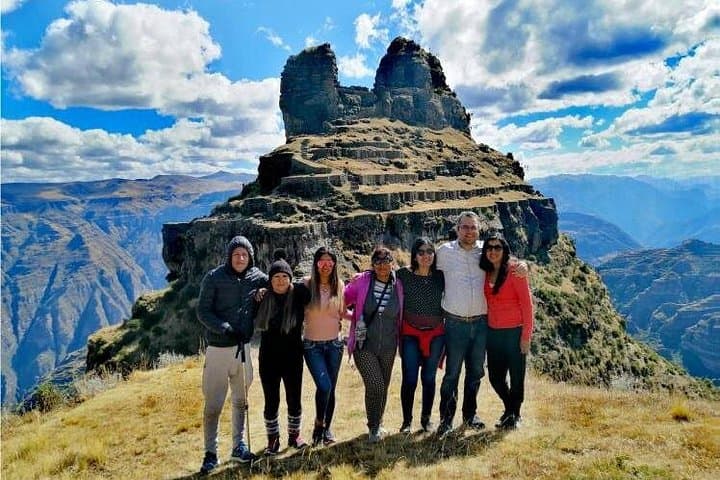
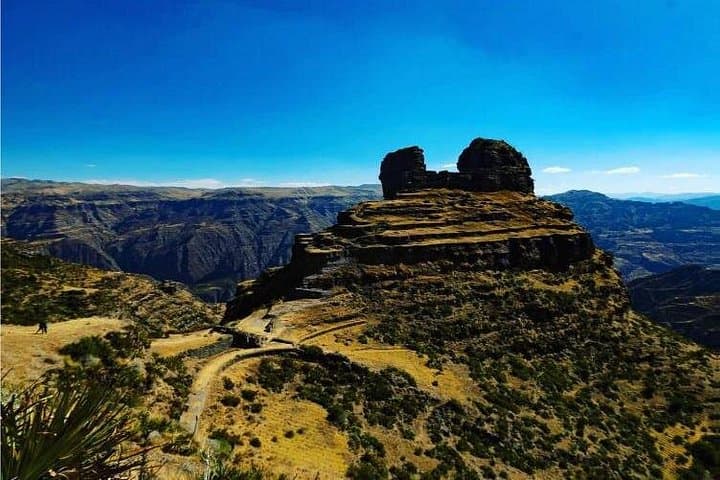
Waqra Pukara — literally “horn fortress” in Quechua — is a late-Inca or regional imperial site made of terraces, retaining walls and stairways cut into steep bedrock. The geology here is dramatic: folded volcanic and sedimentary layers have been carved by the Apurímac River, producing sheer canyon walls and narrow ridgelines. Local campesino communities still practice highland agriculture in terraces below, and the site’s austere masonry points to strategic, possibly ritual uses rather than a dense urban center.
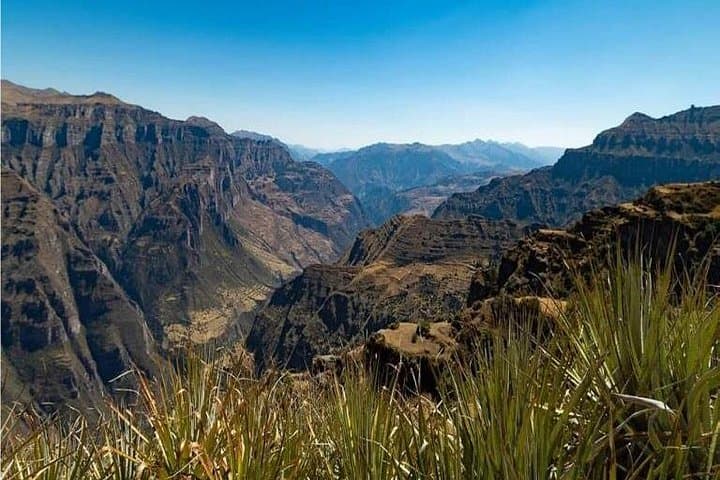
Expect roughly 3½ hours driving each way from Cusco and about two hours of uphill walking each direction on uneven, rocky trail at 3,800–4,000 m elevation. Views open onto the Apurímac gorge and isolated puna grasslands where wind scours the slopes and condors ride thermals. Guides typically include hotel pickup, a boxed lunch and basic first aid.
Practical guidance: arrive acclimatized, bring layered clothing for sun and wind, and use trekking poles on the return descent. Water and sun protection are essentials; services are minimal beyond the trailhead. The route is an excellent training day for longer treks like Salkantay or the Inca Trail — compact, exposed and rewarding with striking archaeology and raw mountain scenery.
moderate.
12–14 hours.
Should be in good cardio shape for steady uphill hiking at high altitude; regular hikers and those training for multi-day treks will be comfortable.
It’s shorter but steep and exposed; use it as conditioning for the Inca Trail — similar elevation challenges but less distance.
No national park permits are required for the site itself, but organized tours usually handle access and transport logistics.
Services are minimal: bring snacks and toilet paper. Lunch is typically provided by the tour at the trailhead or en route back to Cusco.
Symptoms can appear quickly above 3,500 m; ascend slowly, hydrate, avoid alcohol, and consider acetazolamide if recommended by a physician.
Waqra Pukara’s terraces and stairways reflect late-Inca or regional administrative use, sited strategically on a ridge overseeing the Apurímac corridor used for travel and trade.
The high Andean puna is fragile; stay on established trails, pack out waste and respect pastoral lands to avoid erosion and disturbance to grazing cycles.
Into Peru operates guided outdoor trips and adventures with an emphasis on safety, stewardship, and memorable experiences.
Morning light slices canyon walls as a convoy leaves Cusco before dawn; the paved road gives way to hairpin dirt as the Andes tighten around the Apurímac gorge. By the time hikers unload near Sangarará, the air is thin and clear, and the trail climbs steep switchbacks toward a rocky ridge where Waqra Pukara perches like a stubborn watchman.
Morning light slices canyon walls as a convoy leaves Cusco before dawn; the paved road gives way to hairpin dirt as the Andes tighten around the Apurímac gorge. By the time hikers unload near Sangarará, the air is thin and clear, and the trail climbs steep switchbacks toward a rocky ridge where Waqra Pukara perches like a stubborn watchman.
Waqra Pukara — literally “horn fortress” in Quechua — is a late-Inca or regional imperial site made of terraces, retaining walls and stairways cut into steep bedrock. The geology here is dramatic: folded volcanic and sedimentary layers have been carved by the Apurímac River, producing sheer canyon walls and narrow ridgelines. Local campesino communities still practice highland agriculture in terraces below, and the site’s austere masonry points to strategic, possibly ritual uses rather than a dense urban center.
Expect roughly 3½ hours driving each way from Cusco and about two hours of uphill walking each direction on uneven, rocky trail at 3,800–4,000 m elevation. Views open onto the Apurímac gorge and isolated puna grasslands where wind scours the slopes and condors ride thermals. Guides typically include hotel pickup, a boxed lunch and basic first aid.
Practical guidance: arrive acclimatized, bring layered clothing for sun and wind, and use trekking poles on the return descent. Water and sun protection are essentials; services are minimal beyond the trailhead. The route is an excellent training day for longer treks like Salkantay or the Inca Trail — compact, exposed and rewarding with striking archaeology and raw mountain scenery.