THE ADVENTURE COLLECTIVE® · Independent discovery and booking for outdoor travel

Walk the narrow, color-washed lanes of Cartagena's UNESCO-listed walled city on a 3-hour guided tour that pairs colonial history with local culture. Discover plazas, churches and hidden alleys while getting practical tips for navigating cobbles and crowds.
Walk the narrow, color-washed lanes of Cartagena's UNESCO-listed walled city on a 3-hour guided tour that pairs colonial history with local culture. Discover plazas, churches and hidden alleys while getting practical tips for navigating cobbles and crowds.
You step through the Clock Tower and the city immediately changes — voices, music from a nearby plaza, and the clack of sandals on uneven cobbles. Narrow streets open briefly into sunlit squares where colonial facades wear peeling paint like badges of long use. Bougainvillea and laundry hang from iron balconies while the Caribbean breeze pushes warm air through alleys that once guided galleons' shore leave.
Verified experiences and guided adventures in the surrounding area.
Operated by Adventure CTG SAS · Cartagena, Bolívar
You step through the Clock Tower and the city immediately changes — voices, music from a nearby plaza, and the clack of sandals on uneven cobbles. Narrow streets open briefly into sunlit squares where colonial facades wear peeling paint like badges of long use. Bougainvillea and laundry hang from iron balconies while the Caribbean breeze pushes warm air through alleys that once guided galleons' shore leave.
Cartagena's walled center was fortified in the 16th–18th centuries against pirate raids and imperial conflict; the thick stone walls and bastions are military grammar written across the shoreline. The area's limestone and coral-based masonry reflect the region's coastal geology, and plazas such as San Pedro Claver and Santo Domingo anchor everyday life with churches, markets and street performers. In neighborhoods like Getsemaní, murals and narrow passageways trace social histories — resistance, religion and the city's Afro-Caribbean rhythms.
On a guided 3-hour walk you'll pass the Clock Tower, Plaza de los Coches, the Botero sculpture in Plaza Santo Domingo and quiet corners with a palpable domestic life. Expect cobbles, short stairways and bursts of shade under broad trees.
Plan practicalities: wear sturdy, grippy shoes for uneven surfaces, carry a refillable water bottle and sun protection, and bring a photocopy of your passport rather than the original. Mornings are cooler and less crowded; late afternoons deliver golden light for photos but attract more people. Respect local vendors, keep to marked routes, and let the guide explain stories behind plaques and façades — the tour is as much about listening as walking.
easy.
2–3 hours.
Suitable for casual walkers who can handle several miles of slow-paced walking on uneven terrain.
Most tours start at the Clock Tower (Torre del Reloj) in the historic center and loop through nearby plazas and streets, finishing near Plaza Santo Domingo or the original meeting point.
Yes — the itinerary is classified as easy, but uneven cobbles and short stairways can be challenging; bring a stroller only for short flat stretches and consider pace when booking.
Guides commonly offer tours in Spanish and English; check your booking page for specific language availability or request your preference when reserving.
Yes — public plazas and many cafés near major stops offer restrooms and drinks; bring small bills for purchases and plan short stops during the 3-hour walk.
Cartagena's walled city was a strategic port for Spanish colonial trade and was repeatedly fortified from the 16th century onward to resist pirates and foreign powers.
Conservation focuses on protecting colonial stonework from salt air and tourism wear; visitors are encouraged to avoid touching fragile masonry and to support local preservation initiatives.
Adventure CTG SAS operates guided outdoor trips and adventures with an emphasis on safety, stewardship, and memorable experiences.

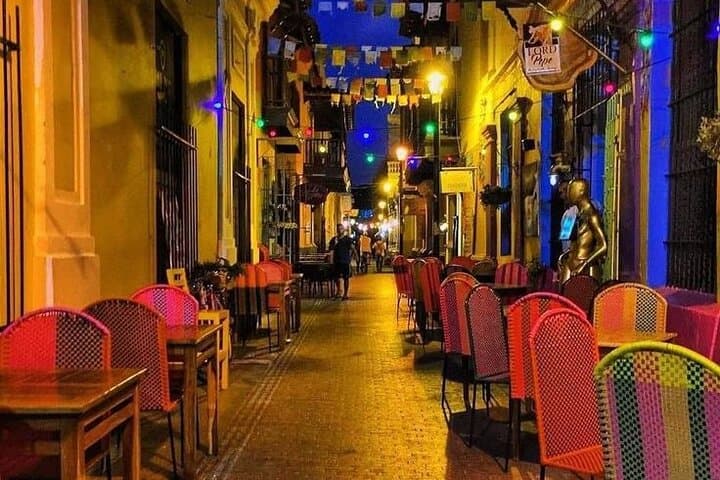

You step through the Clock Tower and the city immediately changes — voices, music from a nearby plaza, and the clack of sandals on uneven cobbles. Narrow streets open briefly into sunlit squares where colonial facades wear peeling paint like badges of long use. Bougainvillea and laundry hang from iron balconies while the Caribbean breeze pushes warm air through alleys that once guided galleons' shore leave.
You step through the Clock Tower and the city immediately changes — voices, music from a nearby plaza, and the clack of sandals on uneven cobbles. Narrow streets open briefly into sunlit squares where colonial facades wear peeling paint like badges of long use. Bougainvillea and laundry hang from iron balconies while the Caribbean breeze pushes warm air through alleys that once guided galleons' shore leave.
Cartagena's walled center was fortified in the 16th–18th centuries against pirate raids and imperial conflict; the thick stone walls and bastions are military grammar written across the shoreline. The area's limestone and coral-based masonry reflect the region's coastal geology, and plazas such as San Pedro Claver and Santo Domingo anchor everyday life with churches, markets and street performers. In neighborhoods like Getsemaní, murals and narrow passageways trace social histories — resistance, religion and the city's Afro-Caribbean rhythms.
On a guided 3-hour walk you'll pass the Clock Tower, Plaza de los Coches, the Botero sculpture in Plaza Santo Domingo and quiet corners with a palpable domestic life. Expect cobbles, short stairways and bursts of shade under broad trees.
Plan practicalities: wear sturdy, grippy shoes for uneven surfaces, carry a refillable water bottle and sun protection, and bring a photocopy of your passport rather than the original. Mornings are cooler and less crowded; late afternoons deliver golden light for photos but attract more people. Respect local vendors, keep to marked routes, and let the guide explain stories behind plaques and façades — the tour is as much about listening as walking.