THE ADVENTURE COLLECTIVE® · Independent discovery and booking for outdoor travel

Scan tidal flats where flamingos feed and pelicans loaf on sandbanks—an eight-hour private tour around Walvis Bay’s lagoon brings coastal birdlife and desert-dune landscapes into close view. Learn where to look, what to pack, and how to move quietly for better sightings.
Scan tidal flats where flamingos feed and pelicans loaf on sandbanks—an eight-hour private tour around Walvis Bay’s lagoon brings coastal birdlife and desert-dune landscapes into close view. Learn where to look, what to pack, and how to move quietly for better sightings.
The wind carries salt and the click of binoculars as you step toward the lagoon’s edge—flamingos tilt like pink punctuation against a pale horizon while pelicans loaf on sandbanks that the tide exposes and hides.
Verified experiences and guided adventures in the surrounding area.
Operated by Rolling Hills Safaris Namibia · Walvis Bay, Erongo Region
The wind carries salt and the click of binoculars as you step toward the lagoon’s edge—flamingos tilt like pink punctuation against a pale horizon while pelicans loaf on sandbanks that the tide exposes and hides.
This stretch of Namibia’s coast is shaped by the cold Benguela Current and the Namib Desert’s dunes sliding to the sea; the Walvis Bay lagoon and adjoining salt pans have long been magnets for migratory and resident birds. The port town of Walvis Bay grew around a sheltered harbor and salt works, and its coastal flats have supported fishing communities and guided naturalists for decades.
Geology here is simple and striking: broad tidal flats, shallow lagoon channels, and towering wind-carved dunes. Culturally, the area blends coastal Herero, Nama, and European fishing traditions—local guides often point out old salt works and pelican-hauling spots that reveal human use of the shore.
On a full-day private birding tour you’ll cover the lagoon shoreline, salt pans and nearby dunes by vehicle with short, flat walks for better views. Expect easy walking on sand and compacted paths, frequent stops for scopes and photography, and a picnic or café break included. Bring sunscreen, a wide-brim hat and water: wind and sun are constant companions, and the light changes fast—best photos come in the softer hours around sunrise and late afternoon.
This experience is low on elevation but high on attention to detail—respect nesting areas, keep voices low near roosts, and let the birds set the pace.
easy.
8 hours.
Suitable for most fitness levels; requires short flat walks and standing for extended viewing periods.
This private tour runs about eight hours and typically includes guide services, a coffee stop, picnic lunch, and bottled drinks; transportation is provided from arranged pickup points.
The tour notes list wheelchair and stroller accessibility for transportation and short stops, but specific access to hides or uneven sands may be limited—check with the operator when booking.
Late dry-season and southern summer (spring to early summer) often bring good numbers of migratory species and breeding activity; early mornings and late afternoons are best daily windows.
Most of the lagoon shoreline and bird hides are accessible by regular vehicles, but reaching dunes like Sandwich Harbour or remote spits may require a 4x4—confirm the itinerary with the guide.
Walvis Bay has long been a strategic harbor and salt-production center; its lagoon has supported local fishing communities and naturalists since the colonial era.
The lagoon and flats are ecologically sensitive—stick to marked routes, avoid disturbing roosts, and support local guides who practice low-impact viewing.
Rolling Hills Safaris Namibia operates guided outdoor trips and adventures with an emphasis on safety, stewardship, and memorable experiences.
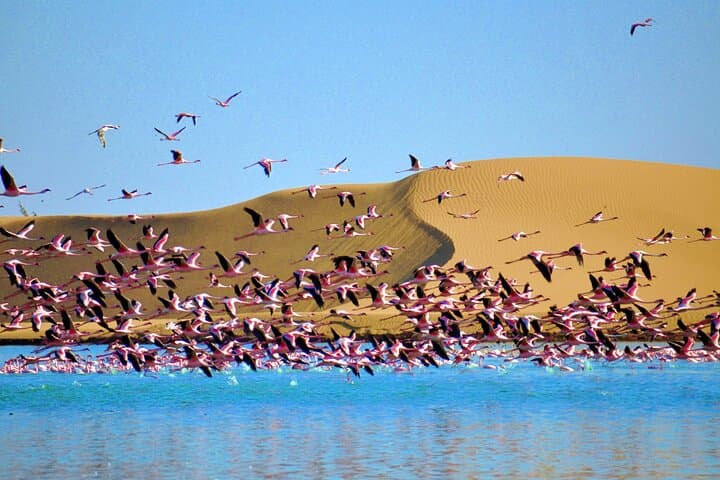
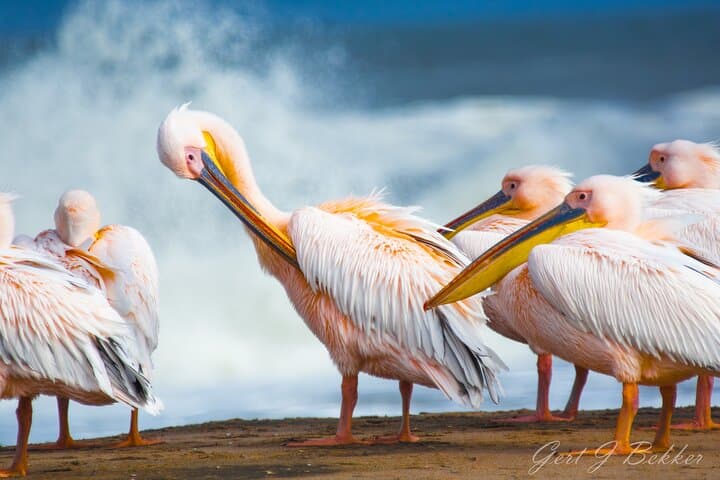
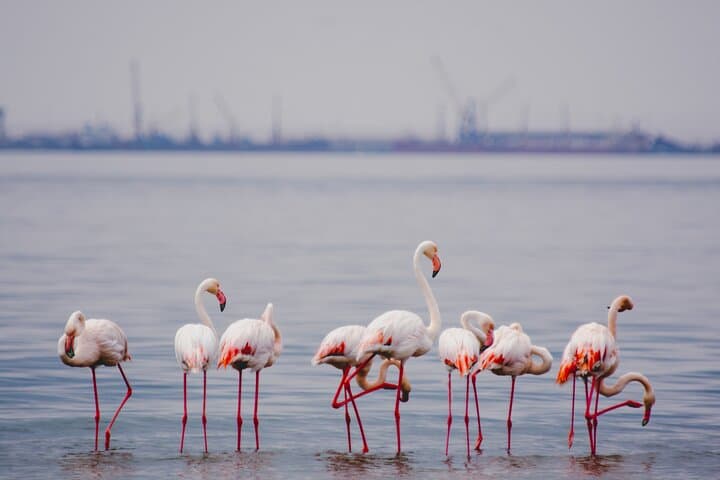
The wind carries salt and the click of binoculars as you step toward the lagoon’s edge—flamingos tilt like pink punctuation against a pale horizon while pelicans loaf on sandbanks that the tide exposes and hides.
The wind carries salt and the click of binoculars as you step toward the lagoon’s edge—flamingos tilt like pink punctuation against a pale horizon while pelicans loaf on sandbanks that the tide exposes and hides.
This stretch of Namibia’s coast is shaped by the cold Benguela Current and the Namib Desert’s dunes sliding to the sea; the Walvis Bay lagoon and adjoining salt pans have long been magnets for migratory and resident birds. The port town of Walvis Bay grew around a sheltered harbor and salt works, and its coastal flats have supported fishing communities and guided naturalists for decades.
Geology here is simple and striking: broad tidal flats, shallow lagoon channels, and towering wind-carved dunes. Culturally, the area blends coastal Herero, Nama, and European fishing traditions—local guides often point out old salt works and pelican-hauling spots that reveal human use of the shore.
On a full-day private birding tour you’ll cover the lagoon shoreline, salt pans and nearby dunes by vehicle with short, flat walks for better views. Expect easy walking on sand and compacted paths, frequent stops for scopes and photography, and a picnic or café break included. Bring sunscreen, a wide-brim hat and water: wind and sun are constant companions, and the light changes fast—best photos come in the softer hours around sunrise and late afternoon.
This experience is low on elevation but high on attention to detail—respect nesting areas, keep voices low near roosts, and let the birds set the pace.