THE ADVENTURE COLLECTIVE® · Independent discovery and booking for outdoor travel

A one-day guided hike from Seattle to Wallace Falls offers three dramatic cascades, moss-draped forests and a moderate 6-mile round trip. Expect rails at viewpoints, mixed trail surfaces, and flexible lunch stops at lower, middle or upper falls.
A one-day guided hike from Seattle to Wallace Falls offers three dramatic cascades, moss-draped forests and a moderate 6-mile round trip. Expect rails at viewpoints, mixed trail surfaces, and flexible lunch stops at lower, middle or upper falls.
A misted ribbon of water calls as the van pulls off Highway 2 and the trees close in — Washington’s Cascades pressing against the road like a green wall. The trailhead at Wallace Falls unfolds quickly: a well-built path, wooden stairs, and the steady drum of the Wallace River daring you toward the falls. Hikers move at a conversational pace, stopping at rail-protected overlooks where spumes of spray punctuate the forest air.
Verified experiences and guided adventures in the surrounding area.
Operated by Adventures In Seattle · Gold Bar, Washington
A misted ribbon of water calls as the van pulls off Highway 2 and the trees close in — Washington’s Cascades pressing against the road like a green wall. The trailhead at Wallace Falls unfolds quickly: a well-built path, wooden stairs, and the steady drum of the Wallace River daring you toward the falls. Hikers move at a conversational pace, stopping at rail-protected overlooks where spumes of spray punctuate the forest air.
Wallace Falls State Park sits on the western edge of the Cascades, carved by glacial runoff and the persistent work of the Wallace River. The three main cascades — lower, middle and upper — mark stages in the river’s descent and were long-traveled territory for local Indigenous peoples, including the Snohomish, before the logging era reshaped parts of the valley.
Expect mixed terrain: packed dirt, exposed roots and rock steps, with handrails at key viewpoints. The round-trip route to the upper falls is roughly 6 miles with about 1,150–1,300 feet of elevation gain, enough to raise your pulse and reward you with broad, fern-softened benches and panoramic forest views.
Practical guidance: start early to beat crowds and afternoon drizzle; wear grippy hiking shoes, carry 1–2 liters of water and layers for quick weather shifts. Lunch options are flexible — many groups picnic above the middle or upper falls. Follow park rules, stay on signed trails and pack out what you pack in; the trail stays in good condition when visitors do their part. This trip is an accessible slice of the Cascades’ energy: loud water, cool shade and a walk that feels both invigorating and unfussy.
moderate.
8–9 hours (including transport from Seattle).
Participants should be comfortable hiking 6 miles with steady uphill sections and carrying a daypack
The full route to the upper falls is about 6 miles round trip with roughly 1,150–1,300 feet of ascent, typically taking 3–5 hours on trail depending on stops.
Yes — this tour includes pickup in the Seattle area with an air-conditioned vehicle and return to the city the same day.
Service animals are allowed; general pet policies vary by operator and park — confirm with the tour operator before booking.
Dress in layers: a moisture-wicking base, insulating mid-layer, and waterproof outer layer; hat and gloves are advised in late fall and winter.
The Wallace River valley was used seasonally by Indigenous peoples such as the Snohomish; later logging and trail development opened access for recreation.
Wallace Falls is managed by Washington State Parks—stay on trails, pack out trash and respect seasonal closures to protect riparian habitat and trail integrity.
Adventures In Seattle operates guided outdoor trips and adventures with an emphasis on safety, stewardship, and memorable experiences.
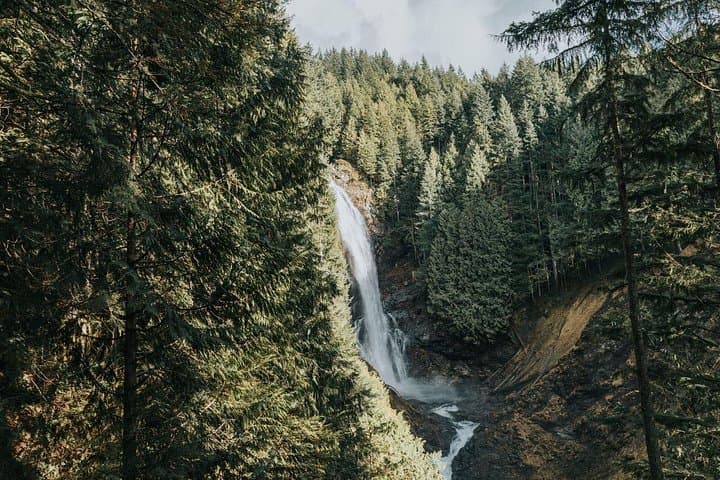
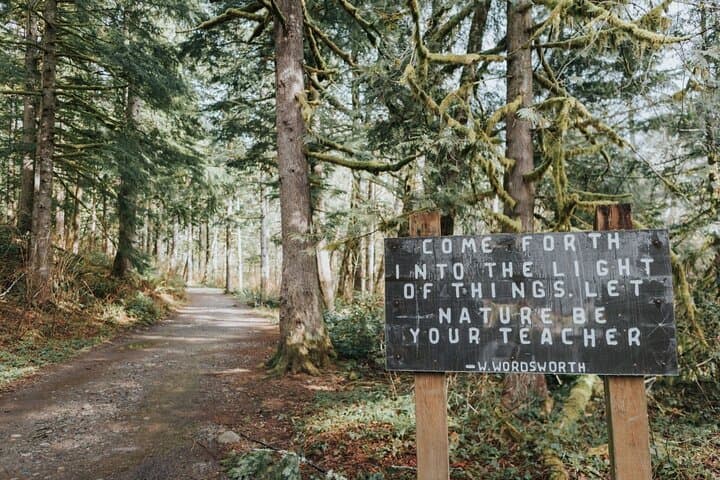
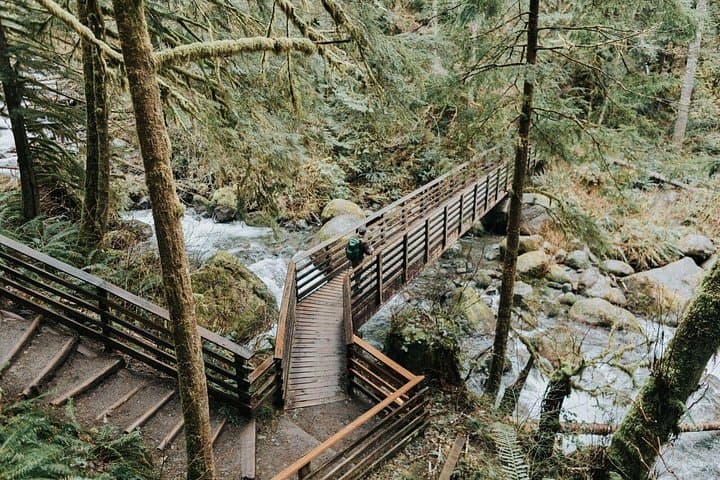
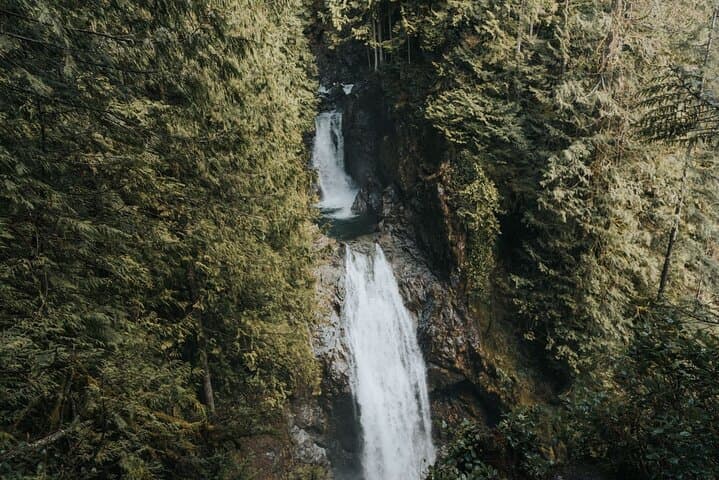
A misted ribbon of water calls as the van pulls off Highway 2 and the trees close in — Washington’s Cascades pressing against the road like a green wall. The trailhead at Wallace Falls unfolds quickly: a well-built path, wooden stairs, and the steady drum of the Wallace River daring you toward the falls. Hikers move at a conversational pace, stopping at rail-protected overlooks where spumes of spray punctuate the forest air.
A misted ribbon of water calls as the van pulls off Highway 2 and the trees close in — Washington’s Cascades pressing against the road like a green wall. The trailhead at Wallace Falls unfolds quickly: a well-built path, wooden stairs, and the steady drum of the Wallace River daring you toward the falls. Hikers move at a conversational pace, stopping at rail-protected overlooks where spumes of spray punctuate the forest air.
Wallace Falls State Park sits on the western edge of the Cascades, carved by glacial runoff and the persistent work of the Wallace River. The three main cascades — lower, middle and upper — mark stages in the river’s descent and were long-traveled territory for local Indigenous peoples, including the Snohomish, before the logging era reshaped parts of the valley.
Expect mixed terrain: packed dirt, exposed roots and rock steps, with handrails at key viewpoints. The round-trip route to the upper falls is roughly 6 miles with about 1,150–1,300 feet of elevation gain, enough to raise your pulse and reward you with broad, fern-softened benches and panoramic forest views.
Practical guidance: start early to beat crowds and afternoon drizzle; wear grippy hiking shoes, carry 1–2 liters of water and layers for quick weather shifts. Lunch options are flexible — many groups picnic above the middle or upper falls. Follow park rules, stay on signed trails and pack out what you pack in; the trail stays in good condition when visitors do their part. This trip is an accessible slice of the Cascades’ energy: loud water, cool shade and a walk that feels both invigorating and unfussy.