THE ADVENTURE COLLECTIVE® · Independent discovery and booking for outdoor travel

Walk among alpacas to reach Palcoyo, the quieter alternative to Vinicunca, and see multiple striped ridges without the crowds. This mid-morning hike is lower and gentler than the original Rainbow Mountain but still requires altitude awareness and solid layers.
Walk among alpacas to reach Palcoyo, the quieter alternative to Vinicunca, and see multiple striped ridges without the crowds. This mid-morning hike is lower and gentler than the original Rainbow Mountain but still requires altitude awareness and solid layers.
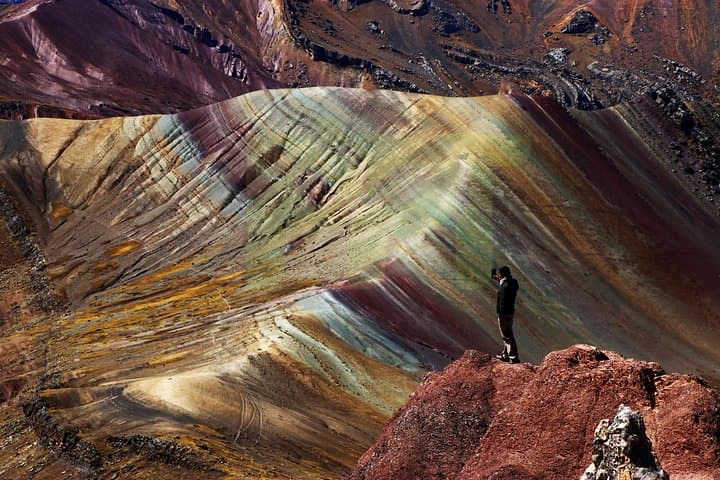
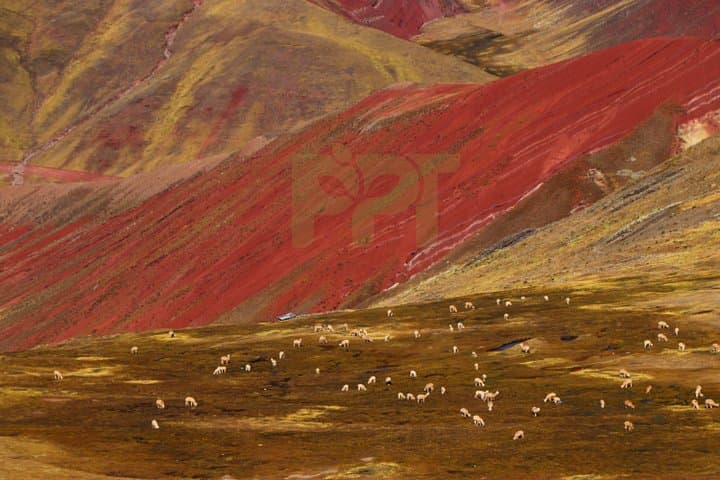
High on the puna east of Cusco, the slopes of Palcoyo rise in bands of rust, ochre, and mint, less crowded but no less striking than Vinicunca. The tour begins with a short drive from town and a slow, measured walk alongside patient alpacas, whose curious faces and rhythmic steps set the pace at altitude.
Verified experiences and guided adventures in the surrounding area.
Operated by Peru Private Tours · Cusco, Cusco Region
High on the puna east of Cusco, the slopes of Palcoyo rise in bands of rust, ochre, and mint, less crowded but no less striking than Vinicunca. The tour begins with a short drive from town and a slow, measured walk alongside patient alpacas, whose curious faces and rhythmic steps set the pace at altitude.
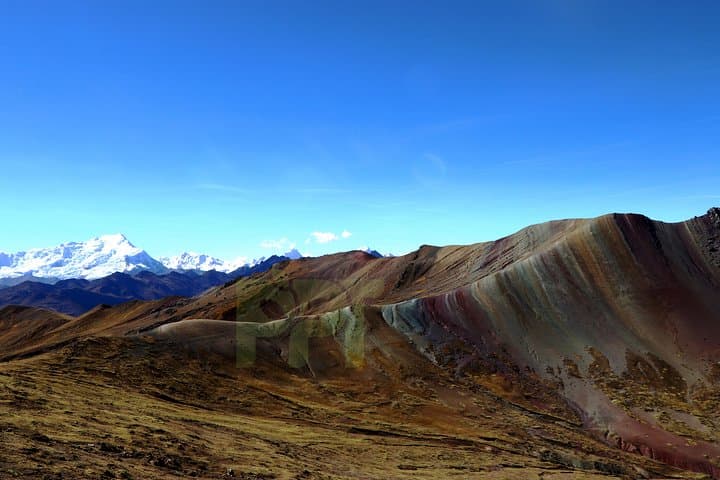
Palcoyo's stripes come from oxidized minerals—iron, copper and other deposits—laid down over millennia as tectonic uplift folded the Andes. Local Quechua communities still graze llamas and alpacas here; guides often share stories of seasonal herding and mountain offerings that shaped routes and camps. Geologically simpler and lower than Vinicunca, Palcoyo presents multiple colored ridges that can be seen in a single sweep.
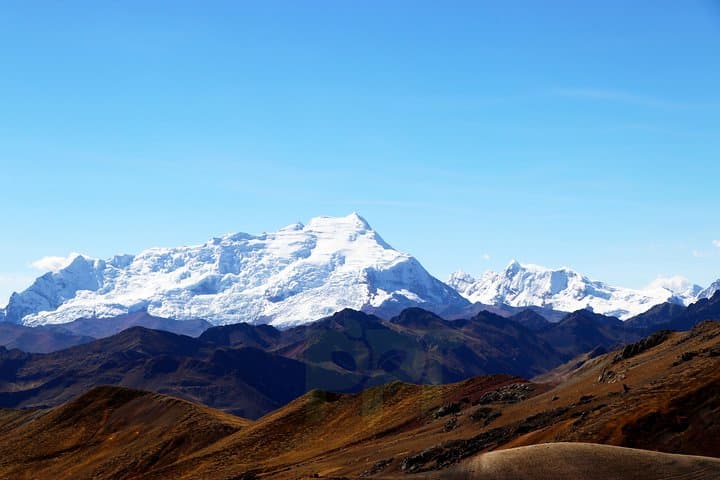
Expect wide, exposed terrain, short rolling ascents, and panoramic views of the Ausangate massif. Because the route is relatively flat and organized tours keep groups small, it’s a good option for travelers easing into high-altitude hiking, though thin air still demands conservative pacing and frequent rests.
Practical guidance: acclimatize in Cusco for 24–48 hours, carry sun protection and layered clothing, and bring an insulated jacket for windy moments. The full outing including transport, snacks and lunch runs about 10–11 hours. Stay on marked tracks to protect fragile puna grasses, respect local herding areas, and rely on your guide—oxygen and first-aid kits are commonly available. The payoff is quieter ridgelines, close-up alpacas, expansive mineral bands, and a view that lingers long after you return and lasting memory.
moderate.
10–11 hours.
Moderate fitness recommended; able to walk 2–4 miles at high altitude and handle 3500–4500 m elevation with frequent rest stops.
Palcoyo is generally easier: shorter walking distances, gentler gradients, and lower congestion, but altitude still makes it more demanding than lowland walks.
Yes, tours include trained alpacas for the walk; always follow guide instructions and avoid feeding or startling them.
You should spend at least 24–48 hours in Cusco to acclimatize; people with cardiovascular issues or pregnancy are not recommended to join.
Typical inclusions are private transport, a guide, snacks, water, lunch after the hike, oxygen and a first-aid kit, and alpacas for the walk.
The area sits within traditional Quechua pastoral lands; seasonal herding and ritual offerings to mountain deities have shaped trails for generations.
The high puna is ecologically fragile—stay on trails, avoid touching mineral outcrops, and pack out all waste to minimize impact.
Peru Private Tours operates guided outdoor trips and adventures with an emphasis on safety, stewardship, and memorable experiences.
High on the puna east of Cusco, the slopes of Palcoyo rise in bands of rust, ochre, and mint, less crowded but no less striking than Vinicunca. The tour begins with a short drive from town and a slow, measured walk alongside patient alpacas, whose curious faces and rhythmic steps set the pace at altitude.
High on the puna east of Cusco, the slopes of Palcoyo rise in bands of rust, ochre, and mint, less crowded but no less striking than Vinicunca. The tour begins with a short drive from town and a slow, measured walk alongside patient alpacas, whose curious faces and rhythmic steps set the pace at altitude.
Palcoyo's stripes come from oxidized minerals—iron, copper and other deposits—laid down over millennia as tectonic uplift folded the Andes. Local Quechua communities still graze llamas and alpacas here; guides often share stories of seasonal herding and mountain offerings that shaped routes and camps. Geologically simpler and lower than Vinicunca, Palcoyo presents multiple colored ridges that can be seen in a single sweep.
Expect wide, exposed terrain, short rolling ascents, and panoramic views of the Ausangate massif. Because the route is relatively flat and organized tours keep groups small, it’s a good option for travelers easing into high-altitude hiking, though thin air still demands conservative pacing and frequent rests.
Practical guidance: acclimatize in Cusco for 24–48 hours, carry sun protection and layered clothing, and bring an insulated jacket for windy moments. The full outing including transport, snacks and lunch runs about 10–11 hours. Stay on marked tracks to protect fragile puna grasses, respect local herding areas, and rely on your guide—oxygen and first-aid kits are commonly available. The payoff is quieter ridgelines, close-up alpacas, expansive mineral bands, and a view that lingers long after you return and lasting memory.