THE ADVENTURE COLLECTIVE® · Independent discovery and booking for outdoor travel

Experience Victoria Falls from the Zambia side with a private, guided 90–110 minute walk through rainforest trails and panoramic viewpoints. This tour combines geology, local history, and practical guidance to help you capture the falls’ raw power—and stay comfortable in the spray.
Experience Victoria Falls from the Zambia side with a private, guided 90–110 minute walk through rainforest trails and panoramic viewpoints. This tour combines geology, local history, and practical guidance to help you capture the falls’ raw power—and stay comfortable in the spray.
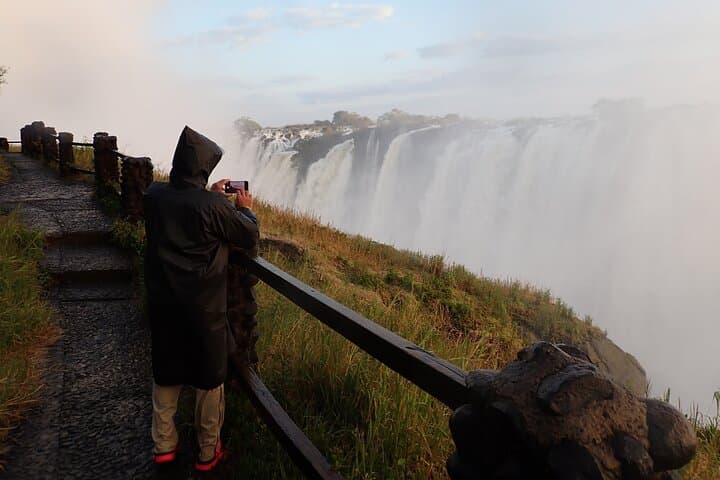
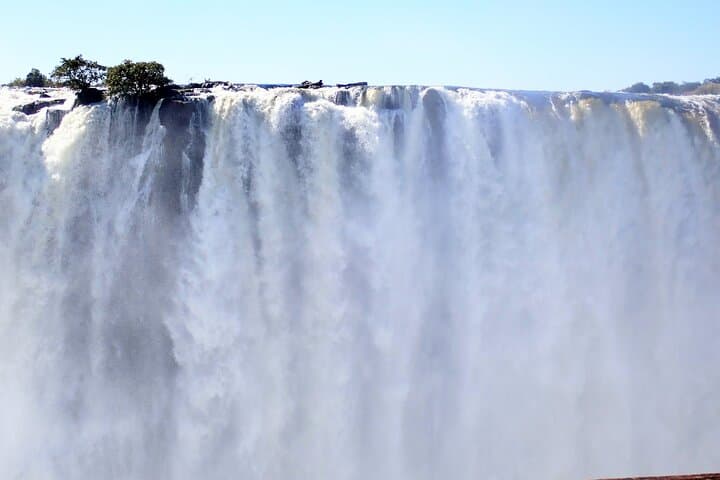
You step onto damp, leaf-littered trail and the gorge announces itself before you see it—the Zambezi’s voice dropping into a thunderous, spray-driven curtain. Mist claws at your jacket and rainbows arc through the vapor; your guide points, quietly, to a place where the river narrows and hurtles over basalt ledges.
Verified experiences and guided adventures in the surrounding area.
Operated by BUSH WILDERNESS SAFARIS · Livingstone, Southern Province
You step onto damp, leaf-littered trail and the gorge announces itself before you see it—the Zambezi’s voice dropping into a thunderous, spray-driven curtain. Mist claws at your jacket and rainbows arc through the vapor; your guide points, quietly, to a place where the river narrows and hurtles over basalt ledges.
This is Mosi-oa-Tunya—“The Smoke That Thunders”—a geological seam carved by the Zambezi through ancient basalt about 200,000 years ago. European explorer David Livingstone first recorded the falls in 1855; local Lozi and Tonga communities have long woven the site into spiritual practice and daily life. On the Zambian side, trails thread a rainforest microclimate that supports fig trees, ferns, and a chorus of birds drawn to the spray.
Expect a paced 90–120 minute walk along well-formed paths with multiple viewpoints: Devil’s Cataract, the Main Falls outlook, and steps down toward the Boiling Pot. Guides blend natural history—basalt columns, seasonal flow patterns—with cultural stories and tips for photographs. Wildlife sightings are possible: vervet monkeys, monitor lizards, and fish eagles hunting upstream.
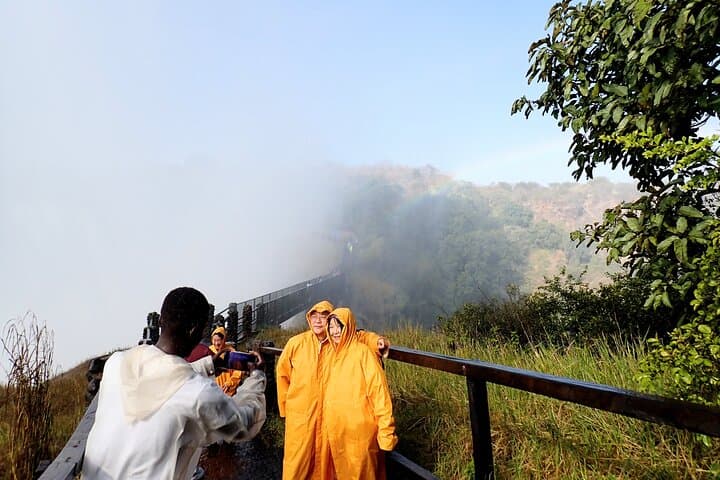
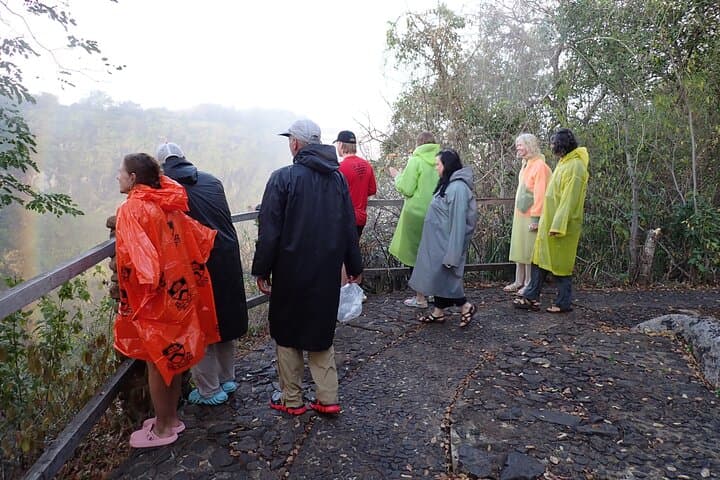
Practical edge: wear grippy shoes and a waterproof layer—the mist is constant, even in dry months. Carry a small daypack for water, a rain cover for electronics, and arrive early for softer light and fewer crowds. Tours are wheelchair-accessible along parts of the circuit, but some viewpoints use steps and uneven ground. Whether you want close-up spray and sound or composed landscape shots, a private guided walk on the Zambian side delivers both theatrical power and quiet moments of connection with a living waterfall.
easy.
1.5–2 hours.
Suitable for most fitness levels; involves walking on damp, uneven paths and a few steps.
This private walk focuses on the Zambian side of Victoria Falls, offering the Main Falls viewpoints and rainforest trails with views of the gorge.
Yes; the route is rated easy and wheelchair-accessible in parts, though some viewpoints require short stair sections—notify the operator of mobility needs.
Bring a waterproof layer, quick-dry clothing, a protective case for electronics, and a microfiber cloth for lenses.
High water (rainy season) increases spray and spectacle but may obscure some vista-level shots; dry season offers clearer views but reduced flow.
David Livingstone publicized the falls to Europeans in 1855; indigenous names and cultural ties—most prominently Mosi-oa-Tunya—precede colonial mapping.
Victoria Falls is a UNESCO World Heritage Site with visitor management focused on minimizing trail erosion and protecting the rainforest microclimate; water flow is increasingly influenced by regional dams and climate variability.
BUSH WILDERNESS SAFARIS operates guided outdoor trips and adventures with an emphasis on safety, stewardship, and memorable experiences.
You step onto damp, leaf-littered trail and the gorge announces itself before you see it—the Zambezi’s voice dropping into a thunderous, spray-driven curtain. Mist claws at your jacket and rainbows arc through the vapor; your guide points, quietly, to a place where the river narrows and hurtles over basalt ledges.
You step onto damp, leaf-littered trail and the gorge announces itself before you see it—the Zambezi’s voice dropping into a thunderous, spray-driven curtain. Mist claws at your jacket and rainbows arc through the vapor; your guide points, quietly, to a place where the river narrows and hurtles over basalt ledges.
This is Mosi-oa-Tunya—“The Smoke That Thunders”—a geological seam carved by the Zambezi through ancient basalt about 200,000 years ago. European explorer David Livingstone first recorded the falls in 1855; local Lozi and Tonga communities have long woven the site into spiritual practice and daily life. On the Zambian side, trails thread a rainforest microclimate that supports fig trees, ferns, and a chorus of birds drawn to the spray.
Expect a paced 90–120 minute walk along well-formed paths with multiple viewpoints: Devil’s Cataract, the Main Falls outlook, and steps down toward the Boiling Pot. Guides blend natural history—basalt columns, seasonal flow patterns—with cultural stories and tips for photographs. Wildlife sightings are possible: vervet monkeys, monitor lizards, and fish eagles hunting upstream.
Practical edge: wear grippy shoes and a waterproof layer—the mist is constant, even in dry months. Carry a small daypack for water, a rain cover for electronics, and arrive early for softer light and fewer crowds. Tours are wheelchair-accessible along parts of the circuit, but some viewpoints use steps and uneven ground. Whether you want close-up spray and sound or composed landscape shots, a private guided walk on the Zambian side delivers both theatrical power and quiet moments of connection with a living waterfall.